In the vaults of the MONOVA archives lies a memoir by Maurice G. Baker, a former pupil of Kingsley School for boys in North Vancouver. Long since closed, Baker spent two years there as a boarder from 1922 to 1924.
Founded by Albert Henry Scriven in 1919, Kingsley School occupied ten acres at St Mary’s Avenue in Upper Lonsdale.
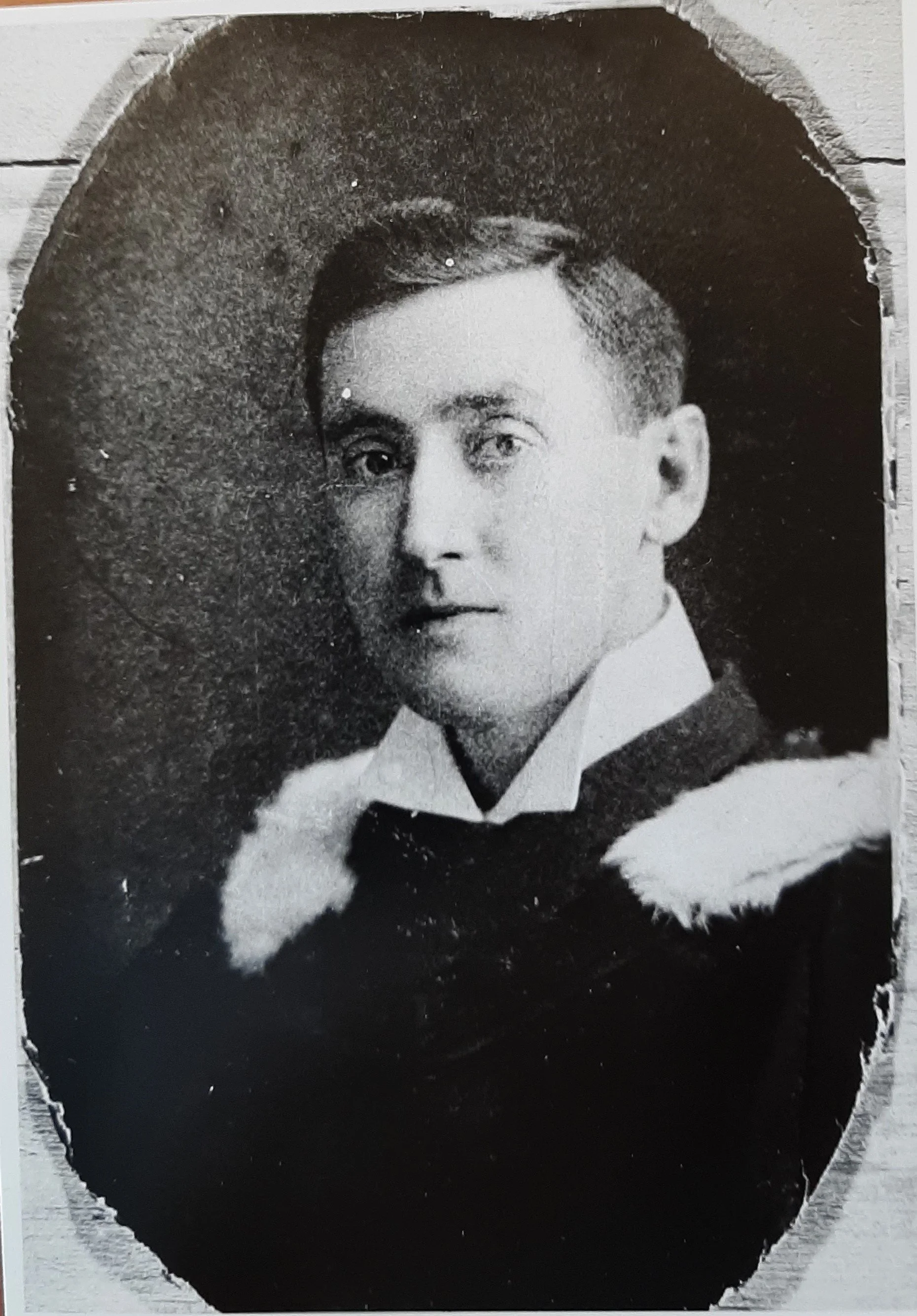
Albert H Scriven, Kingsley School’s founder and headmaster was a graduate of McGill University. Photograph courtesy of MONOVA Archives, inventory number 6865.
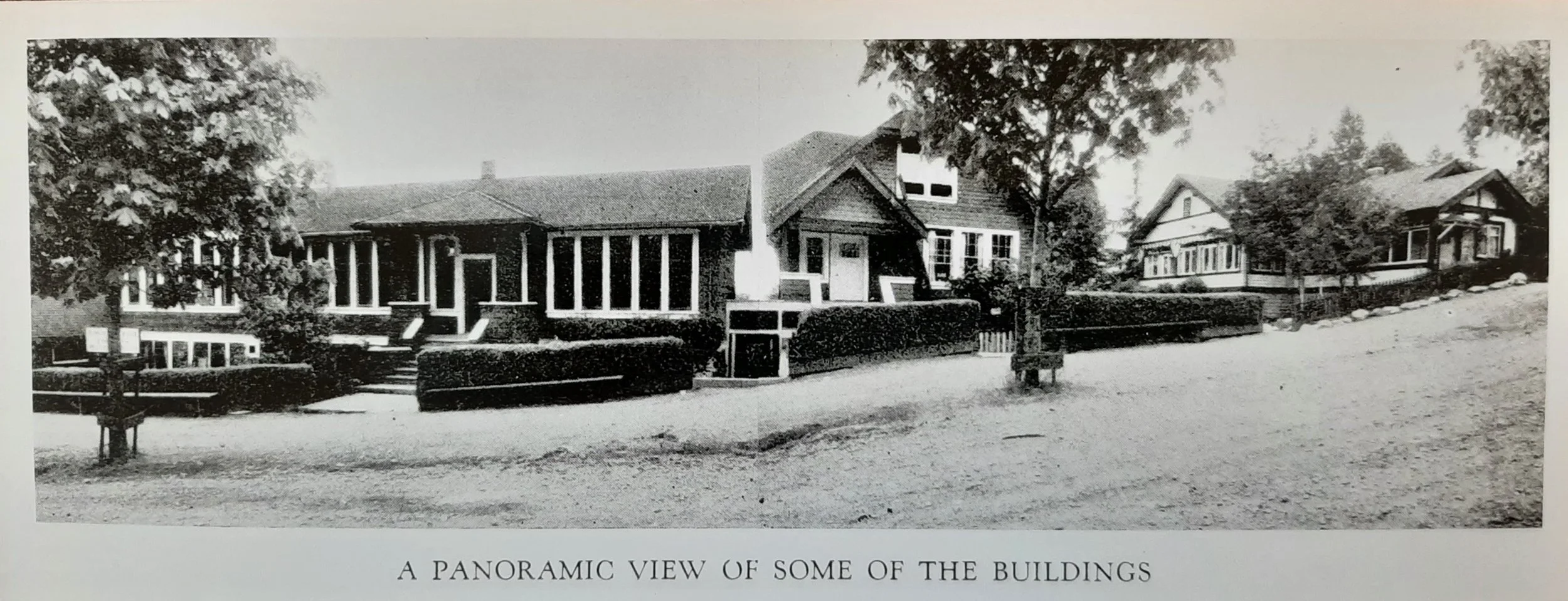
Kingsley School buildings ca 1935. Photograph courtesy of MONOVA Archives, inventory number 6865. On the right of the picture is Scriven’s private residence at 3475 St Mary’s Avenue. None of the buildings remain.
From 1921 to 1932 the school also rented the Thomas Nye House around the corner. Thomas Nye, a returning Boer War veteran, had built his ‘folly’ as it was locally known in 1912, but had gone bankrupt in the process. The grandiose residence, which still stands, was used for housing the staff and boys.
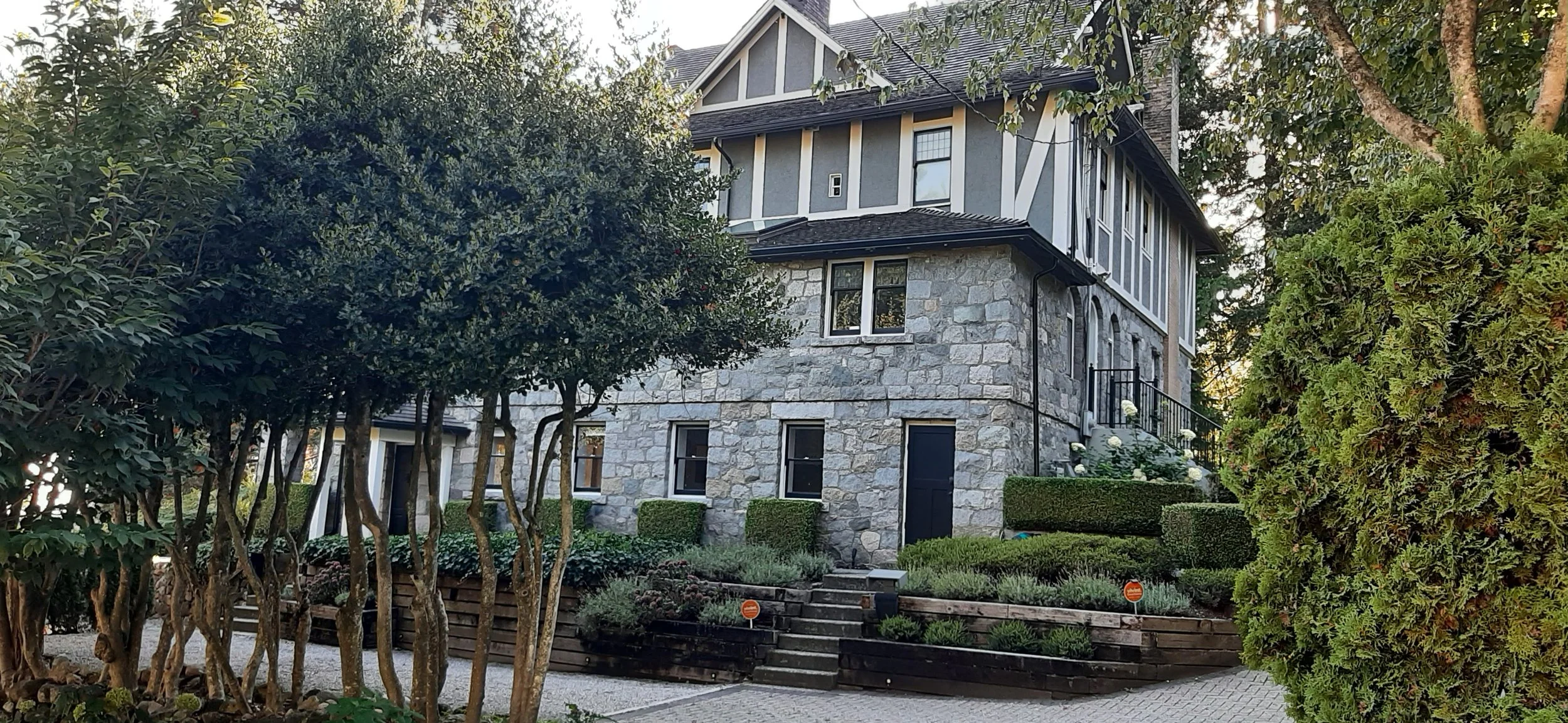
Thomas Nye House, built in 1912, as it stands today. Photograph courtesy of Paul Haston.
Named after Charles Kingsley, the prominent English Victorian-era clergyman and social reformer, Kingsley School followed in the tradition of elite British ‘public’ (meaning private) schools. Its location enabled it to enjoy, as Baker explains in his memoir, “exhilarating mountain atmosphere and freedom from the noise and grime of the city.” In addition to the headmaster, four other masters also attended to the curriculum, which included French, Latin and Chemistry. Pupils were either day attending or boarders, with evening homework, called ‘prep’ supervised “to keep order and see that we kept down to business.”
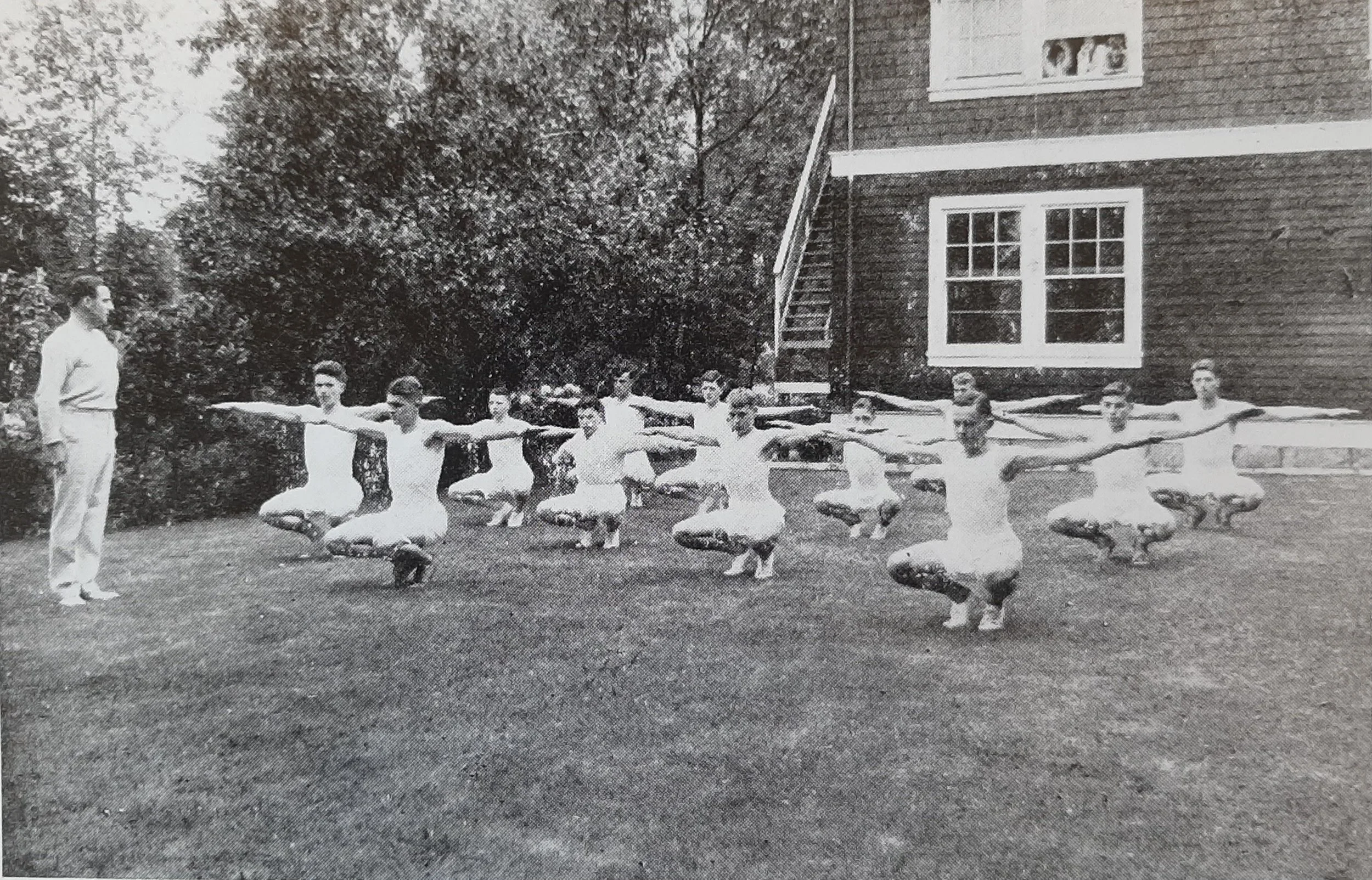
Kingsley School Physical Training ca 1935. Photograph courtesy of MONOVA Archives, inventory number 6865.
As befitting its ‘public’ school roots emphasis was placed on sport and exercise. “Every morning a mile run was the rule before breakfast, all those capable participating.” As Baker notes, if a boy fell ill, he came under the eye of Matron who “did not spare the Epsom salts, no matter how trifling the complaint.” Serious misbehaviour was met with by a sharp dose of corporal punishment, “invariably administered to the seat of learning with the culprit touching his toes.” For lesser offences, boys were tasked with “sawing cord-wood” or “lost dessert at dinner time.”
Some boarders went home for the weekend. For those who remained “no moping or idleness was tolerated.” Saturday morning was spent in “reading, playing games, gardening and amateur carpentering,” with a visit to the ‘tuck’ shop a treat in the afternoon. Sundays involved church, followed by a hike, then afternoon Sunday school and letter writing.
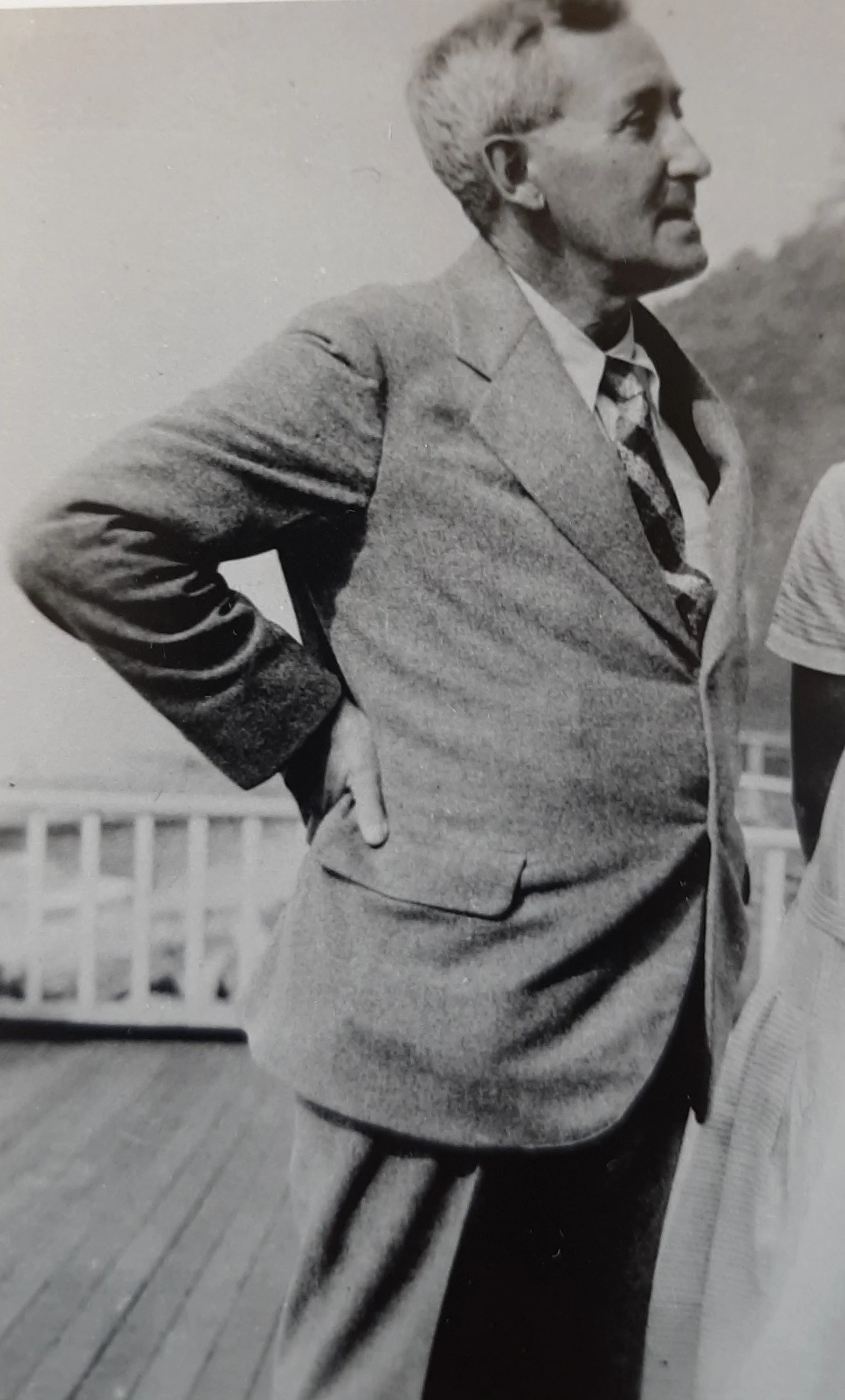
Albert H Scriven pictured in 1931 or 1932. Photograph courtesy of MONOVA Archives, inventory number 6866.
Scriven, who appears to have been held in high regard by his pupils, ran the school until his death in 1932, at which time his wife, Muriel took up the reins. Continuing to act as matron, Mrs Scriven brought in a new headmaster, Rev J T Burchill, to run the academics. The Depression and increasing competition caused attendee numbers to decline. The school stayed open until 1950 before closing down, Mrs Scriven having sold it to Ernest Allen in 1946.
Albert H Scriven will be remembered as a pioneer in British Columbia schooling. Maurice Baker’s stories of Kingsley School are a throwback to a bygone age. What shines through, however, is an appreciation of the schooling he was offered.
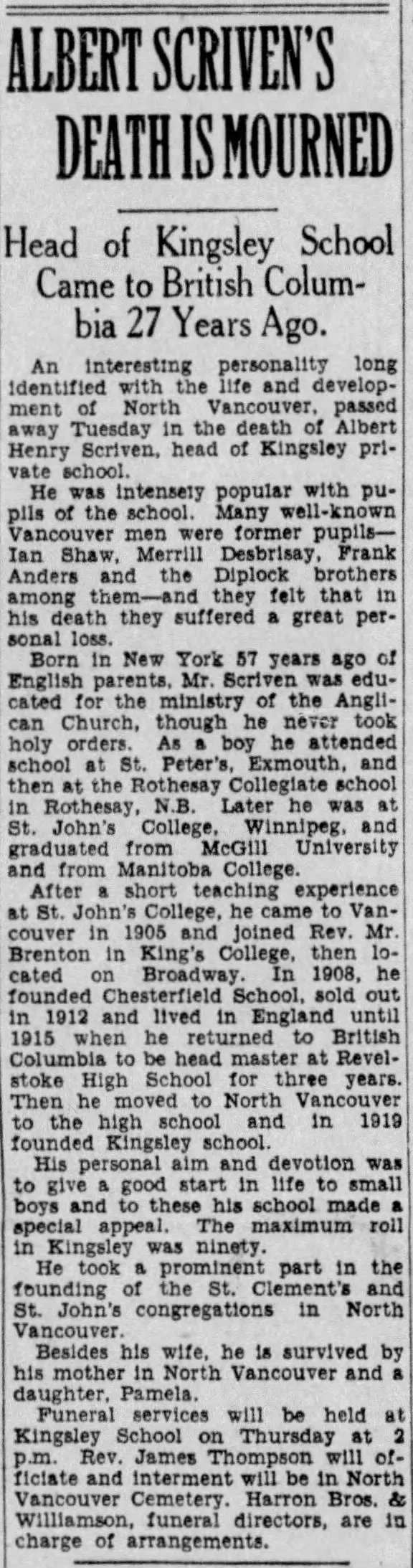
Albert H Scriven’s obituary in The Province 8th June 1932, courtesy of newspapers.com
Fun Facts:
The Cole brothers, Art and George attended Kingsley School in the 1930s before becoming flying heroes in the Second World War.
Art Cole, who survived the war, flew spitfires. George, whose squadron was involved in the ‘Dambusters’ raid, was shot down and killed over Germany in a Lancaster bomber.
A shout-out goes to the late Sharon Proctor whose March 2008 Express Article for MONOVA provided inspiration for this blog piece.
Except where indicated, text and images Copyright @ North Shore Heritage and Paul Haston. All rights reserved. Republication in whole or in part is prohibited without the written consent of the copyright holder.
References:
MONOVA, North Vancouver Museum and Archives https://monova.ca/archives/
British Columbia City Directories https://bccd.vpl.ca/
‘Two years at a Private School’ by Maurice G. Baker