
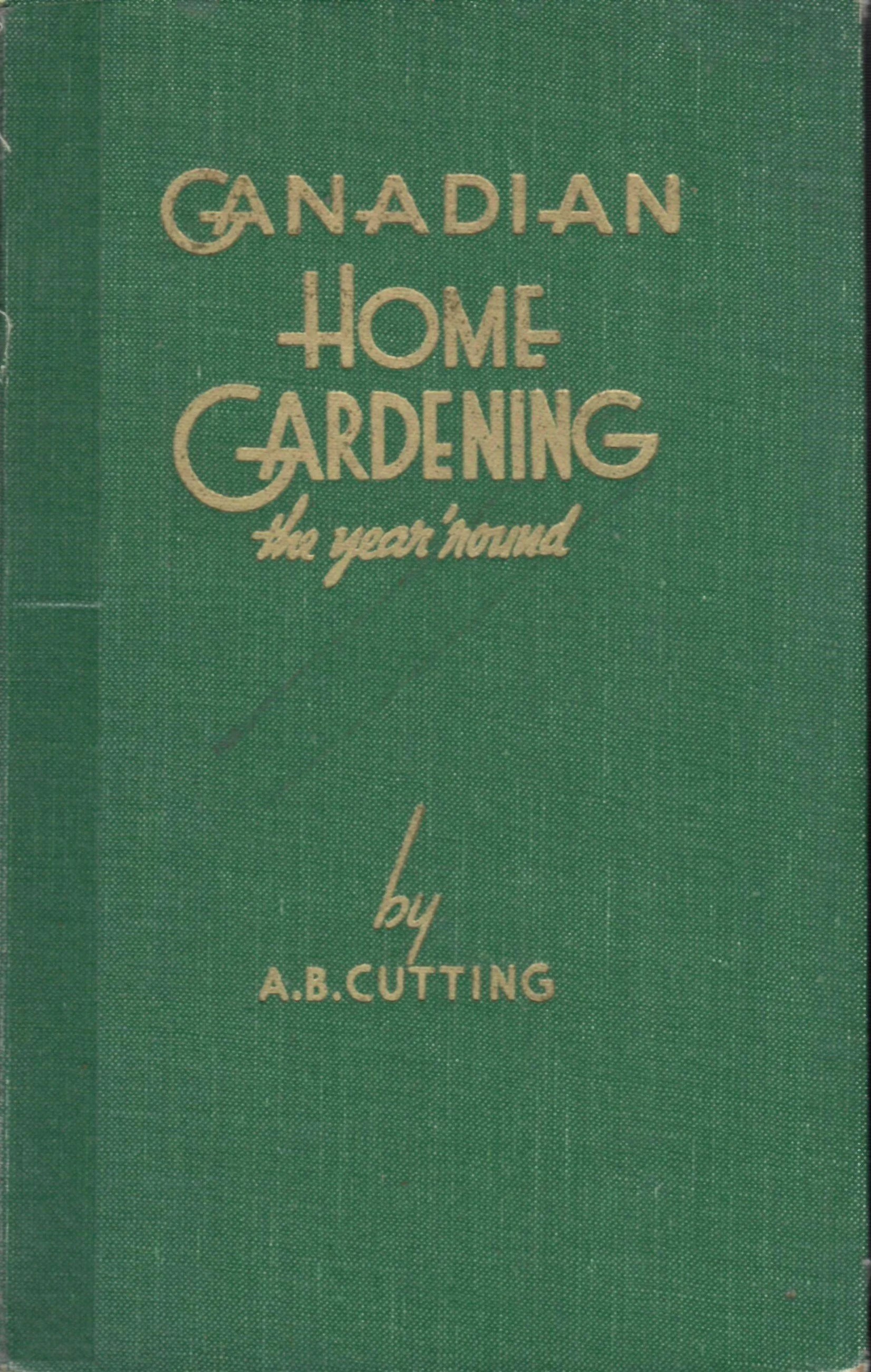
Some years ago, Jenny Morgan, one of our blog writers, gifted me a vintage copy of “Canadian Home Gardening; The Year ‘Round” which was published in 1941. It was written by A.B. Cutting who was clearly eminently qualified to write this book. Not only did he have the very fitting last name of “Cutting”, but he was also the editor of “Canadian Horticulture and Home Magazine” and “Canadian Florist” and was a one-time instructor in Horticulture at the Ontario Agricultural College. As I delved into the book, which contains a chapter for each month of the year, it became apparent that it was part-advice and part-observation, written in the “flowery” (pun intended) prose of A.B. Cutting. While I had the occasional good laugh at concepts that are no longer relevant in the 21st century, much of the author’s advice still holds today! Join me in your favourite outdoor seating area as I give you a glimpse into the chapter titled “August” (sub-titled “The Lazy Month”) and take you on a then-and-now tour of local North Shore gardens.
The August chapter begins as follows:
August, the month of “dog-days” – and lazy ways! The annual testing time of the gardener! It is easy enough to garden in Spring, when allurement and enthusiasm alike are fresh and keen. But when the rush and variety of planting and other ever-changing duties are over – in the main, at least – and gardening work through the hot mid-Summer months goes on week after week merely as a grind of routine – weeding and hoeing, spraying and watering, lawn mowing and plant growing – and the mercury steadily goes up, ardor and activity frequently drop, almost to zero. The lure of easy chair and hammock overcomes the glaring needs of lawn and border. The torrid sun begets disloyalty and desertion of duty. Laziness conquers – and the garden suffers.
As a gardener myself, I have to agree that the monotony of garden chores and the extra energy required to work in the August heat has also taken a toll on me. For a while, when the Lower Mainland was in Stage 3 water restrictions, this meant rising before the sun to hand water the garden beds before the heat of the day. At least, we are now back to Stage 2 and automatic sprinkling!
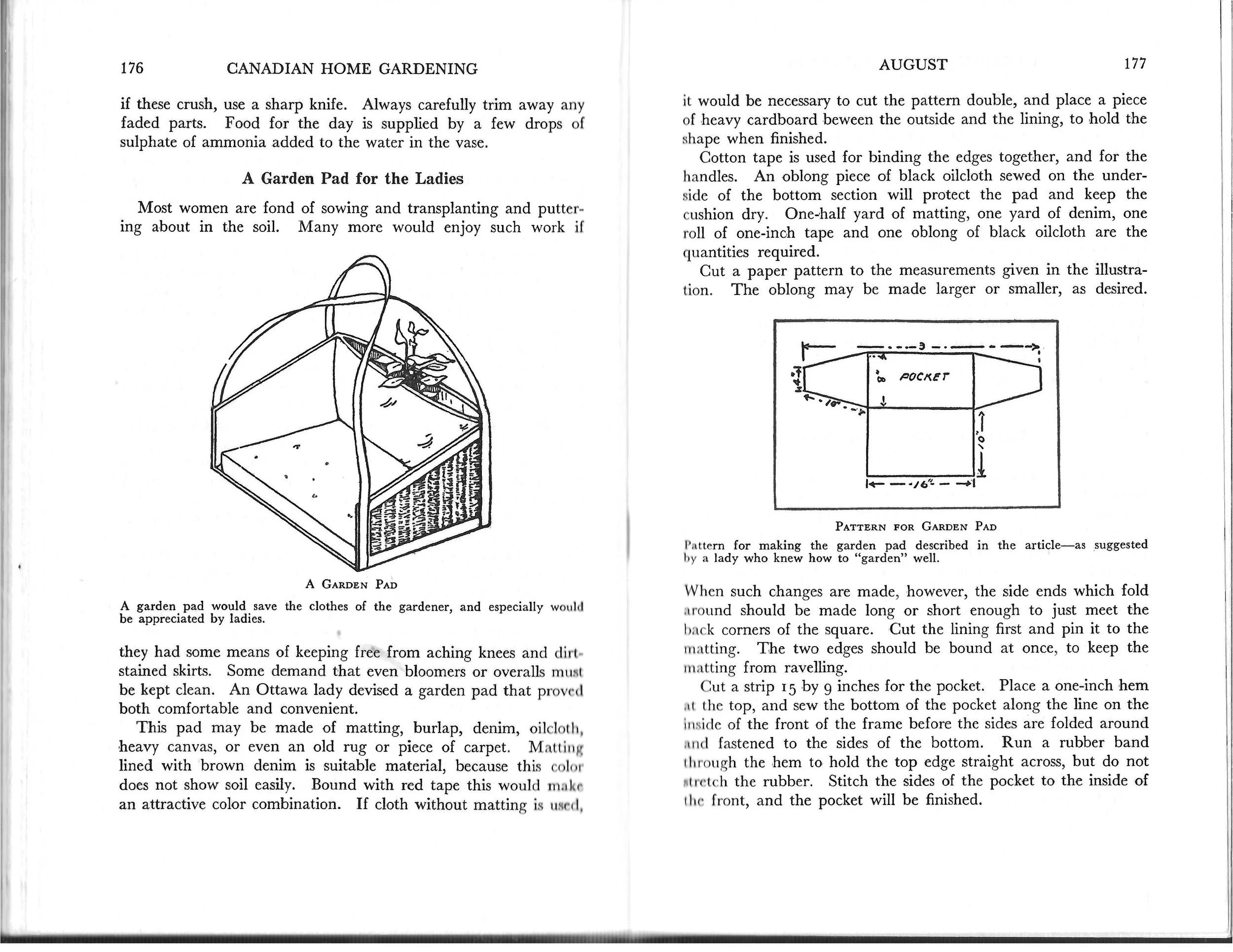
But with watering, comes weeds and inevitably weed pulling. It is no different now than in the 1940’s, when this book was written. Where there is a garden, there are weeds! However, imagine doing your garden work in a skirt and bloomers, which needed to be protected. One of the funniest bits in the August chapter is titled “A Garden Pad for the Ladies” which goes to great lengths describing how ladies can avoid dirt-stained skirts by sewing their own garden pad from matting, burlap, and even old rugs, and binding it with a red tape, so as to make an attractive colour combination! The instructions are below, if anyone wants to try it!
While the August chapter of this 1941 book discusses a wide variety of topics including Flower Gardens, Lawns, Shrubbery, and Roses, I can imagine that one of the most important sections would have been the Vegetable Garden and Fruit Garden sections as people understood the importance of self-sufficiency in food production during the lean war years. In fact, as the war dragged on, the Canadian government actively promoted the planting of Victory Gardens through their 1942 “Dig for Victory” advertising campaign.
As mentioned in my introduction, the author is very descriptive in a theatrical kind of way. Here is an example from the Cover Crops section:
Old empty beds should be replaced as soon as possible with a green maturing crop. Something more is needed than the constant use of commercial fertilizers, something to give body to the soil. If the sowing of a “green” crop is not desired, the city gardener should start scouting around this month for a stableman who will have manure to sell. The rural gardener well knows that a few loads of good manure scattered on garden soil in the “dark of the moon” or even at sunrise will conjure large crops…Sunrise inspiration and sunset perspiration are all in the day’s work of a well-managed home garden – even in August!
And if you thought you would have to drive to Langley to get said manure, here’s a hot tip! You can go to the horse stables on William Avenue, just off Lynn Valley Road, and you can get free manure there!
The book includes illustrations but no photos. So, in order to give you an idea of the attire of the time, and the variety of plant material grown on the North Shore, I’ve included a selection of photos sourced from MONOVA (Archives of North Vancouver) and West Vancouver Archives. These photos demonstrate the tenacity of the gardeners who tamed the mostly clear-cut land to grow, not just fruit and vegetables, but also ornamental gardens with roses, foxgloves and other species that would remind the newcomers of their European gardens. Since one of the goals of our blog is to feature extant heritage, I am pleased to report that the majority of the homes featured in these archival photos are still standing, so I’ve included current photos of those buildings below the archival photo where possible.
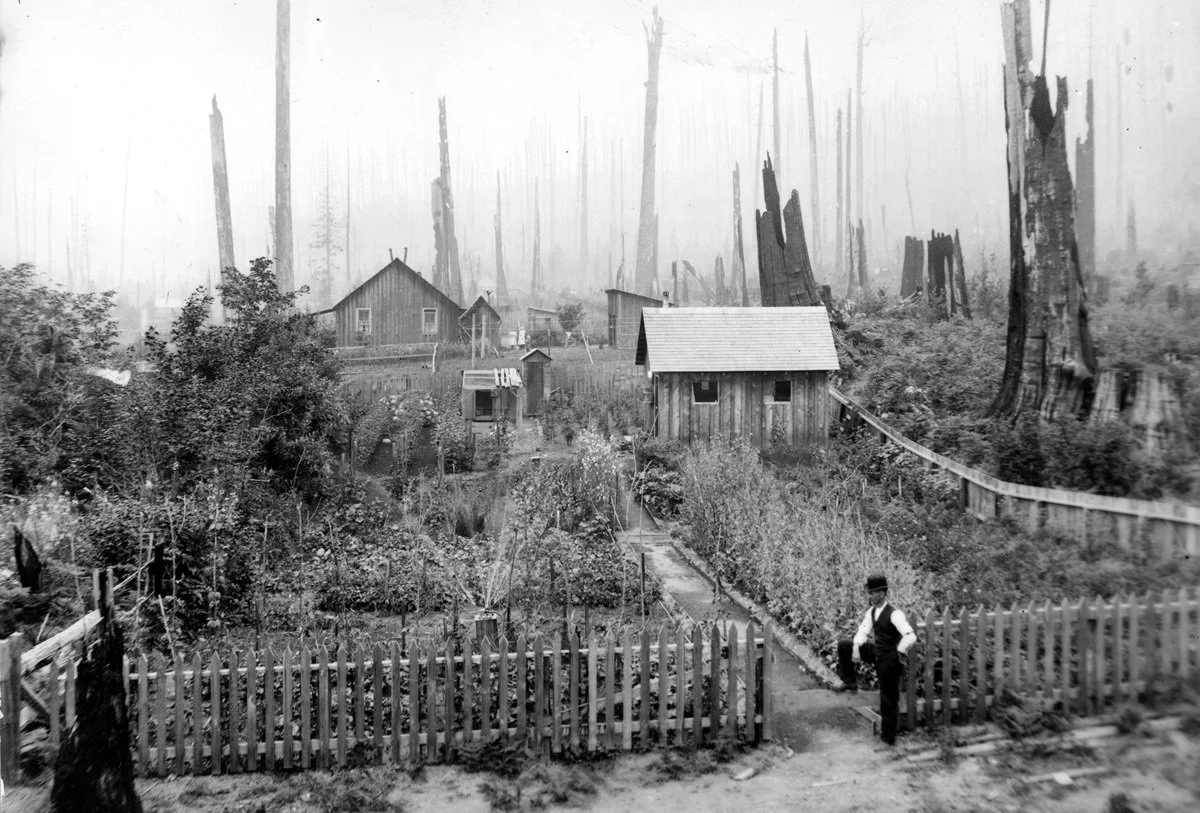
Home of George Smith. Dwelling with fence on Campbell Ave., Lynn Valley, home of George Smith. Mr. Smith in foreground. Maginnis home in background at left., 1909. Inventory #22. Courtesy of MONOVA, North Vancouver Archives.
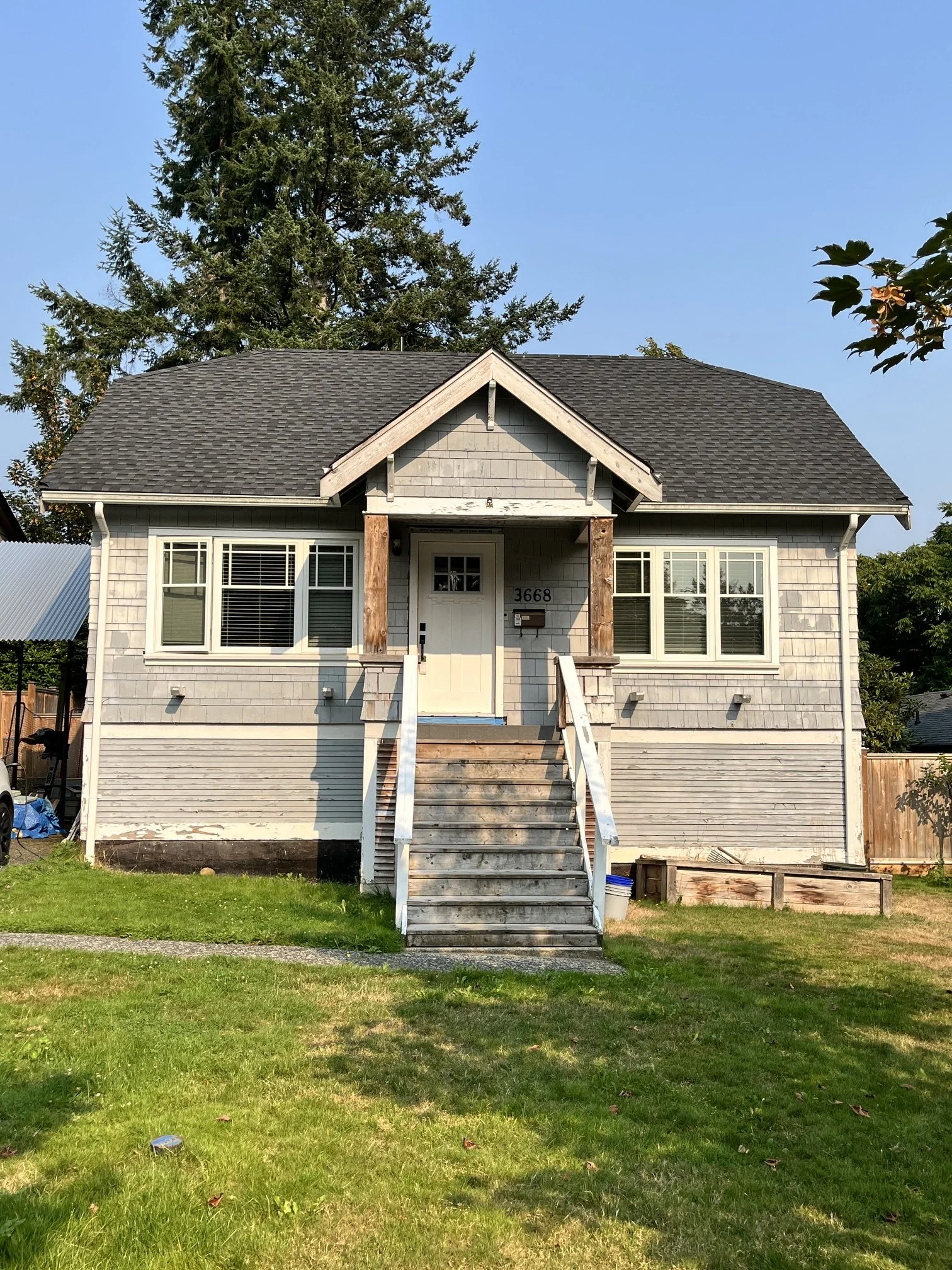
Maginnis House, 3668 Maginnis Ave, North Vancouver, August 2026.. This is the house that is faintly visible in the background of the above photo (Inventory #22). Photo courtesy of Jennifer Clay.
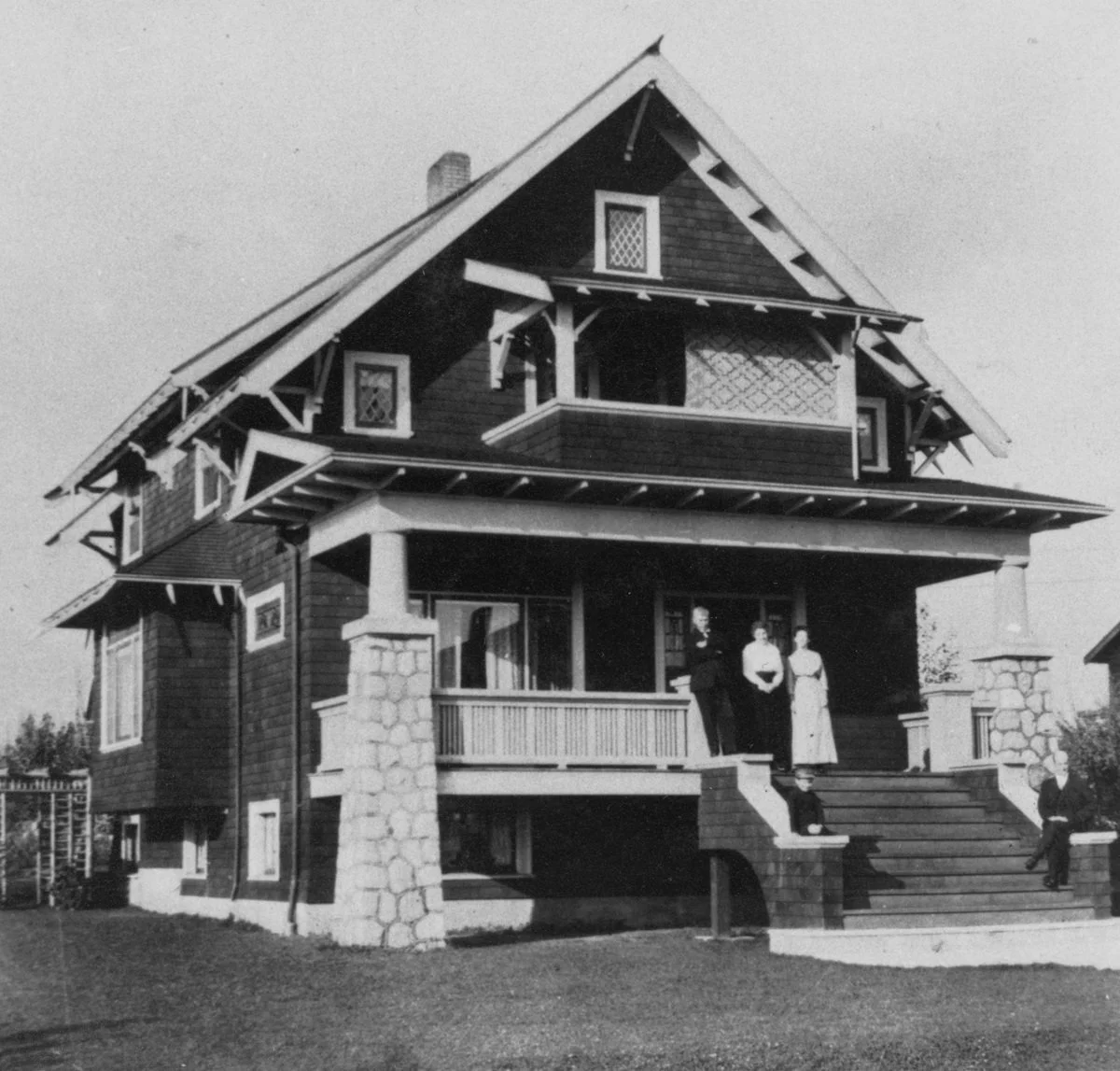
The Keller home at 524 E. 11th St. Built in 1912, designed by E.J. Brougham, contractor E. Markle. Arbour at left built by William Keller for his mother's roses. Circa 1912, Inventory # 7162. Courtesy of MONOVA, North Vancouver Archives.
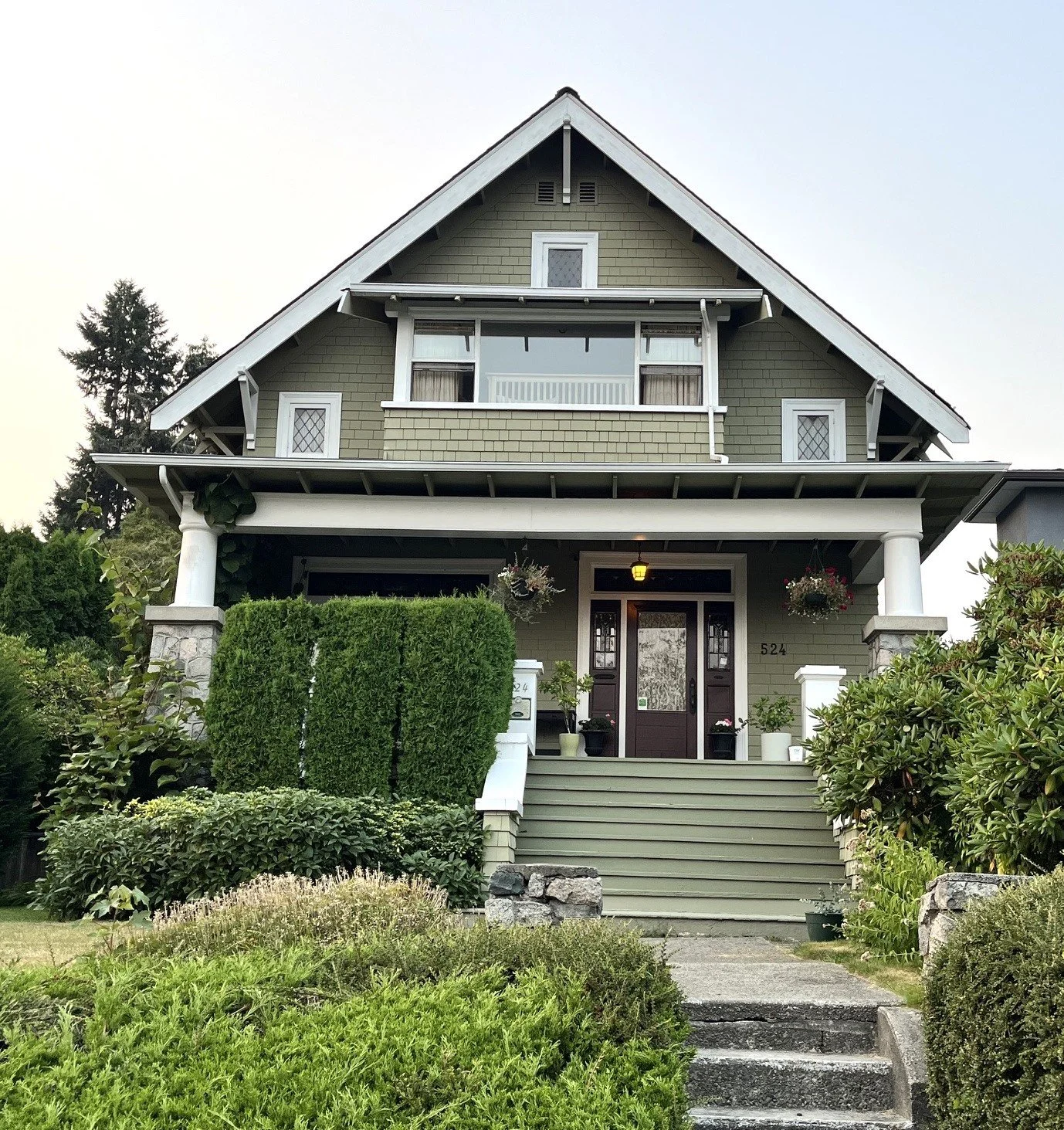
524 East 11th, North Vancouver, August 2026. Photo by Jennifer Clay.
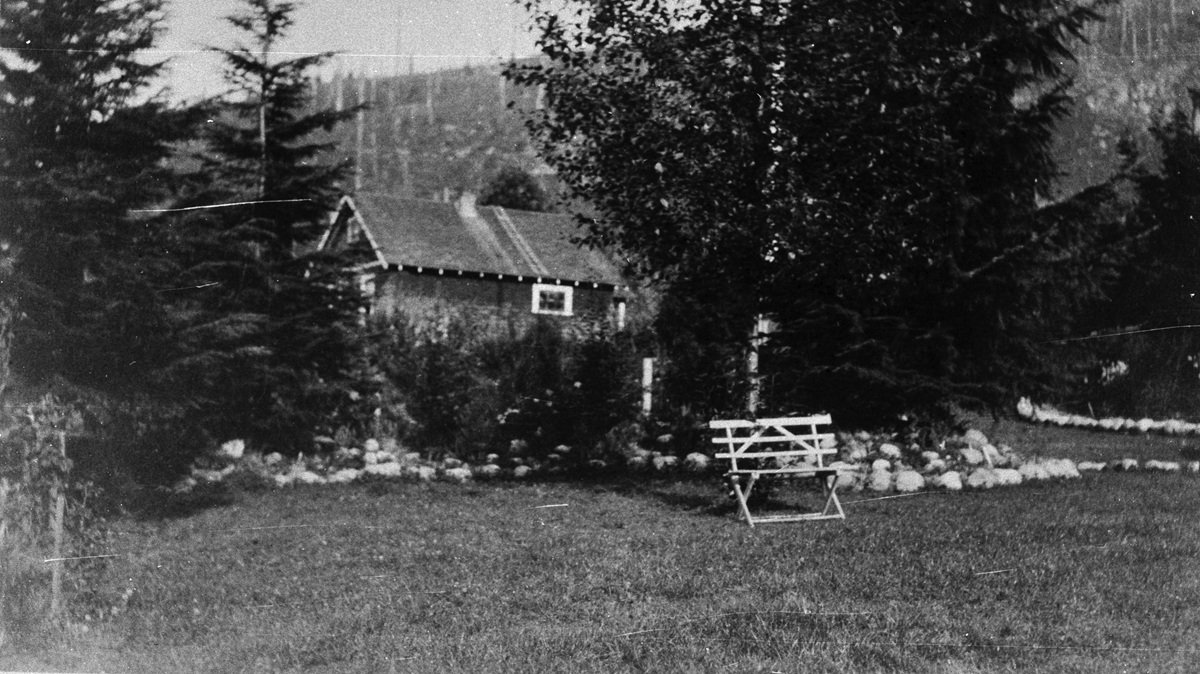
View west in the garden, showing guest cottage, 1401 Dempsey Rd, 1922. Inventory #10141. Courtesy of MONOVA, North Vancouver Archives.
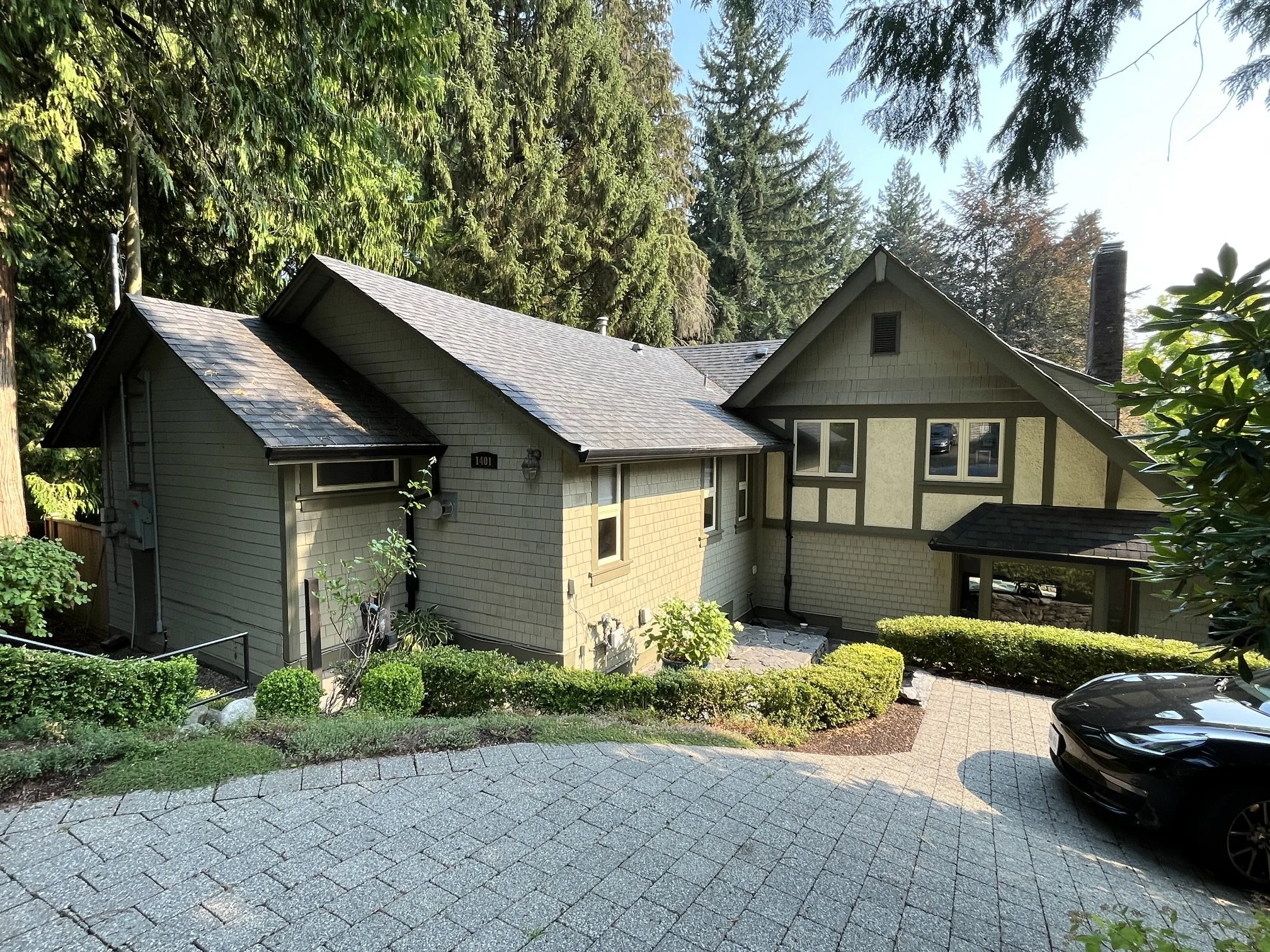
1401 Dempsey, North Vancouver, August 2026. Photo by Jennifer Clay.
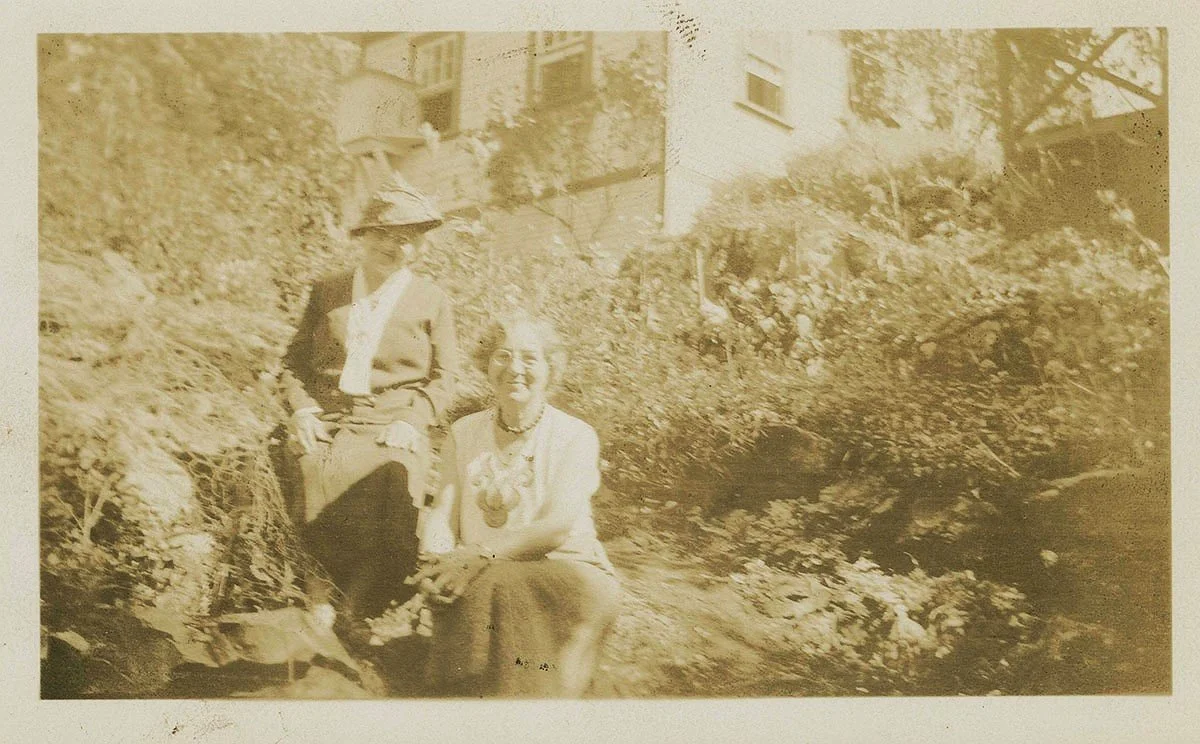
Two women, possibly members of the Kilby family, sitting in a garden. The setting may be the garden at the second Kilby house, "Resthaven," located at 4762 The Highway in Caulfeild. Circa 1930’s. Inventory #1850.WVA.RAH
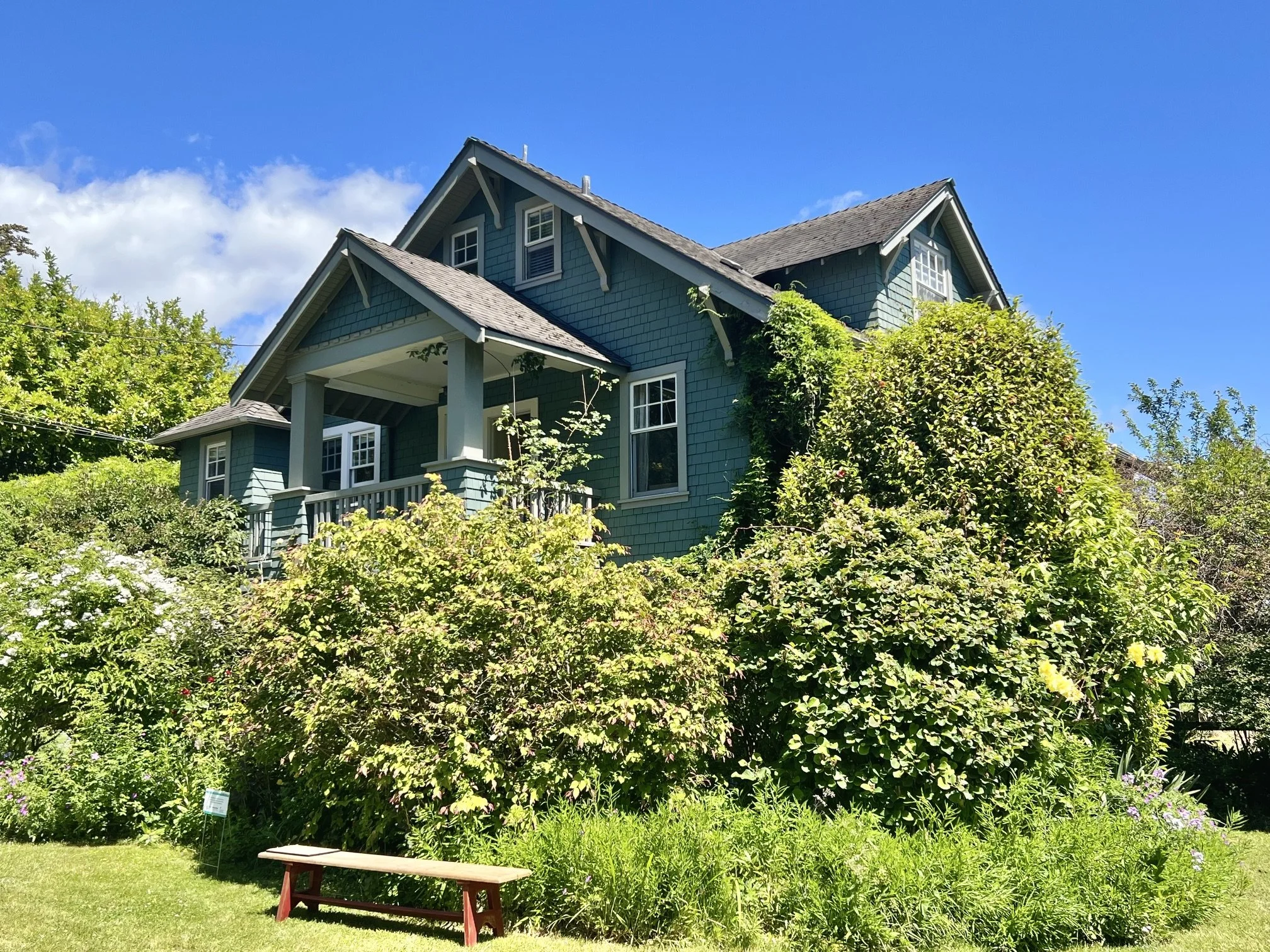
4762 The Highway, West Vancouver. July 2024. Photo courtesy of Jennifer Clay.
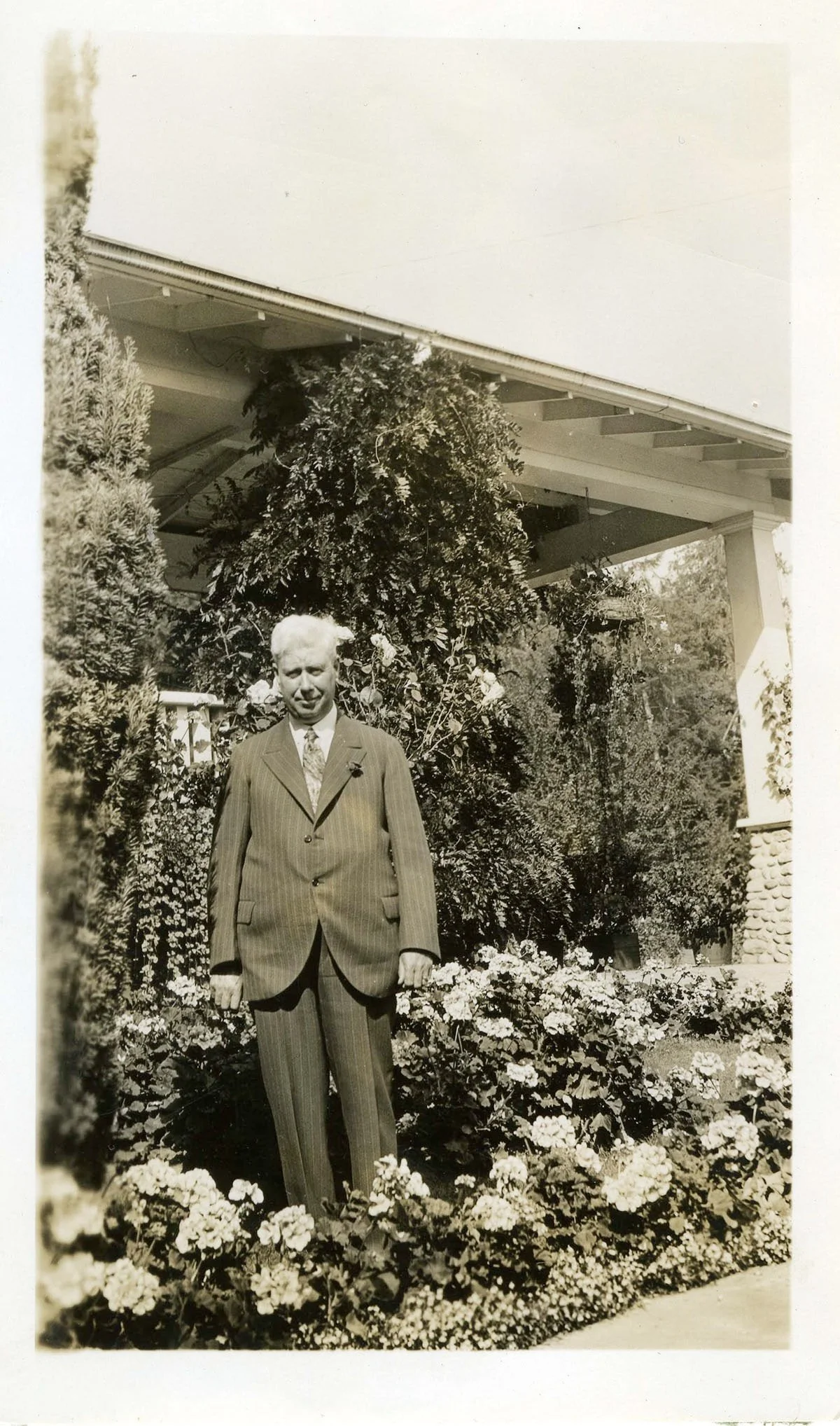
Man standing in the garden outside the Spencer house, located at 2089 Westdean Crescent. Circa 1930s. Inventory #037.WVA.SPE
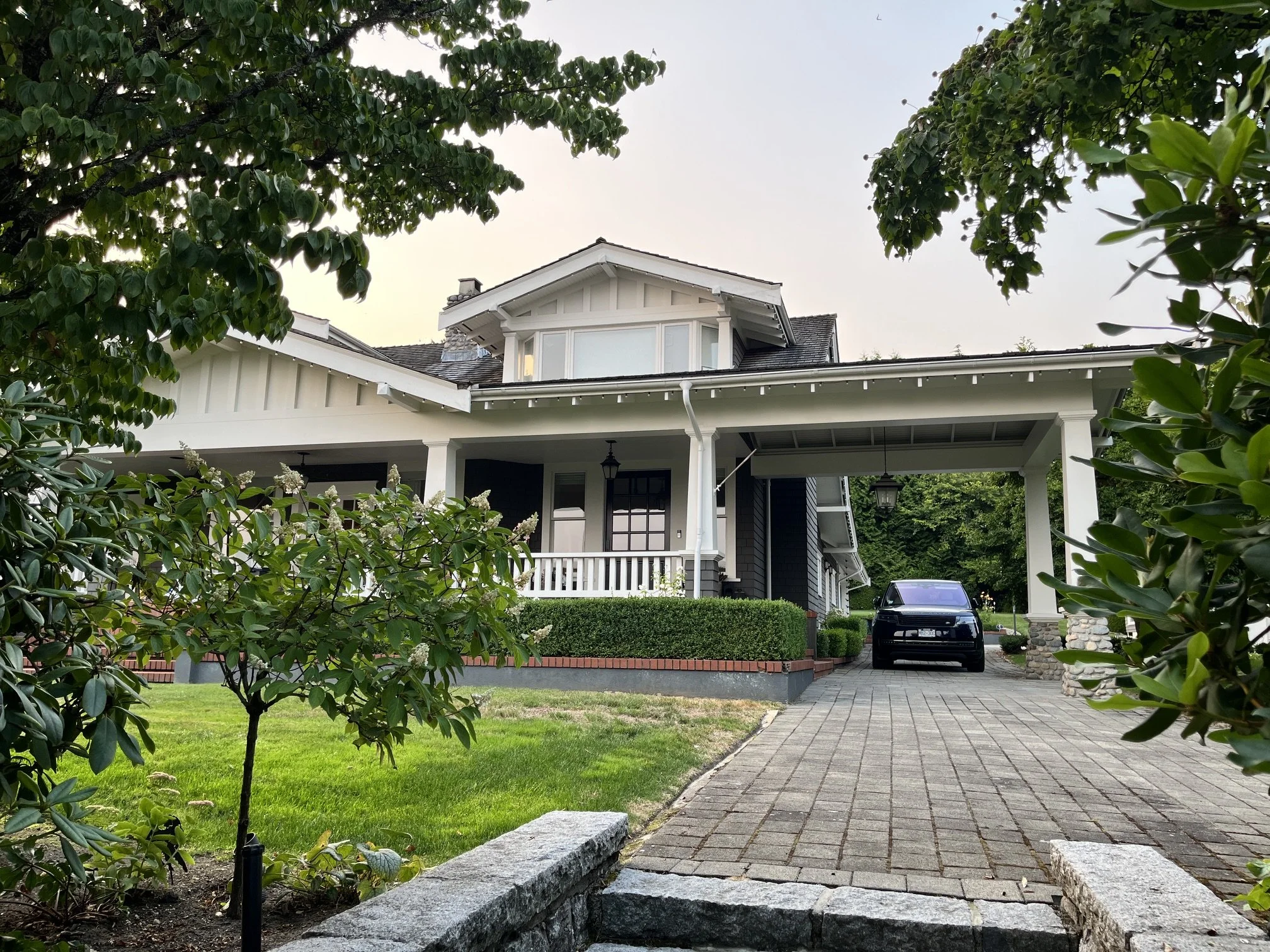
2089 Westdean Crescent, West Vancouver, August 2026. Photo by Jennifer Clay.
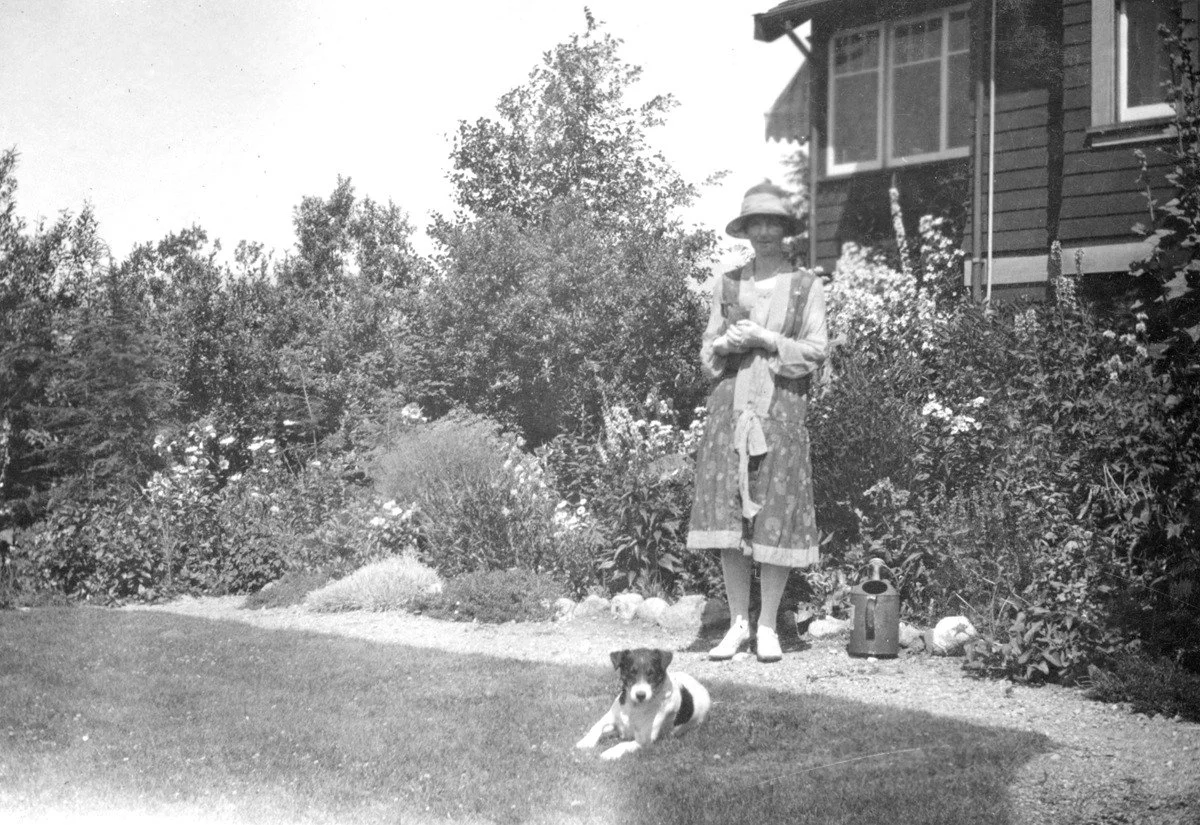
Miss Florence Radcliff and dog in her prize-winning garden at 250 E. 24th. House at right. Circa 193?. Inventory #10734. Courtesy of MONOVA, North Vancouver Archives.
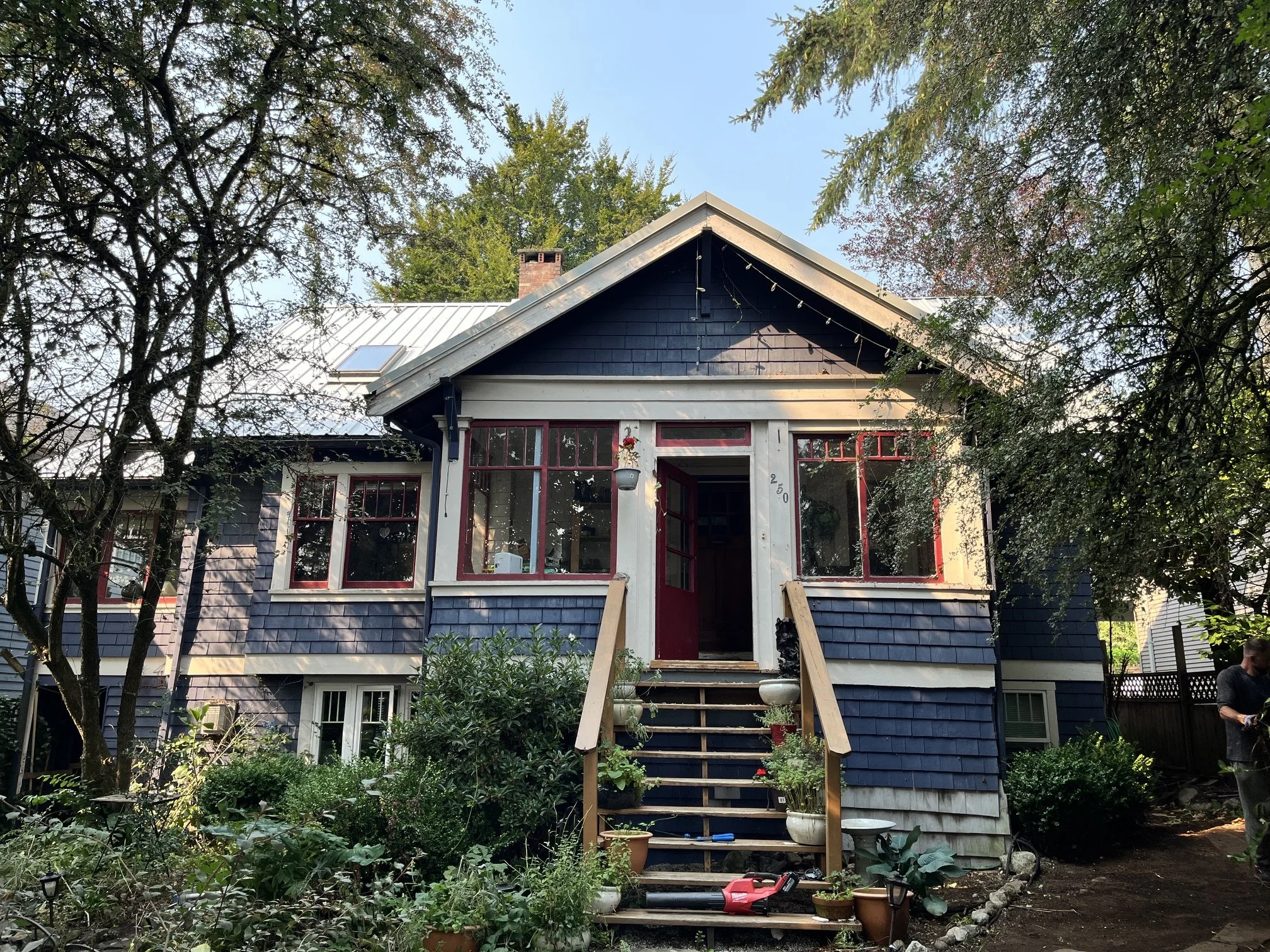
250 East 24th, North Vancouver, August 2026. Photo by Jennifer Clay.
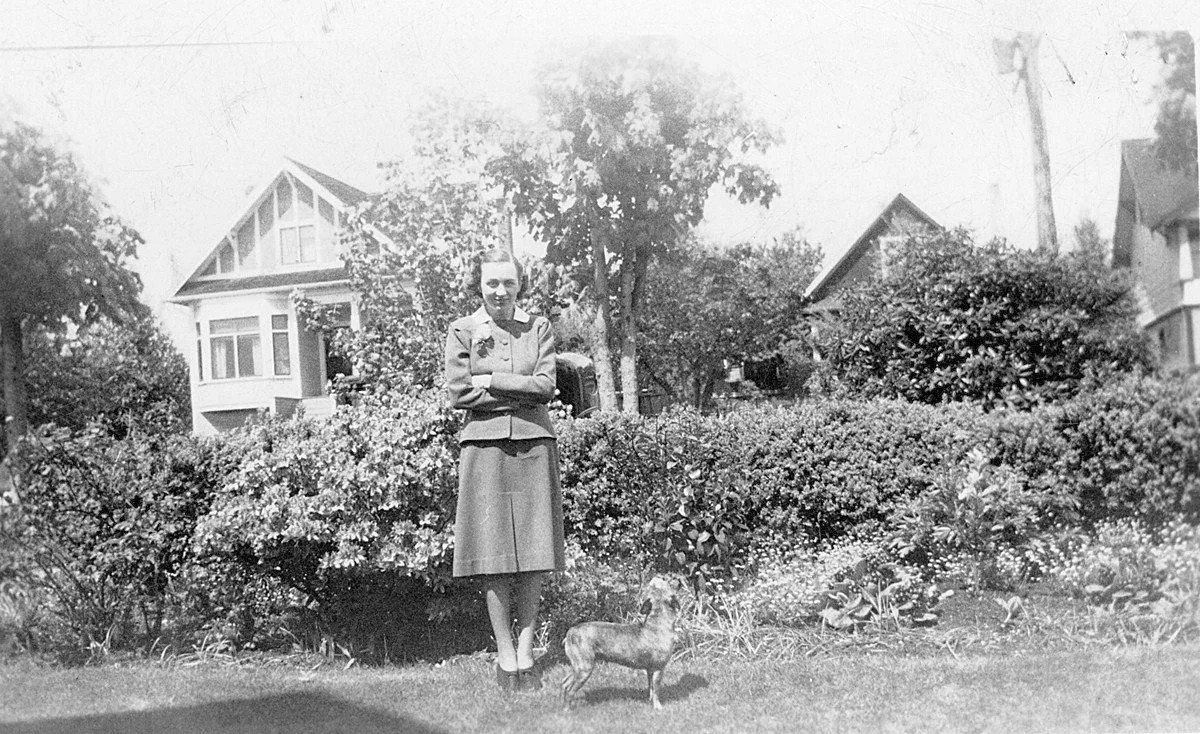
Miss Helen Peers in front garden of Peers home at 513 E. Keith. House at 508 E. Keith in background. 194-?, Inventory #8079. Courtesy of MONOVA, North Vancouver Archives.
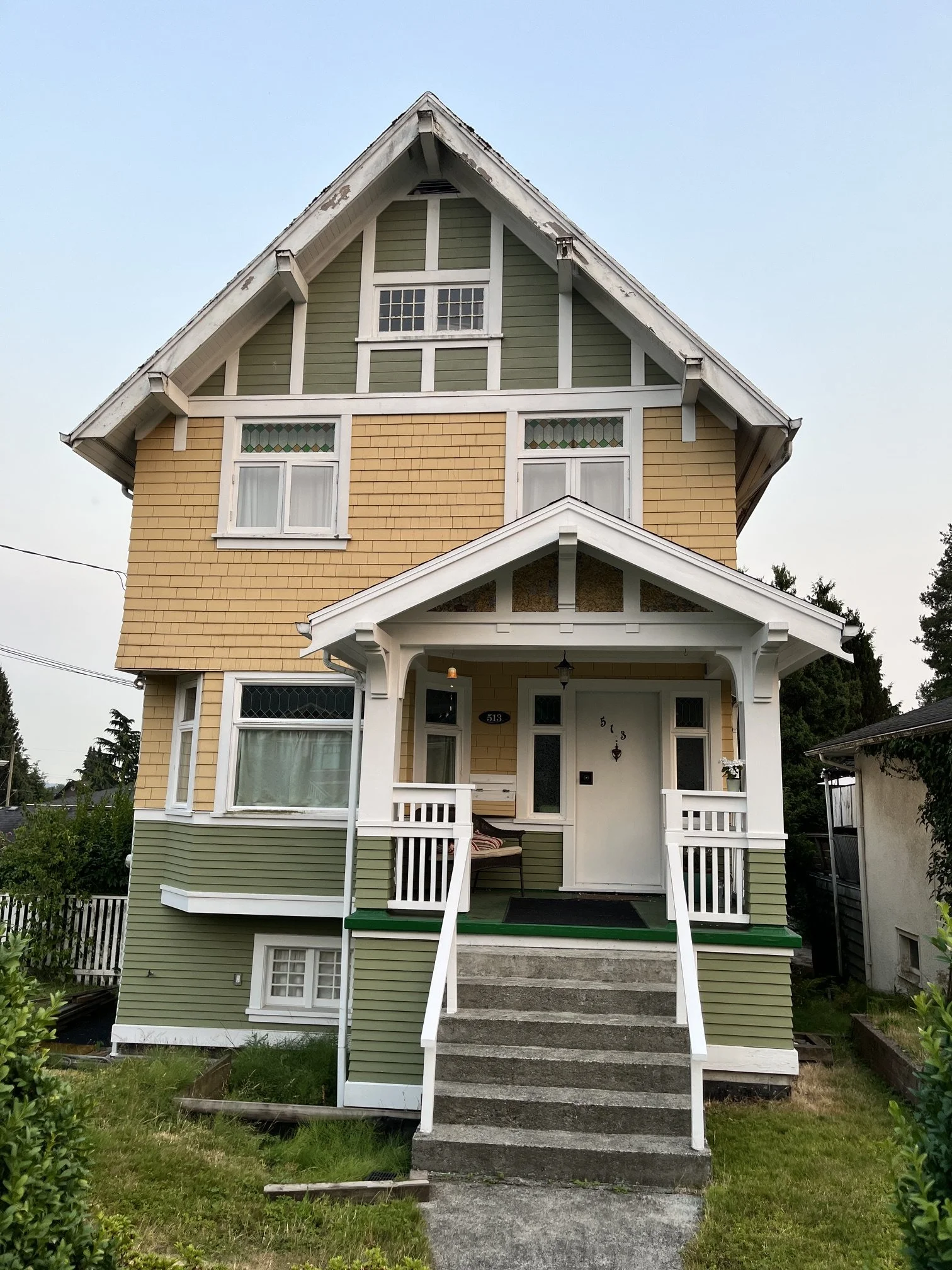
513 East Keith Road, North Vancouver, August 2026. Photo by Jennifer Clay.
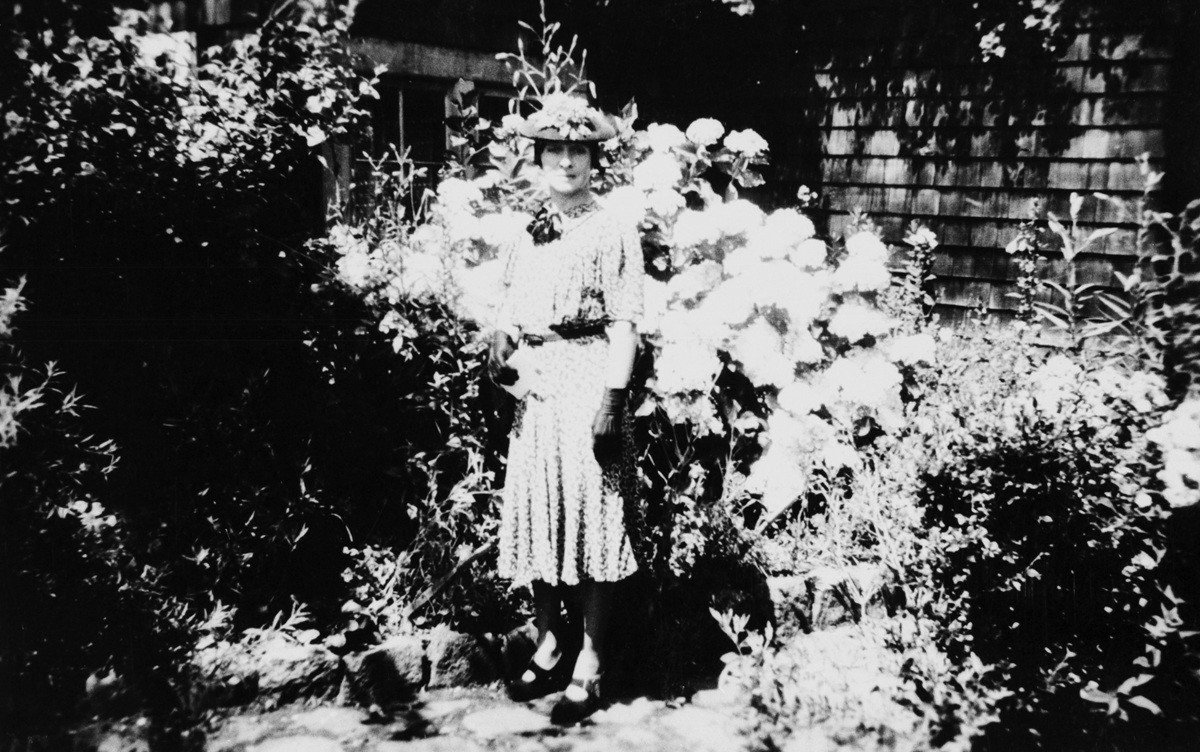
Mrs. Fern Stackhouse in her garden of 3802 St. Paul's Avenue. 1940’s. Inventory #12496. Courtesy of MONOVA, North Vancouver Archives.
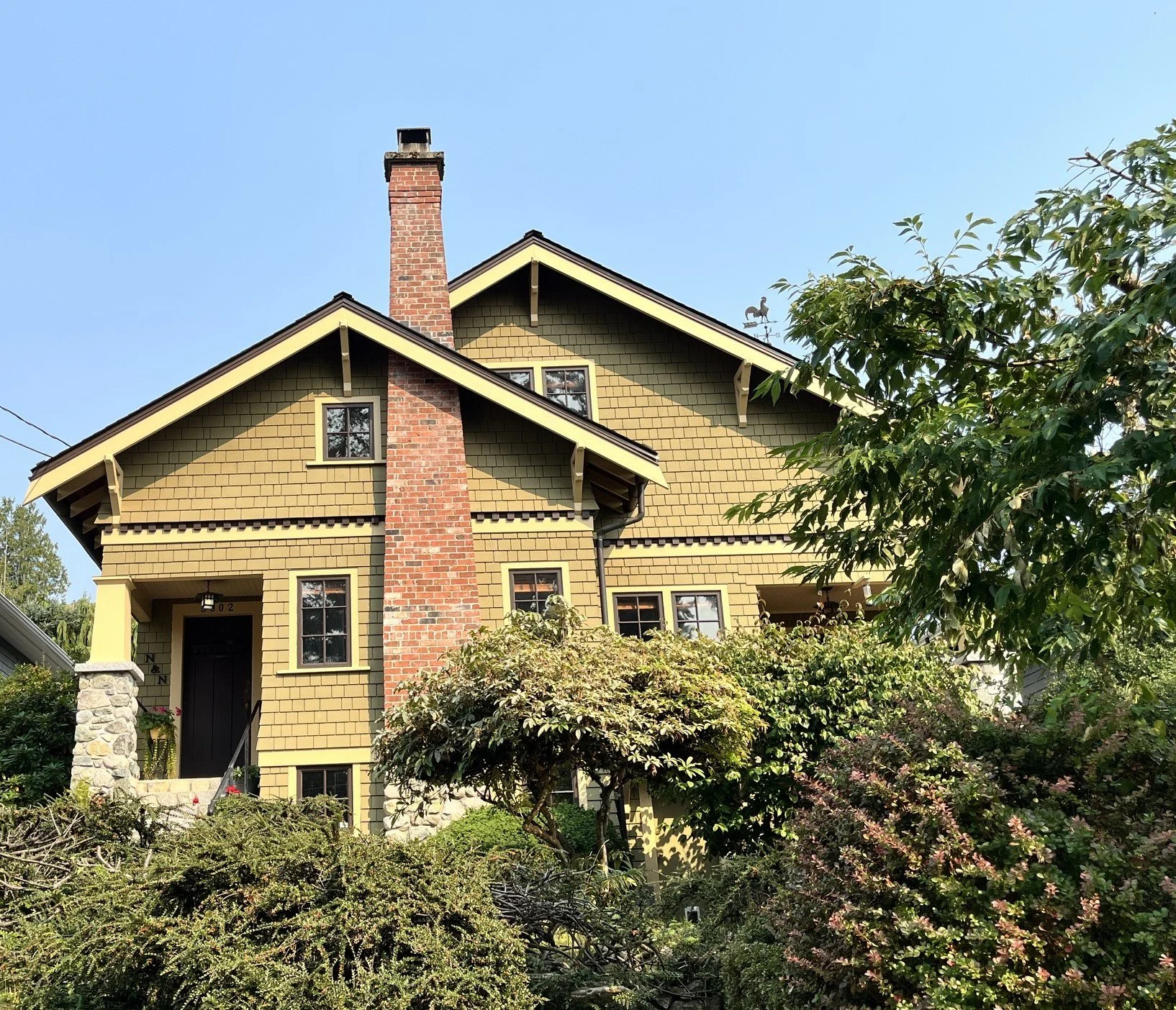
3802 St. Paul’s Avenue, North Vancouver, August 2026. Photo by Jennifer Clay.
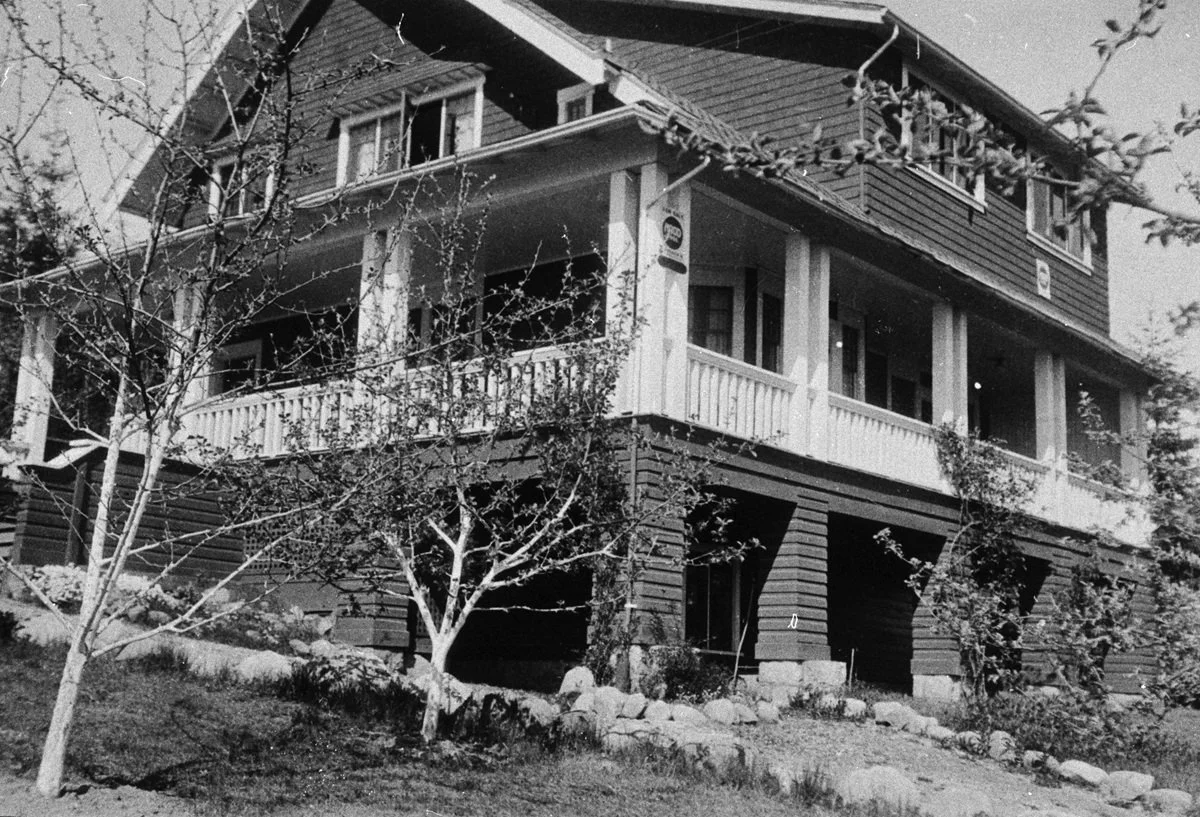
House at 430 Somerset St. with 2 of 30 orchard trees planted by Frances Green and Miss Ellen Whitfield, 1942. Inventory #8556. Courtesy of MONOVA, North Vancouver Archives.
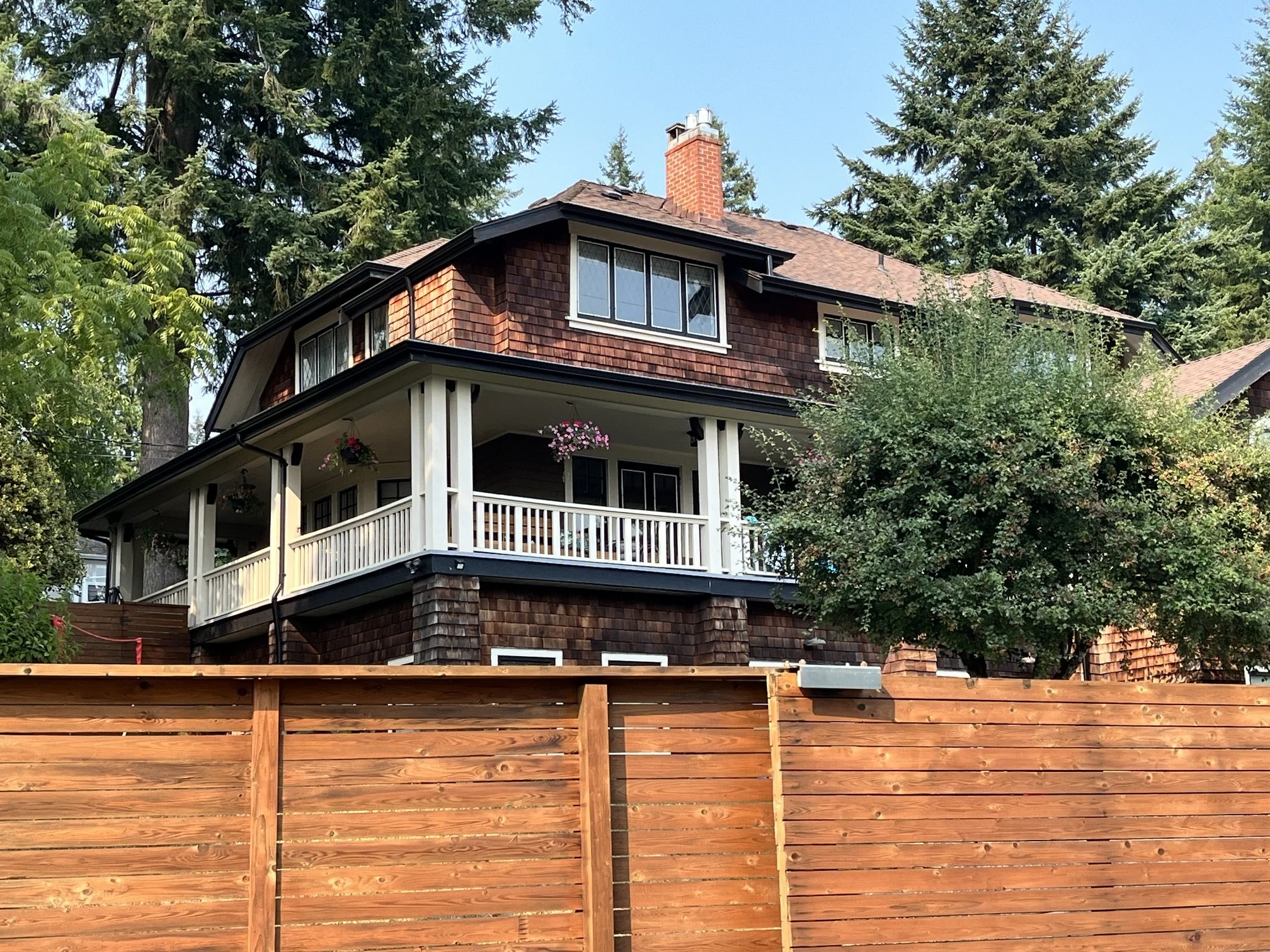
430 Somerset, North Vancouver, August 2026. Photo courtesy of Jennifer Clay.
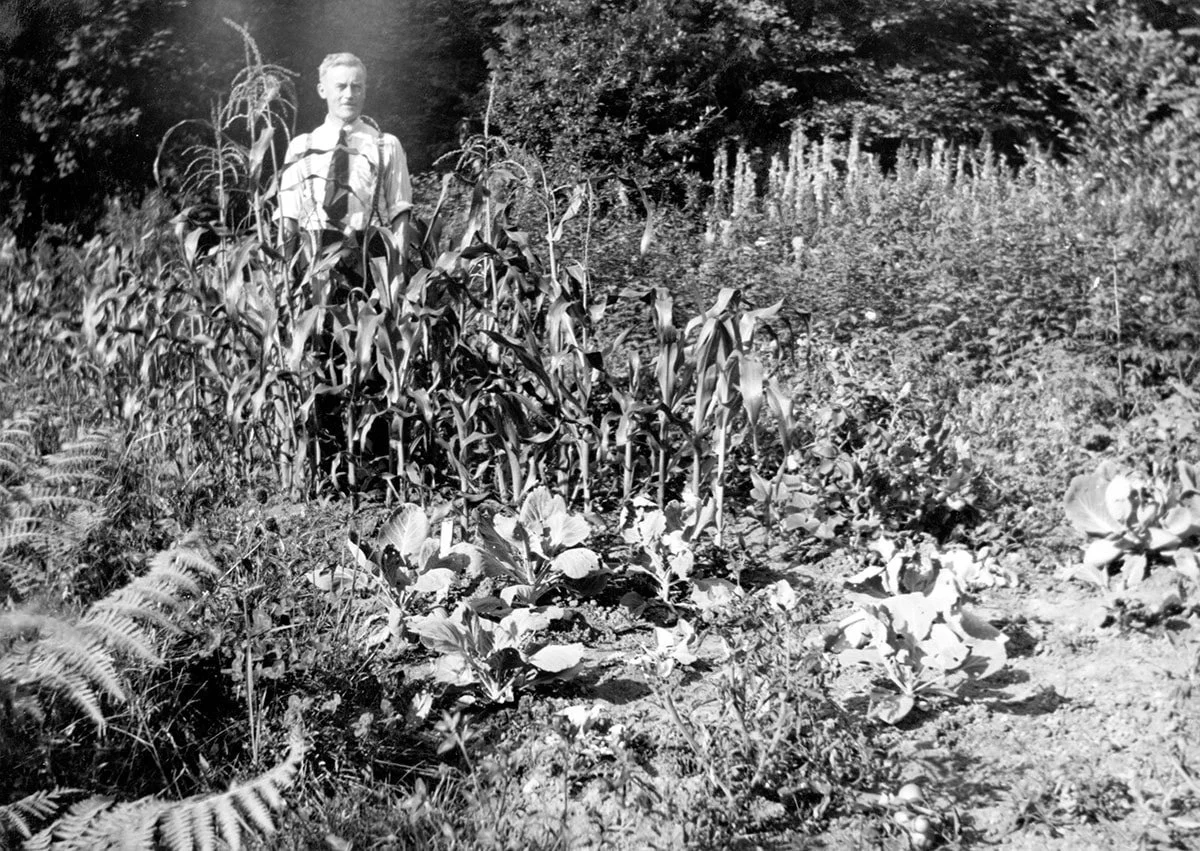
Man standing in a garden, possibly at the Black family home located at 648 Mathers Avenue, 1944-1946. Inventory #008.WVA.DAV. The original house at 648 Mathers is no longer there.
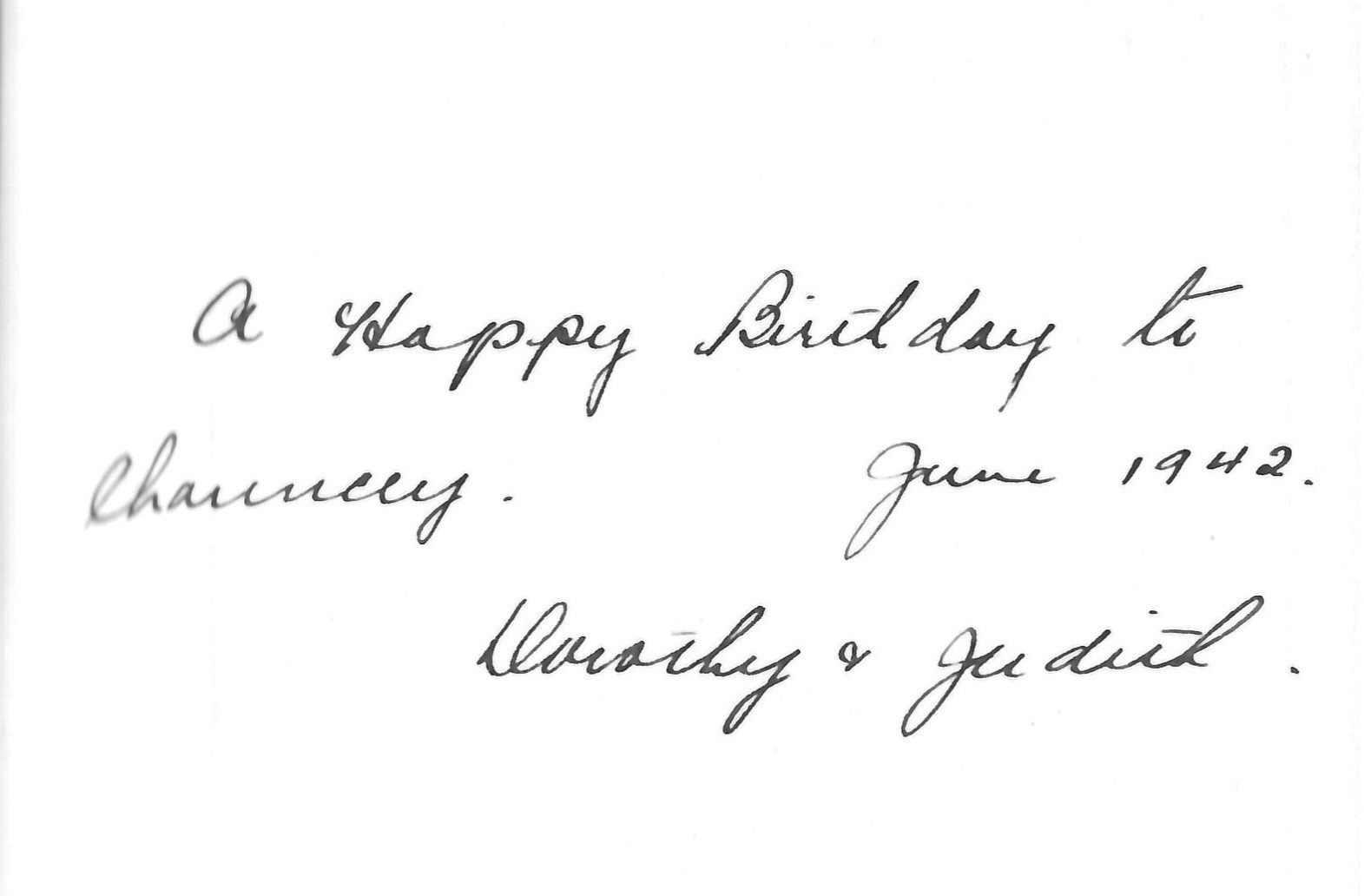
I hope you’ve enjoyed our garden blog! I’d like to close with a scan of the inside front page of the book. Not only are hardcover books becoming a thing of the past, but writing an inscription is also probably something most people no longer do. But I hope Chauncey enjoyed the book and became a better gardener as a result!
Except where indicated, text and images Copyright @ North Shore Heritage and Jennifer Clay. All rights reserved. Republication in whole or in part is prohibited without the written consent of the copyright holder.