If you live on the North Shore, chances are you have been to Lions Gate Hospital in some capacity. The hospital is a cornerstone of the community where lives start and lives end, and where sick and injured seek help, care and cure.
Situated in the heart of the City of North Vancouver (CNV), it is bordered by East 13th and 15th and St. George’s and St Andrew’s Avenues. Its doors are open to the medical needs of all demographics of the North Shore’s diverse population, from Deep Cove to Horseshoe Bay and the Sea to Sky corridor. As such, it is a significant hub of employment and volunteerism and is an anchor to surrounding medical offices and medical services. A recent aim of the CNV is to establish a new Health Innovation District near LGH.
Today's hospital is in the area of the first funded hospital on East 15th near St. Andrew's Avenue, which opened its doors to patients on May 15, 1908.
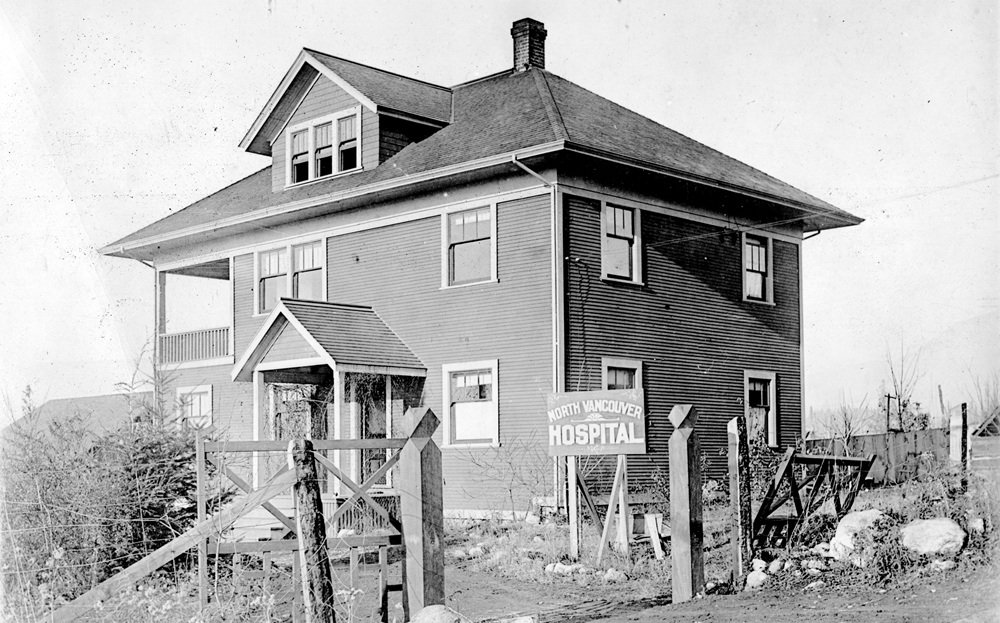
North Vancouver’s first hospital. Courtesy of MONOVA/North Vancouver Archives, Inventory No. 42
The Dawson sisters, Mina, Margaret and Jennie (nurses from Hull, Yorkshire) had taken it upon themselves to rent the house and set up a hospital. At the time, the CNV was less than a year old, having parted from the District of North Vancouver in June 1907. In early 1908, a hospital feasibility committee was formed; the members included aldermen from the City and the District and the Board of Trade. The committee and a subcommittee convened several meetings to discuss setting up a new hospital but realized acquiring adequate funding was a problem. The CNV council felt the financial outlay would be too expensive for the city to carry. Committee discussions continued, unaware that the three nurses had rented a house and opened a much-needed hospital. Upon discovery, the committee sent a sub-committee of two aldermen to meet with the sisters and to inspect the facility. Thus it became recognized as a community hospital, along with a $25 monthly funding allocation from each council. Patient capacity was 6 and ward patients paid $1 per day.
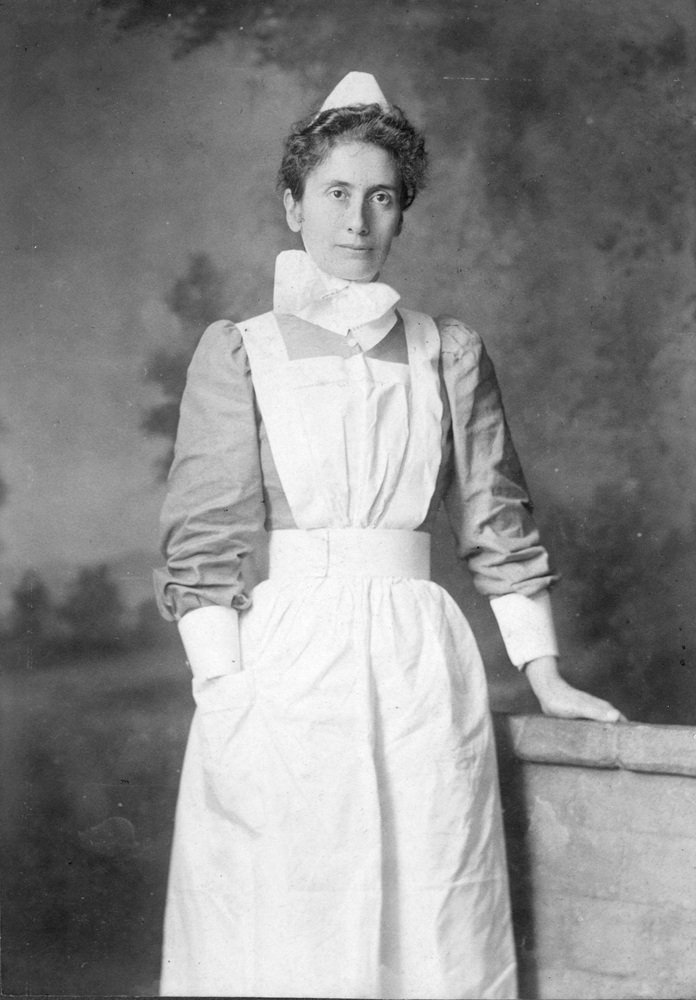
Miss Mina Dawson, 1905. Courtesy of MONOVA/North Vancouver Archives, Inventory No. 5549
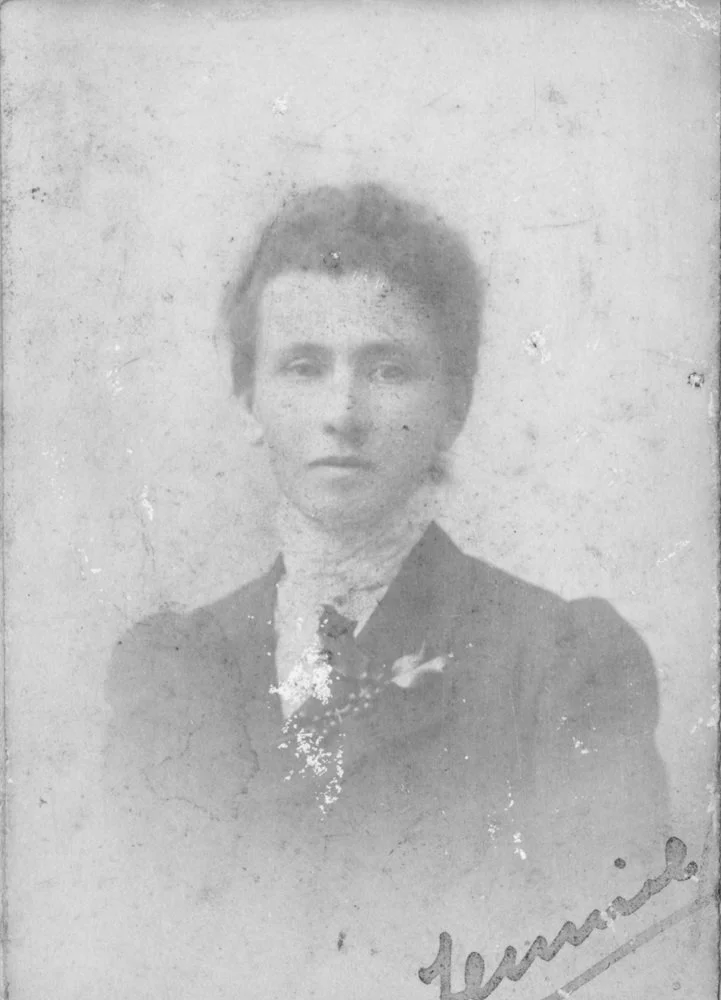
Miss Jennie Dawson, 1899. Courtesy of MONOVA/North Vancouver Archives, Inventory No. 5551
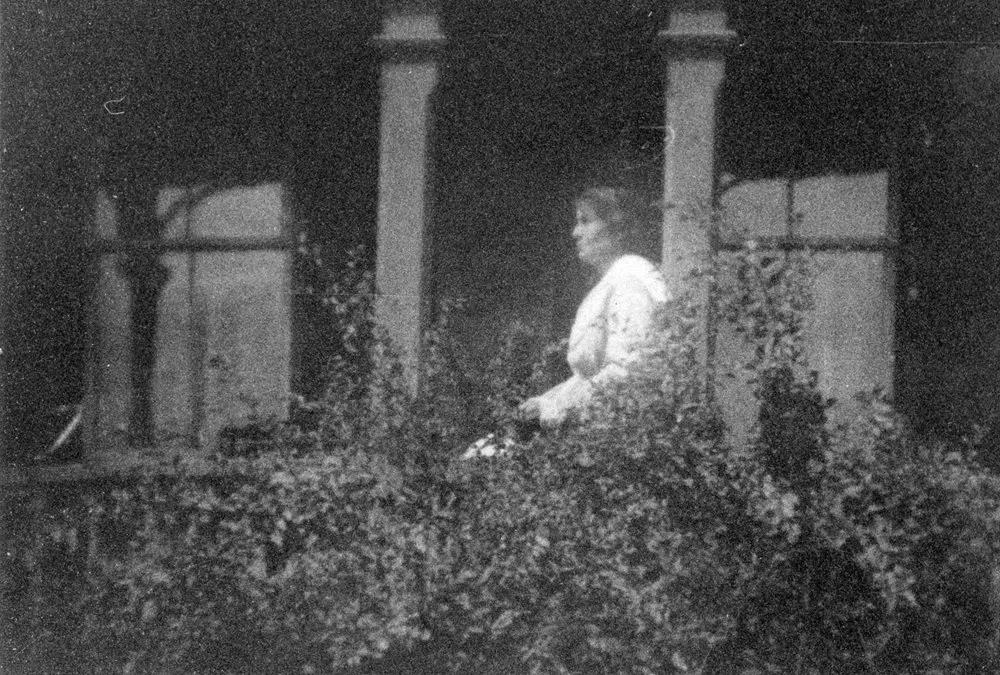
Mrs. Margaret Stephenson (nee Dawson). 1917, outside Harbourview Sanitorium. Courtesy of MONOVA/North Vancouver Archives, Inventory No. 5623
Prior to the hospital opening, residents mainly depended on a few family doctors who usually worked from home, making daily house calls with their black bag in hand, a surgical tool box that included syringes, stethoscopes, thermometers, tongue depressors and surgical tools for emergency use. Emergency surgery could be for tonsillectomy, appendectomy, gallbladder removal, broken limbs and the only suitable place for these procedures would have been the largest table in the home, usually in the kitchen or dining room. Newborns came into the world at home, assisted by a doctor or a nurse or a sister or a neighbour. And a newborn’s first crib was often a dresser drawer.
Drugstores were also preferred for medical help, with hospitals being regarded as a last resort due to the high risk of transmittable infections with no life saving antiseptics or antibiotics. McDowells was an early North Vancouver drugstore that opened in 1904. Ten years later, Harley Anderson started working at McDowell’s and then in 1918, he established Anderson’s Pharmacy at 15 Lonsdale, and then moved up the street to 273 Lonsdale. After his death, Harley’s son Victor took over. Anderson’s pharmacy is still open for business after 100 years. Now at 127 Third Street, it is operated by the present owner and pharmacist Maria Kwong, who took over the business from Victor in 1977.
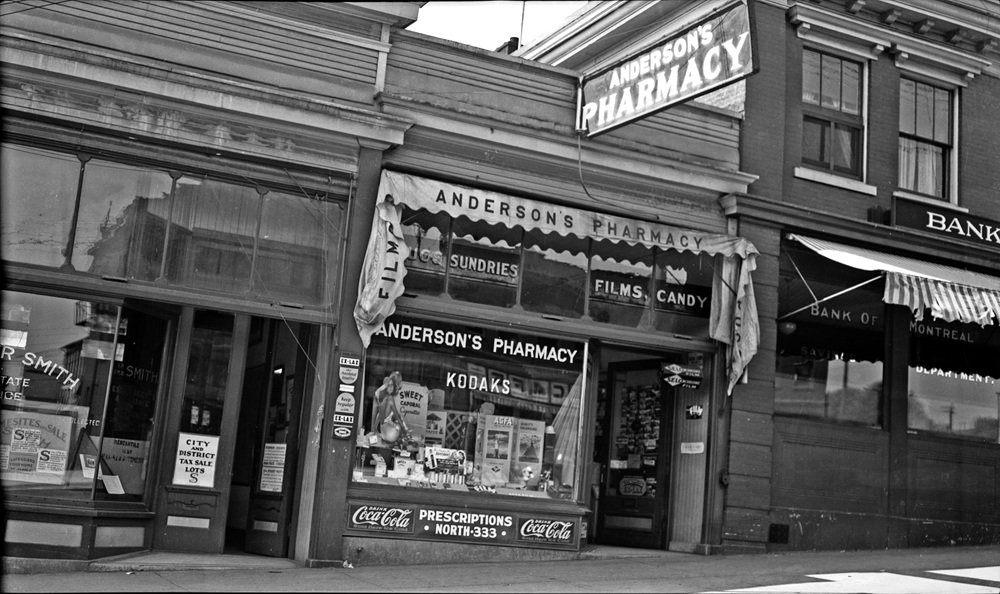
1938, Anderson's Pharmacy in Junction Block on the west side of Lonsdale below Esplanade. Courtesy of MONOVA/North Vancouver Archives, Inventory No. 6779
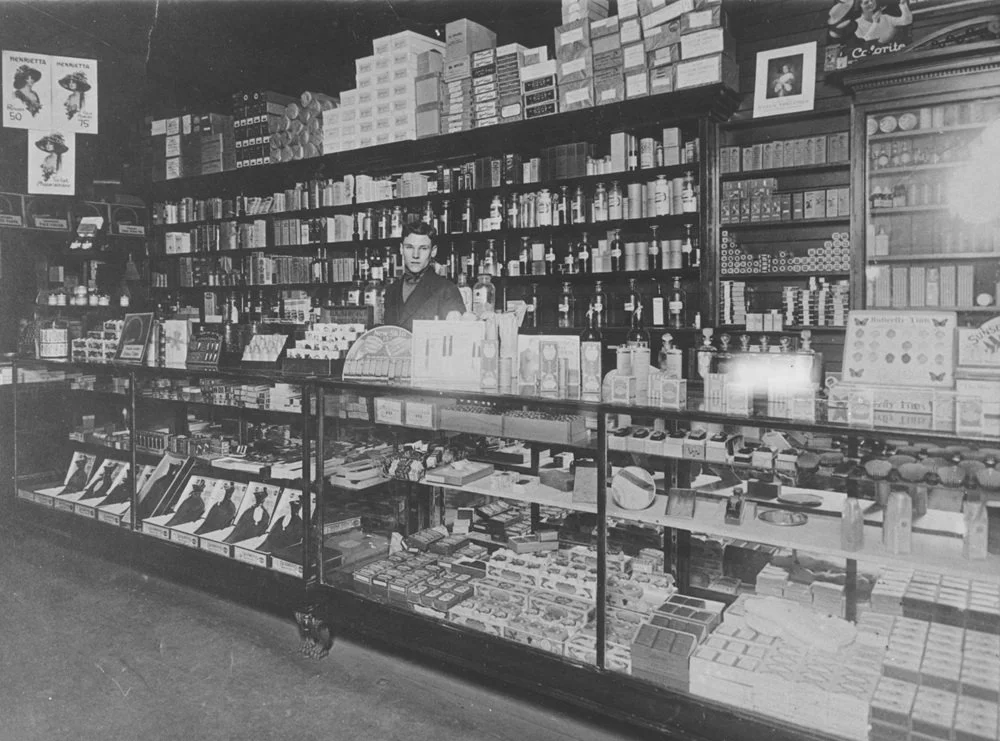
1919 interior of McDowell's Drug Store, Lonsdale & West 1st. Courtesy of MONOVA/North Vancouver Archives, Inventory No. 228
Before North Vancouver’s first hospital opened in 1908, hospital care entailed a ferry trip from either North Vancouver or West Vancouver to reach Vancouver General Hospital (VGH). And before local ambulances existed, methods to transport a patient to the ferry included whatever was available, from an undertaker’s horse and buggy to a wheelbarrow. In 1920, North Van resident and mountaineer, Phyllis Munday, founded St John’s Ambulance Brigade in North Vancouver.
Between 1908 and 1920, the world changed significantly with WWI, followed by the Spanish flu. On the North Shore, a third municipality formed, with the 1912 incorporation of West Vancouver adding a third reeve and council to the area. At that time, it was more efficient for the injured or ill in West Van to go by ferry to Vancouver for hospital care, as continuous, paved road connection between West Vancouver and North Vancouver did not exist. This meant that the new West Vancouver council was not on board to contribute funding to a hospital in North Van.
But before West Vancouver appeared on the map, the hospital on East 15th Street in North Vancouver had moved in 1910 to the new, purpose-built, 15-bed, North Vancouver Community Hospital at 151 East 12th. Again, it was the enterprising Dawson sisters who owned the building and who continued to operate the hospital under the same funding agreement with the two North Vancouver councils. Despite the convenience of a local hospital, some North Shore residents still preferred receiving treatment at Vancouver General Hospital. Most West Vancouver residents continued to use VGH rather than the North Vancouver facility. This is when the issue of fees became a larger question.
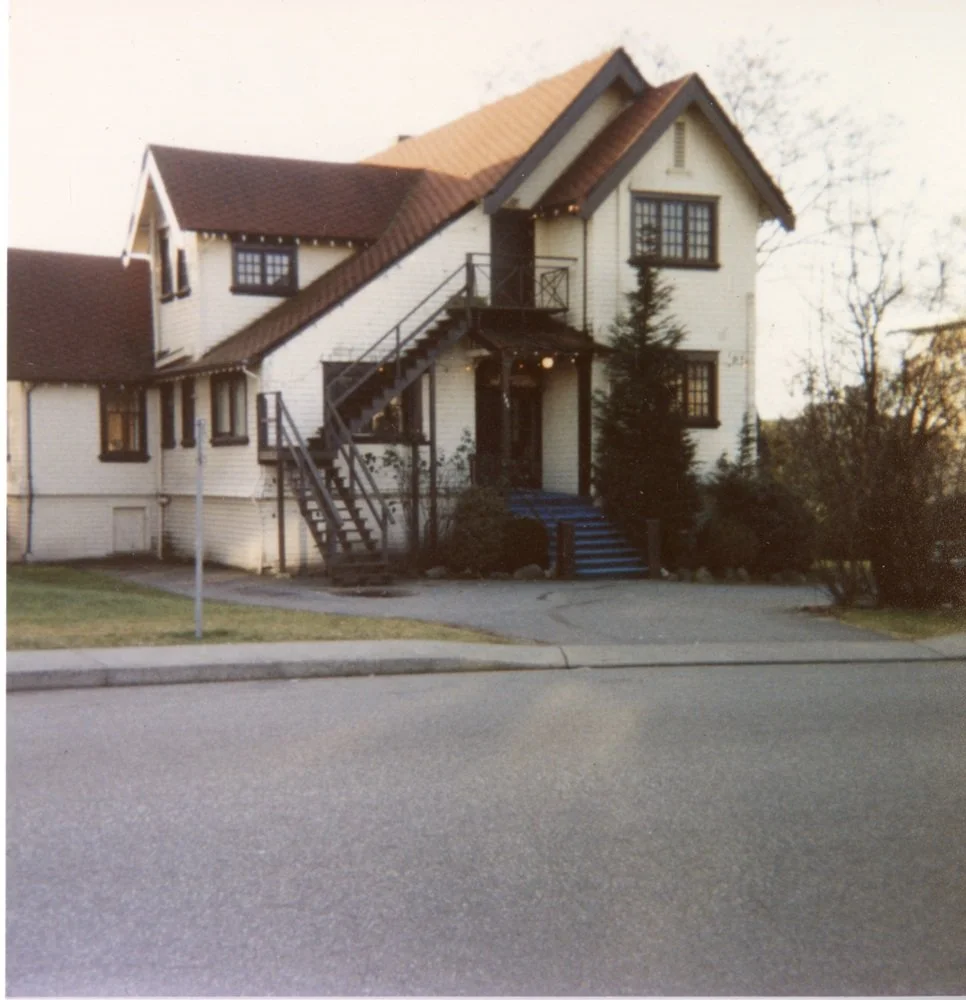
North Vancouver’s Second Hospital, 151 E. 12th St., later a nurses’ residence and then a private hospital. Courtesy of MONOVA/North Vancouver Archives, Inventory No. 9557
VGH needed payment for services rendered to North Shore patients. Simply put, if a North Shore patient did not pay for hospital treatment available in North Vancouver, then Vancouver would bill the North Shore municipalities. But this was not simple, as each municipal council held a different opinion about the payment issue. The DNV strongly opposed having to pay Vancouver. The CNV resented paying Vancouver for treatment that could, and they thought should, have been done in North Vancouver, but West Vancouver agreed that as their residents were using VGH, they would pay $2:50 per patient day as set out under the Hospital Amendment Act of 1913. The CNV and DNV were obliged to pay VGH under the 1913 Act, but the Act also allowed them to be recompensed by the patient. The complexities of health care funding started as soon as the B.C. Health Care Act was enacted in 1902, and health care funding complexities continue to this day.
Meanwhile, the Dawson sisters bought out two doctors who ran a sanatorium, Harbour View, in Hamersley House at 350 East 2nd Street, running it as an annex to the East 12th location.
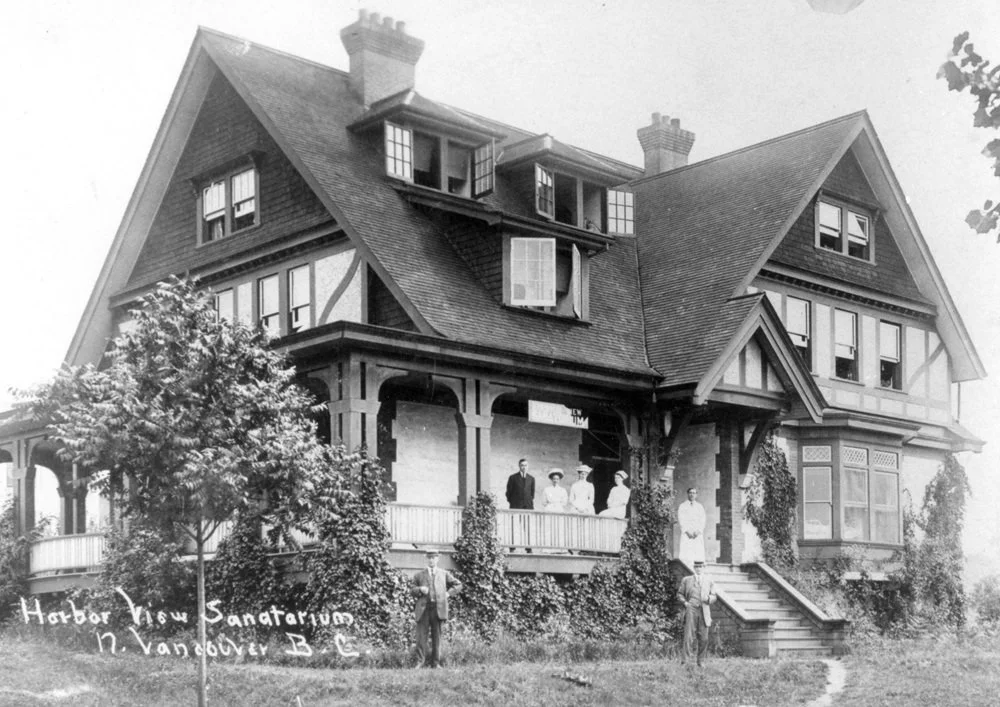
Harbour View Sanatorium, 350 E. 2nd St. Langton Lodge/Hamersley House. Courtesy of MONOVA/North Vancouver Archives, Inventory No 8935
This continued until 1918, when the Spanish flu epidemic, that killed over 50,000 Canadians, overwhelmed the system and there were not enough nurses available to continue. In addition, soldiers, injured or maimed by the brutality of WWI, required care and convalescence, further straining the fledgling medical system. To fill the gap, the dance pavilion in Mahon Park was temporarily converted into a large medical ward to accommodate soldiers sick with Spanish flu. “Built in 1915, it was a 75-by-36-foot dancing floor with a roof above. The field-engineers built outer walls, plus a cookhouse next door. They used this hospital for a few months.” In 1918, A recent widow and qualified nurse, Maude Schultz, converted her home, at the NW corner of Lonsdale and 19th, into Lonsdale Private Hospital and, for the next two years, provided needed medical, surgical, maternity and convalescent services.
In 1920, the Dawson sisters agreed to sell the East 12th hospital to the District of North Vancouver. During the 1920s, the North Shore population grew, increasing the need for a larger hospital or added facilities. Each municipality spent hours unilaterally and jointly, discussing funding and how to proceed with implementing expanded hospital care.
Should the current East 12th hospital be expanded or should plans be made to build a new larger facility? Where would the money come from? And where would a new hospital be located?
Voices raised concerns about there being three North Shore municipalities, citing known problems for financial agreement on the funding of medical, fire and police services. Although the formation of the three municipalities was fairly recent, some called for amalgamation to be considered, a suggestion that has occurred regularly until this day. The DNV pushed to purchase and expand the East 12th hospital in the CNV through a by-law plebiscite by the district electorate to agree to the purchase and expansion of the existing hospital. The by-law passed and work began on the new wing that was completed in 1921. The enlarged facility became the North Vancouver General Hospital.
During this period, there had been some opposition to expansion with preference for a new hospital. Both West Vancouver and the CNV appear to have favoured that route. However, West Vancouver was showing less interest and the CNV had not moved forward with a financial plebiscite for the required funding for such a project. And, the DNV did not wish to continue as the sole managers of the facility but were unsuccessful in finding a management replacement. The North Shore Memorial Hospital Society wanted nothing to do with the renovated building and declined to be involved. They were in favour of a new hospital. By the mid 1920s, the N.S. population was increasing because of the first bridge connection to Vancouver, the Second Narrows rail/road bridge. Subsequent population growth increased demand for hospital services, but it also increased the tax base, resulting in the possibility of funding for a new hospital. It was also pointed out that if the North Shore were to attract increased business and industry, improved and enlarged new hospital facilities would be essential. This time, both the DNV and CNV presented their electorate with a hospital plebiscite for funding that gained significant approval. West Vancouver did not take part in, or contribute to, this initiative to move forward with a larger purpose-built hospital. They did agree to an annual $1,000 grant, that some years later increased to $2,000, but not to the capital outlay.
By 1928, the CNV acquired a legal 50% interest in the proposed new hospital. In the same year, Scottish architect William Bow took on the project, and site clearing started on the 200-block East 13th, close to the Dawson sisters' first hospital on East 15th. With astonishing speed, by today’s timelines, the three-storey North Vancouver General Hospital opened its doors on May 29th, 1929. During the opening ceremony remarks, the Dawson sisters were acknowledged with appreciation for establishing the first two North Shore Hospitals. The East 12th facility became a nurses’ residence.
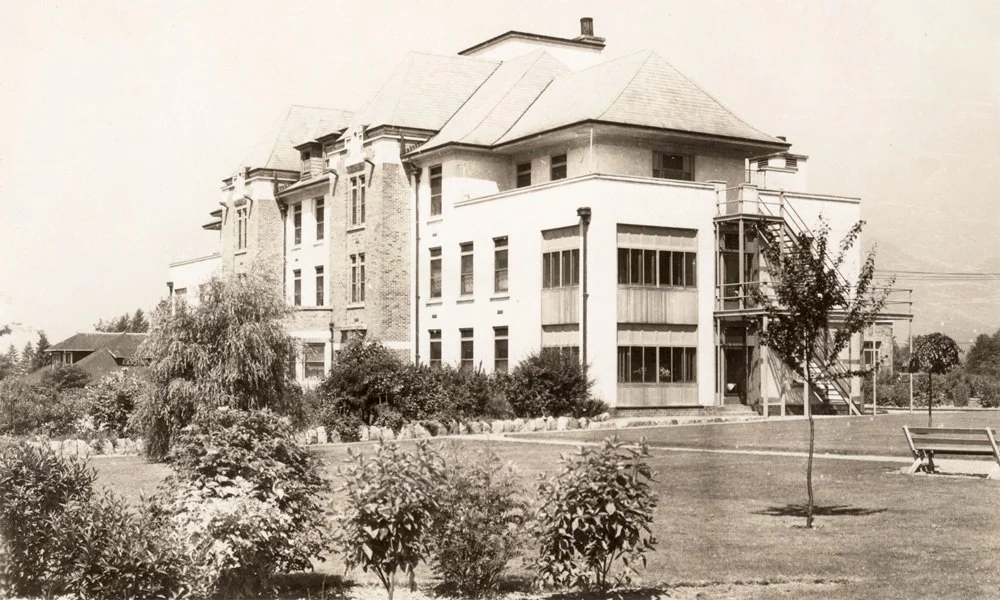
North Vancouver General Hospital, 228 E. 13th Street. Officially opened 29th May, 1929. Courtesy of MONOVA/North Vancouver Archives, Inventory No. PHC 10274
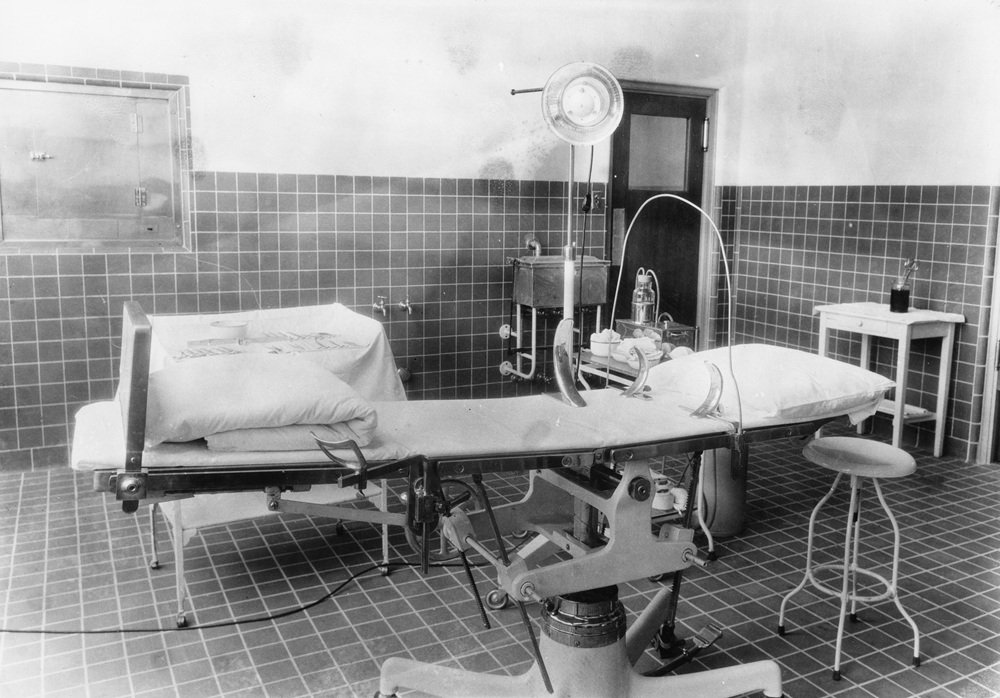
1930s Operating Room, North Vancouver General Hospital. Courtesy of MONOVA/North Vancouver Archives, Inventory No. 3494
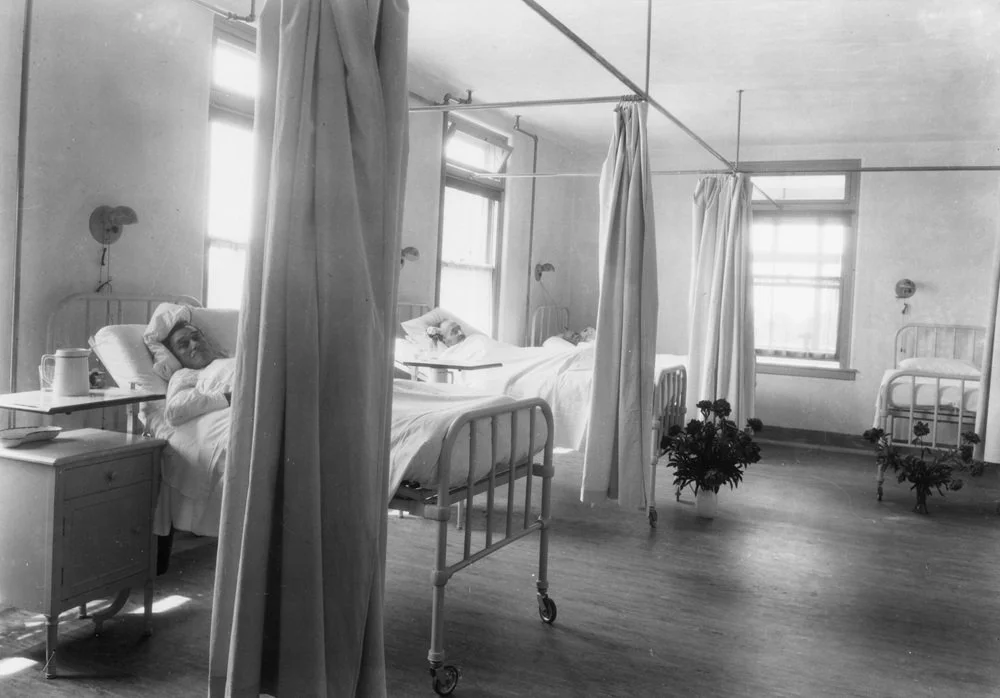
1930s public ward, North Vancouver General Hospital. Courtesy of MONOVA/North Vancouver Archives, Inventory No. 3490
Completion of the hospital was financially timely with the affluence of the 1920s fading as the world faced the Great Depression of the 1930s. Loss of employment for residents led to municipal taxes not being paid. That led to impoverished municipal governments, including the North Shore municipalities. It also meant that hospital patient bills were not being paid, and this led to a financial crisis for the new hospital that could no longer rely on local government funding. The North Vancouver local governments applied to the Provincial Government for financial aid. The refusal said, “the position of the North Vancouver General Hospital, as described, is unfortunate, but so many other hospitals in the province are in a similar position, and with the financial situation as it is at present, with so many calls upon the treasury, it is not possible for the government to come to their assistance”.
Receivership and bankruptcy now posed a threat. Bankruptcy hit both the district and city of North Vancouver in 1932 and Provincial court appointed a former Vancouver mayor, Englishman, Charles E. Tisdall, as commissioner to run them and balance the books. Hard times led to hard measures, as Tisdall let go of municipal workers, teachers, and hospital staff. The deficit burdened hospital narrowly avoided closure with staff working longer hours for less pay, including nurses.
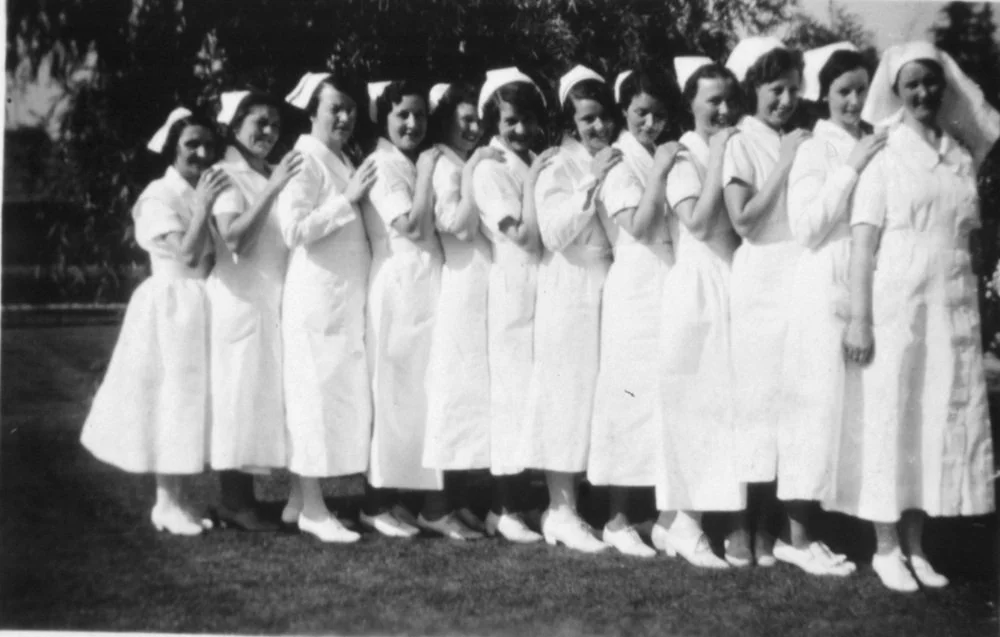
North Vancouver General nursing staff. Courtesy of MONOVA/North Vancouver Archives, Inventory No. 11402
Despite these measures, the hospital’s debt and unpaid patient bills continued to risk its existence. Tisdall pushed the Hospital Board to go after unpaid bills and while the liabilities were reduced rather than eliminated, it survived and in the late 1930s, to boost funds, a monthly sweepstake lottery started that continued until 1952. Tickets cost five cents with 55 monthly prizes. In 1936, former North Vancouver mayor, George Washington Vance, took over as Commissioner until his death in 1944 and in that year, the city regained its municipal powers, followed by the district in 1950. WWII had contributed to renewed prosperity for the CNV with the Wallace Shipyards production of wartime ships, transforming the area into an industrial hub that brought with it substantial tax revenues.
While the District and City had struggled financially throughout these years, West Vancouver remained financially buoyant because in 1931, their coffers were boosted dramatically by the purchase of four thousand acres by British Pacific Properties Limited, an area we still know as the British Properties. Essential to the successful development of the British Properties was the attached influx of one million dollars and also the construction of a bridge at first narrows. The First Narrows Bridge opened in 1938, but shortly thereafter, became known as the Lions Gate Bridge, with two concrete lion sculptures on the southern approach, inspired by the twin mountain peaks, known at that time as the lions. The new bridge opened up development of and prosperity for the entire North Shore, helping to ease the financial woes of the Great Depression. While the official title of the bridge remains as the First Narrows Bridge, the name Lions Gate started there and in 1961, when the next new North Shore hospital opened, it was named Lions Gate Hospital.
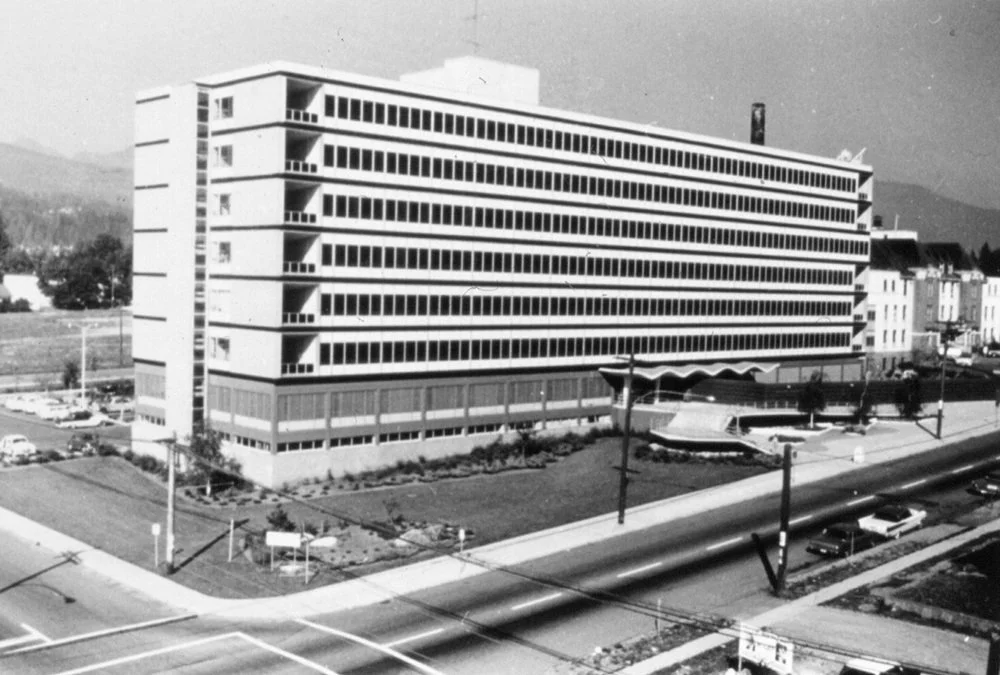
By the end of the war in 1945, the N.V. General Hospital was overflowing as it was operating well beyond capacity. It took many months of inter-municipal discussion to agree to the addition of two new wings which opened in 1948.
But as the population grew, the facility again faced overcrowding and the need for a new hospital became urgent. It took years of discussion by the three municipalities and other funding levels to commit to a new and larger concrete and steel seven storey building. Even deciding that seven would be better long-term than five storeys involved discussion. Eventually, two sites were considered for the new hospital, Grand Boulevard, or next to the existing N.V. General Hospital. The latter site was chosen. It is difficult to imagine where a Grand Boulevard site might have been.
Dr. Carson Graham, Chief of Medical Staff at N.V. General Hospital, was a driving force behind the planning and vision of the Lions Gate Hospital we have today. After 1961, the general hospital became known as the Activation Centre and housed both rehabilitation and mental health services departments. The building was demolished in 2017 to accommodate the new, purpose-built Paul Myers Acute Care Tower. In 2014, mental health services moved to the new, purpose-built Greta and Robert H.N. HOpe Centre at East 13th and St Andrews. The Jimmy Pattison Emergency Centre’s opening in 2009 doubled the size of the previous emergency centre. In 2010 the North Vancouver Hospice opened on East 14th, close to St Andrews and the Dawsons’ first hospital.
So, what became of the three Dawson sisters who in 1908 rented a house at East 15th and St Andrews and set up a hospital?
Jennie remained in North Vancouver after the sale of the East 12th hospital, dying in 1944 at age 87. Margaret (Dawson) Stephenson moved to Peterborough, dying in Toronto in 1937, aged 68. Mina took up private nursing at various locations, returning to England in 1934. She died there in 1956 at age 85. While some aldermen and reeves of the time have been honoured with a street or park name, it does not appear that the three Yorkshire nurses have ever been given any lasting recognition.
Recognition must be given here to the late Sally Carswell, who wrote The Story of Lions Gate Hospital, published in 1980, as her excellent book was a valuable source for this article. In covering the evolution of the hospital, her detailed and thorough research also follows the development of the North Shore and the three municipalities. I had the good fortune of meeting her once and have a copy of her book signed for me by the author. The book can be found at all three North Shore libraries.
SOURCES and ACKNOWLEDGEMENTS
Special thanks to Georgia Twiss, Reference Historian for the Museum & Archives of North Vancouver (MONOVA) for photos and support.
The Story of Lions Gate Hospital, Sally Carswell, 1980. 249 pages
C.N.V. Council Minutes Archive
North Shore News
https://www.historicplaces.ca/en/rep-reg/place-lieu.aspx?id=2466
George Szasz, CM, MD. https://bcmj.org/blog/down-my-medical-memories-lane
The City of North Vancouver signed a MOU … to advance the advancement of a “health innovation district” in Central Lonsdale. https://www.nsnews.com/local-news/city-of-north-vancouver-signs-mou-with-multiple-organizations-to-advance-health-innovation-district-12474263
Mahon Park dance pavilion, https://monova.ca/wp-content/uploads/2018/01/September-single-page-web-email-version-1.pdf