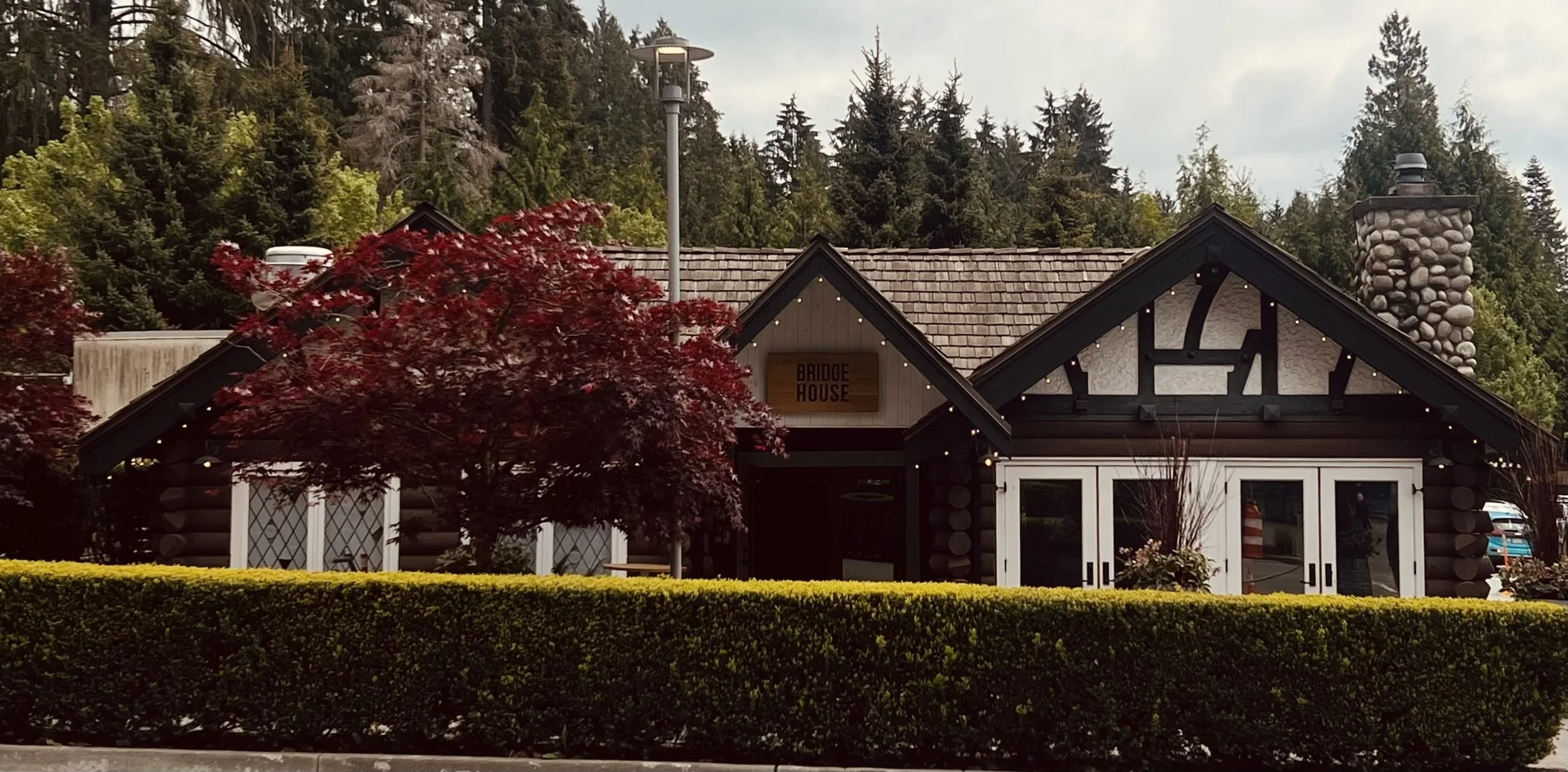
In February, I published the first part of the McEachran House story, Romancing the Rebbecks, which focussed on the somewhat unusual romantic relationships Elizabeth (Lili) Rebbeck and her daughter had, and how they were tied to the Capilano Canyon buildings.
There were so many stories related to this home that I had to break the blog into two parts.
This second part will focus on stories that have to do with the house itself, after it was no longer occupied by the McEachran family.
Here’s a little summary in case you missed the first part:
The unusual part of the romance story is that Lili married a man her daughter’s age, Archibald McEachran, and her daughter, Lilette, married a man her mother’s age, Edward Mahon.
Edward Mahon owned the Capilano Suspension Bridge and surrounding buildings. He was a good friend of Elizabeth’s late husband, James Knight Rebbeck, and after he passed, to help her out, Edward hired her to run the teahouse at the suspension bridge, where she fed tourists and local workers. Edward was asked by Rebbeck to look after his wife and daughter, and it was assumed he would marry Lili, but instead he married her daughter Lilette. They had a son, Bryan, and lived in Vancouver.
Lili and a young local worker, originally from Scotland, Archibald (Mac) McEachran, fell in love after they met while she served him regularly at the teahouse. They lived in a wooden house at the canyon, but Mac promised her a home of their own, and eventually made good on it years later, in the mid 1930s, building a quaint log home across the street from the bridge which is now 3650 Capilano Road. The home had a very storybook look to it and has become an iconic part of the area for many years now.
The second part of the story begins with the sad passing of Lili McEachran. She was in her early seventies by the time the house was finished. She was very excited for it to be finished and was following its progress with bated breath while Mac worked on it. Just as it was completed, she fell ill with a heart problem and passed away before she could live in her new home with Mac.
Her story doesn’t necessarily end there, though. There has been a woman with Lili’s description sighted for years around the McEachran home and in the basement. One story reported by the North Shore Outlook in 2006 tells of a teen named Meredith who was working for her friend Tara’s father around 1989 in the basement of the restaurant washing linens. She’d been told there were some strange goings-on at times and was a bit nervous. Tara said she’d check in periodically, so when someone came down the stairs and asked “What are you doing”, Meredith assumed it was Tara for a moment until she turned around and saw a woman in 1920s clothing with a disheveled bun. The woman disappeared and Meredith screamed. Tara came running, and after she was told what the woman looked like, pulled Meredith into her dad’s office and showed her a picture of Lili. It appeared to be the very same woman she’d seen! Many other staff have reported seeing her as well over the years. After waiting so ardently for the house to be finished, only to not live long enough to live in it, it seems she may have found a way to do that post-mortem.
It seems there may be other ghosts, but I haven’t found details yet. Maybe that will be its own post when I find out more!
Mac had a daughter from a relationship he had had before he moved to Canada. His daughter had moved to Canada when she was a teen, years prior to Lili’s passing, and she and Mac moved into the home together.
Mac took over running the Suspension bridge from Edward after Lili’s death and was its proprietor until 1945 when he sold it. He stayed in the home a few more years, then moved to California with his daughter in 1948 and lived there until 1965 when he re-married and died, tragically, on his honeymoon when he fell off a horse in Mexico. His daughter remained in California until her death in 1997.
Mac sold the home and the bridge property in 1948 to Henri and Younette Aubenau, who took over as proprietors. Henri, a French-born Vancouver restaurateur, also bought and sold much of the Sentinel Hill area and developed some of his lands. He also owned the Capilano Suspension Bridge and adjacent properties from 1945-1953. Henri was listed at the address until 1960, having retired in 1952. Sadly, Younettem his wife of 29 years, died in 1953, so they didn’t get to enjoy their retirement years together. Aubenau Crescent in West Vancouver was named after him, and Younette Drive, a short drive away, was named after his wife.
Helmut F Petrak and his wife, Anne J, are listed as the next owners of the home for only 2 years. Helmut was listed as manager of Trader Vics, a legendary Polynesian style restaurant and tiki bar that ran out of the Westin Bayshore Hotel in Vancouver from 1961 until the late 1990s.
From 1963-1964 a clerk at the Pacific Press, Anne Stringer, lived in the home. The following year, it was already vacant, but by in 1966, John Wann bought the property. He lived there until 1975 and opened the Chelsea Restaurant. It seems to have closed around January, 1976, as I saw close-out sale ads by the restaurant. I found it intriguing that there were no ads promoting the restaurant. This makes me wonder if the Capilano neighbourhood from the mid 1960s to mid-1970’s was still quite a small town, and was able to sustain itself on word of mouth alone.
I found a Vancouver Facebook page devoted to Vancouver restaurant history and the various restaurants that occupied the home were discussed, including the Chelsea. It sounded like it was very important to the neighbourhood! There were comments about it being someone’s mother’s favourite restaurant, and she had gone every Wednesday for years with her friends.
Someone else mentioned that when she and her sister had visited North Vancouver as kids, their aunt would take them to The Chelsea and it felt very special. It seemed like it was a well-cared for place with great food, somewhere than wasn’t ballgown fancy, but a place that people would go to when it was a special occasion or when they wanted to treat themselves.
There wasn’t much of a lull for the building after the Chelsea closed in early 1976, as there were already ads in the paper by the next restaurant owner, looking for staff for a magical new venture, The Hobbit House. It appeared to open around April of 1976 by Paul Berretoni. This restaurant capitalised on the warm log interior and wood-burning fireplace to add to the feel of the Middle Earth inspired restaurant. It was fun, themed and cosy. The walls were covered in Middle Earth maps and books by Tolkien, and the food was inspired by the Hobbit book as well.
I saw in that FB restaurant chat that they made fondue, which was very popular, and one past patron had commented that they had bought it on a date because it was the cheapest thing on the menu!
There were ceramic mugs you could pay for and take home if you liked the one you were served, and these were, apparently, quite coveted.
There was also regular live music, and events were held there. As a musician who really appreciates these kind of venues, it warmed my heart to hear about Helen Frost’s experience. I saw a picture of on that FB page playing guitar, and I asked her if she’d share some of her experiences playing there. She shared this:
“I have such fond memories of singing at The Hobbit House, and would be happy to share them with you. I sang there a few nights a week from 1979 to 1982 I believe. A friend of mine named Rob Alexander worked as a waiter there and he recommended me to the owners as I’d worked as a musician for a number of years. I remember meeting people from all over the world because the Capilano suspension bridge across the street was such a big tourist attraction. It was a really busy spot, and there were always a lot of regular diners too as the Hobbit House was so charming”
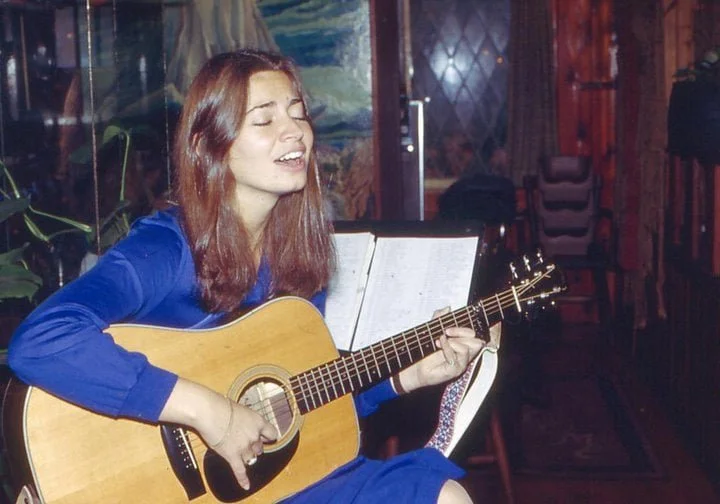
Courtesy of Helen Frost
Another member of the FB group, André Tardif, had worked at the restaurant briefly and had posted great photos of the menus. He has given me permission to post them here and I’m grateful as they’re wonderful! A very fun fact about the menu I discovered in a 1978 copy of the Vancouver Sun was that it won second prize in 1978 for a North America-wide menu design contest! I didn’t even know there was such a thing! What looks most delicious to you on the menu? I’d personally order Dwarf’s Delight.
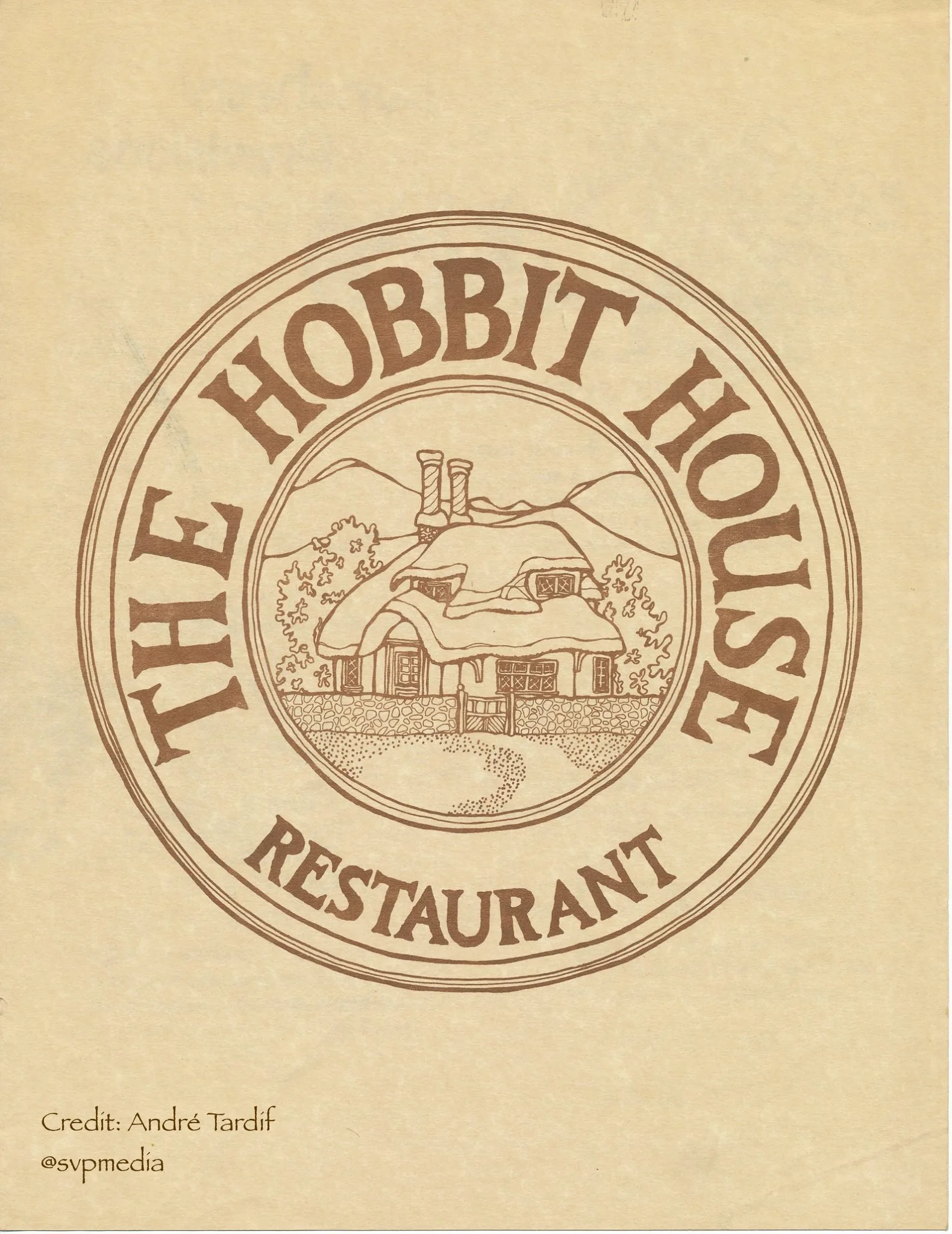
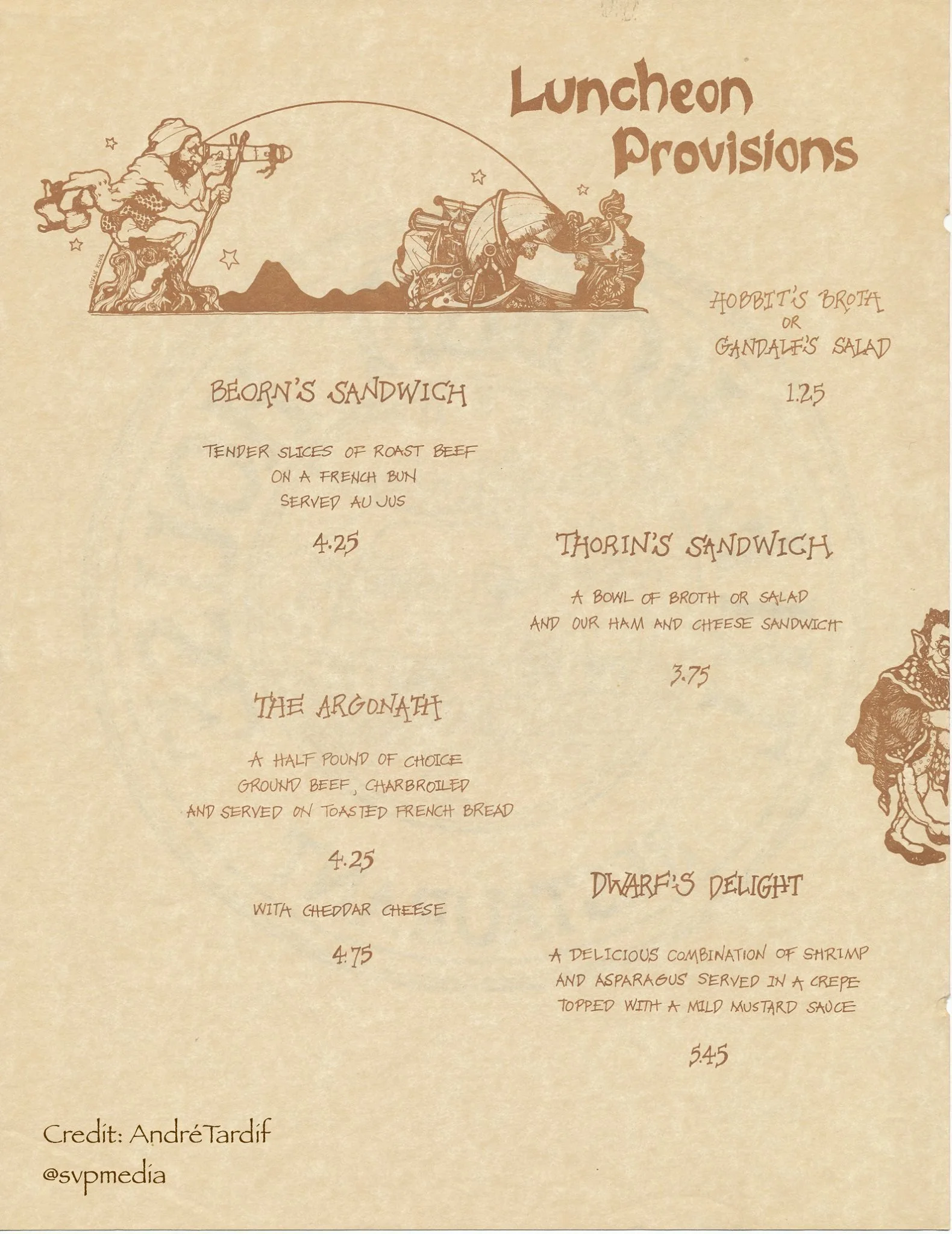
I wish the Hobbit House was still in operation as it really seems like my kind of place! It was a much treasured part of the community while it was open and has left many warm memories with people. But it was not to last forever, although it did operate for over 10 years. In 1988, it closed its doors as a Middle Earth refuge and started a new life as the Bridge House.
The Bridge House Restaurant, although quite different, also had a lot of great things going for it. The 80-seat restaurant had the crackling fireplace in the winter, garden seating in the summer and heated patio, and boasted market fresh West Coast Cuisine.
It was quite popular, I gather, because I found a newspaper ad from its first year in operation looking for more staff to help keep up with business.
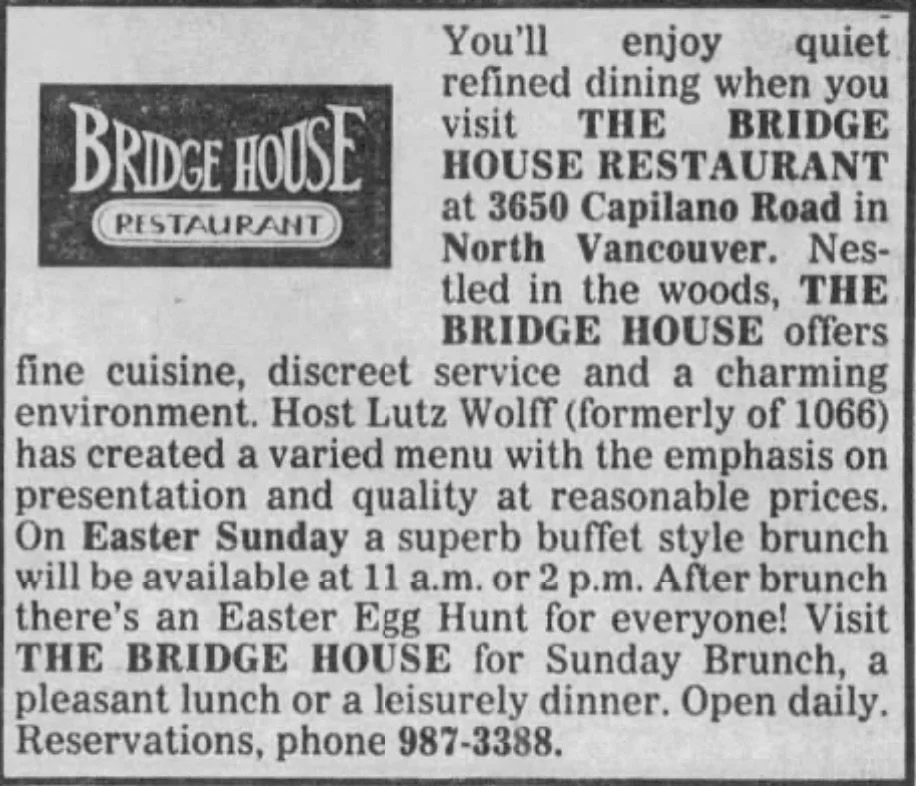
Courtesy of The Province, March 25, 1988 from newspapers.com
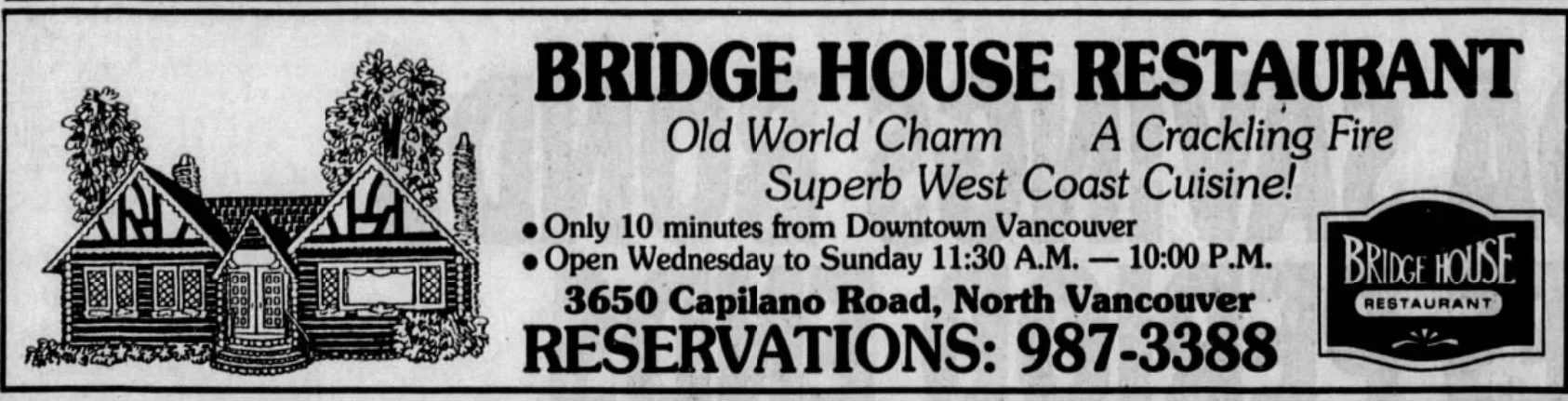
Courtesy of the Vancouver Sun, Oct 31, 1990 from newspapers.com

Courtesy of the Vancouver Sun, July 11, 1991 from newspapers.com
The Bridge House was a place where many happy memories were made, but there is one story that is not so happy; It happened to be the site of a famous police stand-off and arrest following the kidnapping of two women who were held in the forest in North Vancouver at make-shift camps. I won’t get into all the sordid details here, but in short, the kidnapper tried to kidnap a third woman, an employee at the Bridge House who was closing down the restaurant for the night and taking out the trash, when she was assaulted. She fought off her attacker and managed to trip the silent alarm and summon the police. A huge stand-off ensued with the eventual capture of the kidnapper. The two young women at the camps were found and rescued.
The Bridge House ran for many years and was eventually purchased by Capilano Group, a company owned by Nancy Stibbards, long-time owner of the Suspension Bridge (who had bought and taken it over from her father, Rae Stibbards). I haven’t been able to find a date for the change over, but eventually it became a cafe rather than a restaurant. The cafe closed recently, but the building is currently being used as an overflow ticket office as well as providing extra washrooms during the busiest times of the tourist season.
After years of being a place that provided food, for now, that long run is over.
I went yesterday to take some current photos and it was locked up, but just as I was about to leave, after struggling to get some interior photos through the highly reflective windows, a staff member happened by and let me in to take a few photos.
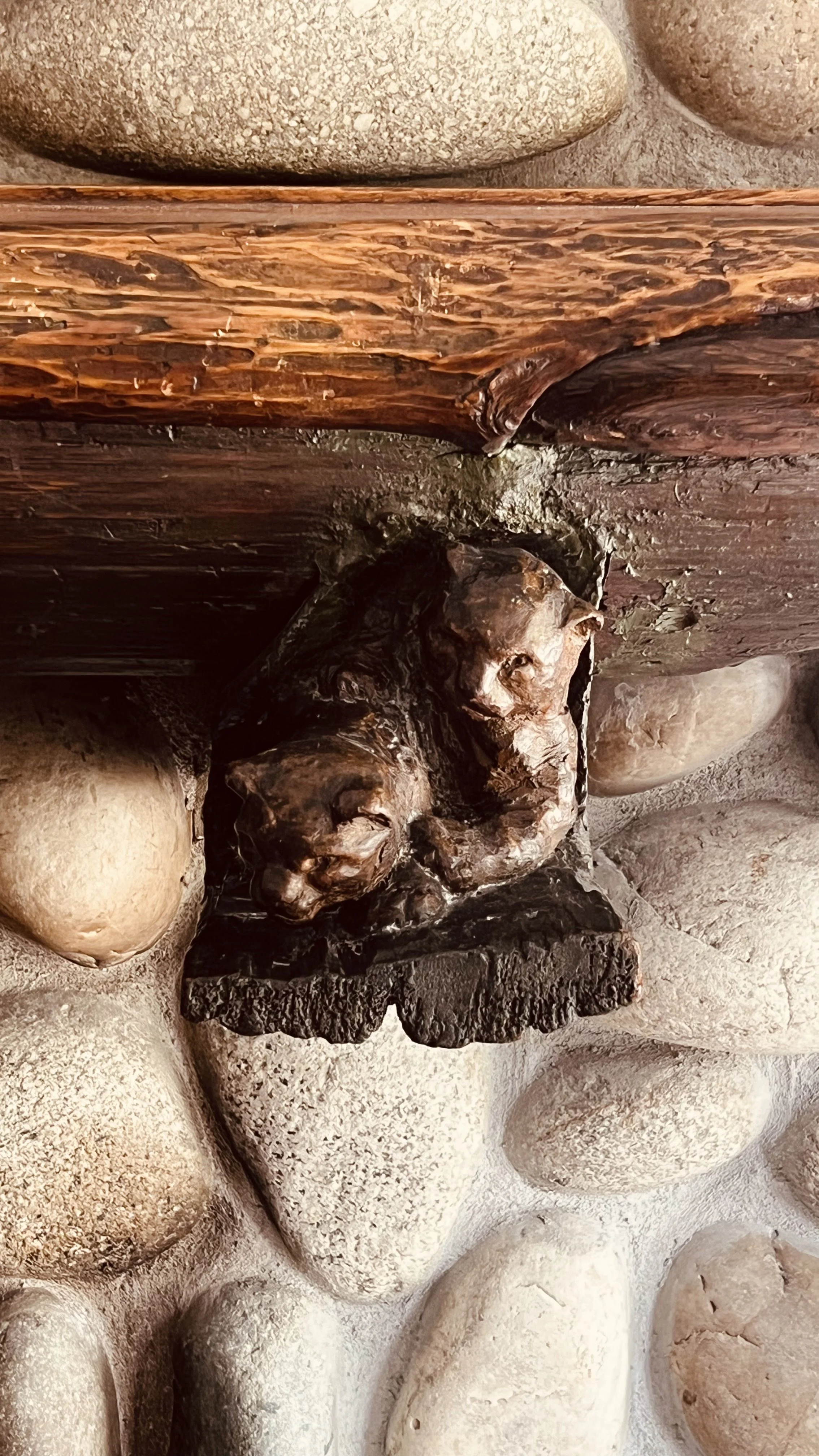
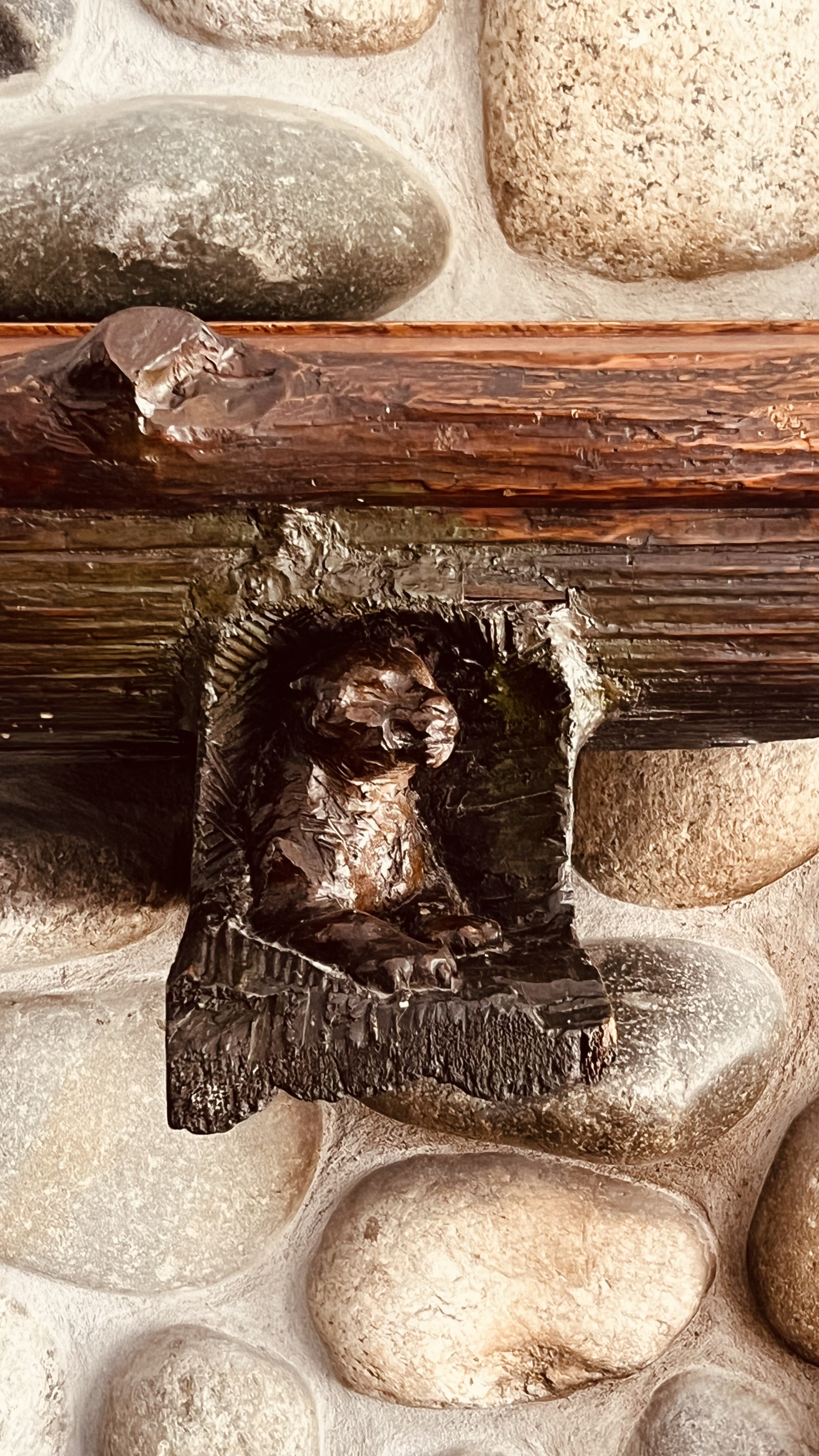
The fireplace, I didn’t realise before, has the sweetest little bears carved into it! I wonder if Mac carved thee himself or hired someone? He had been a forest ranger at one time. The rocks look like river rock which makes sense being in the location it is!
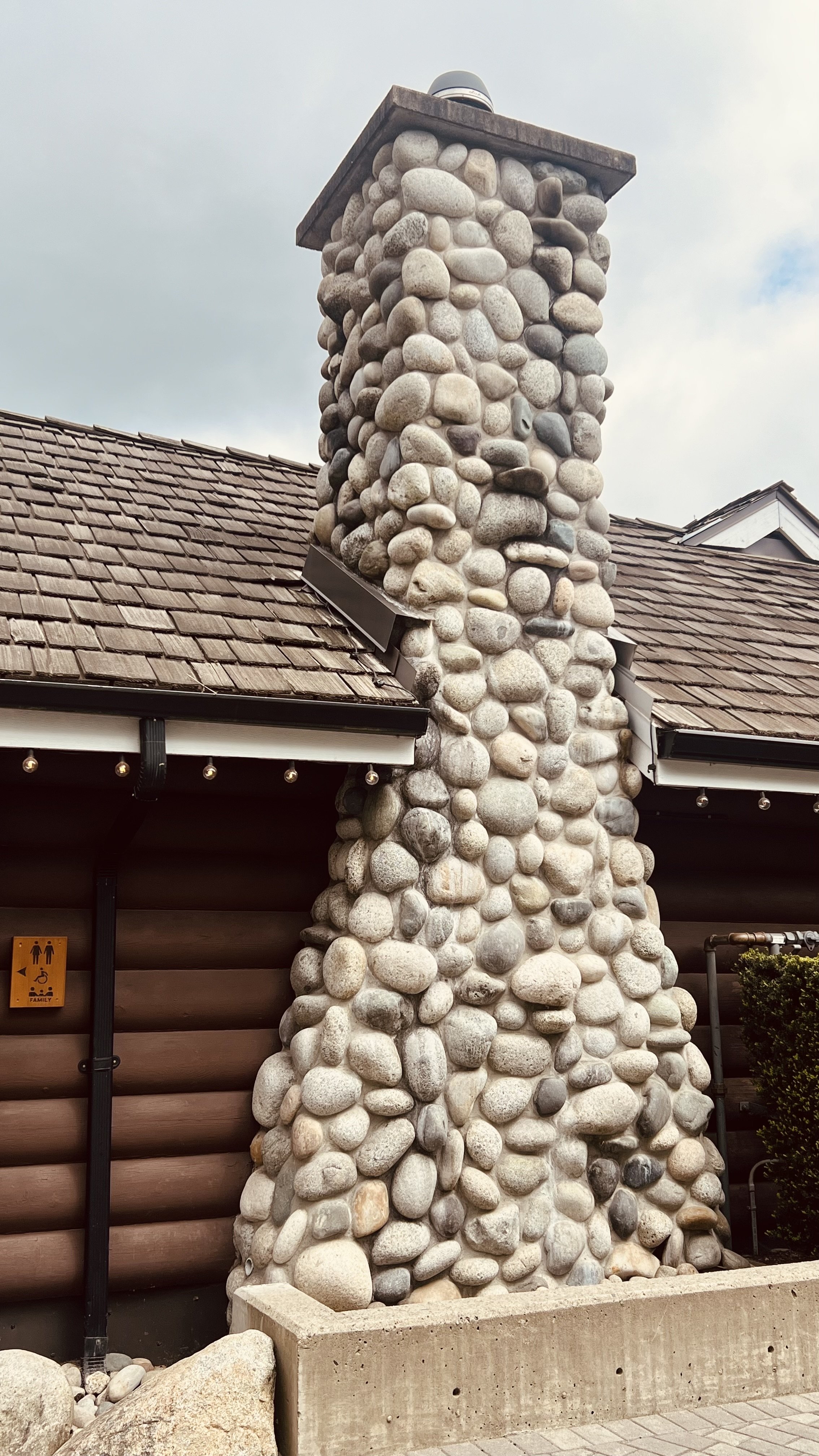
Photo by Jenny Morgan
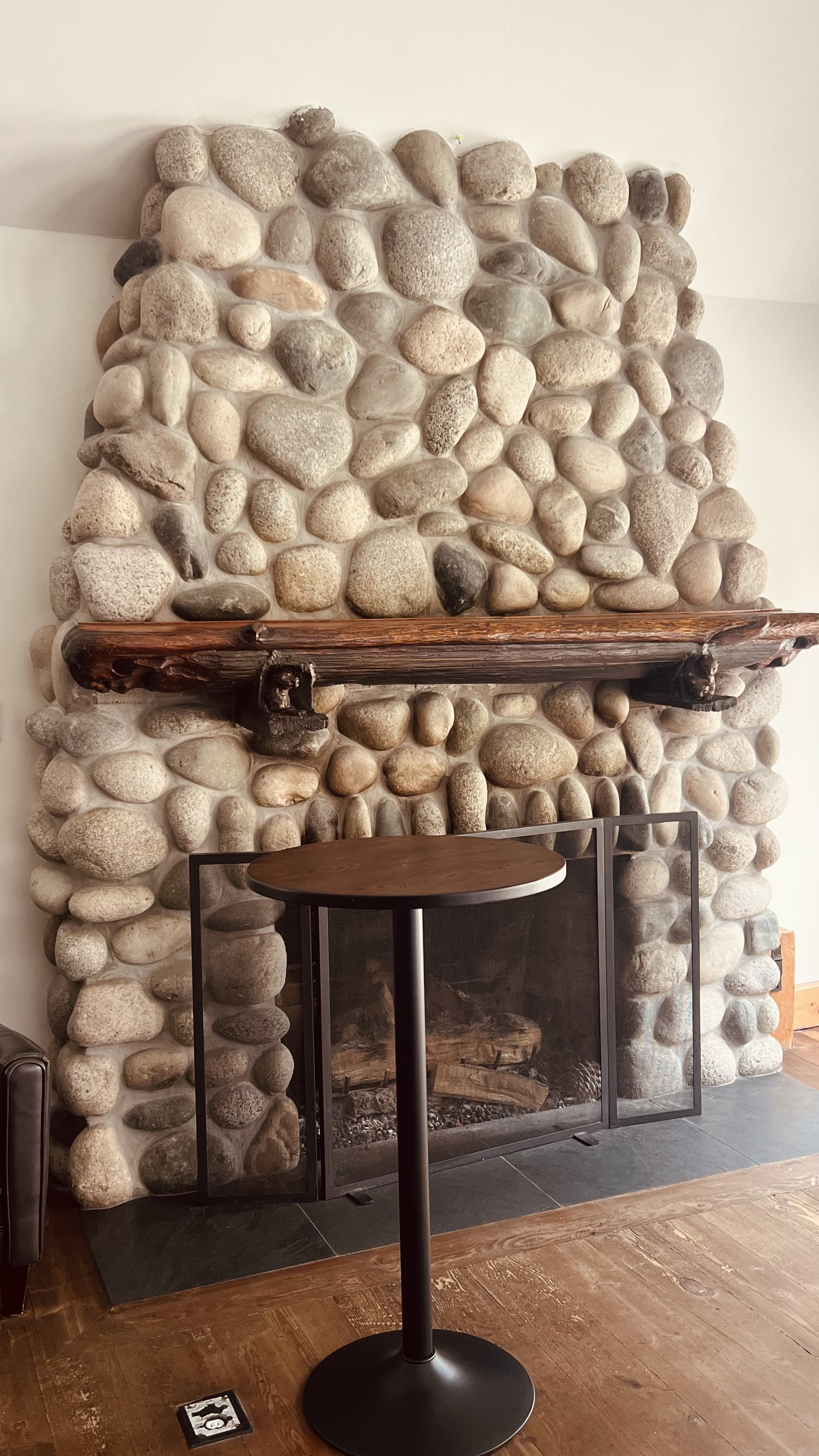
Photos above and below by Jenny Morgan
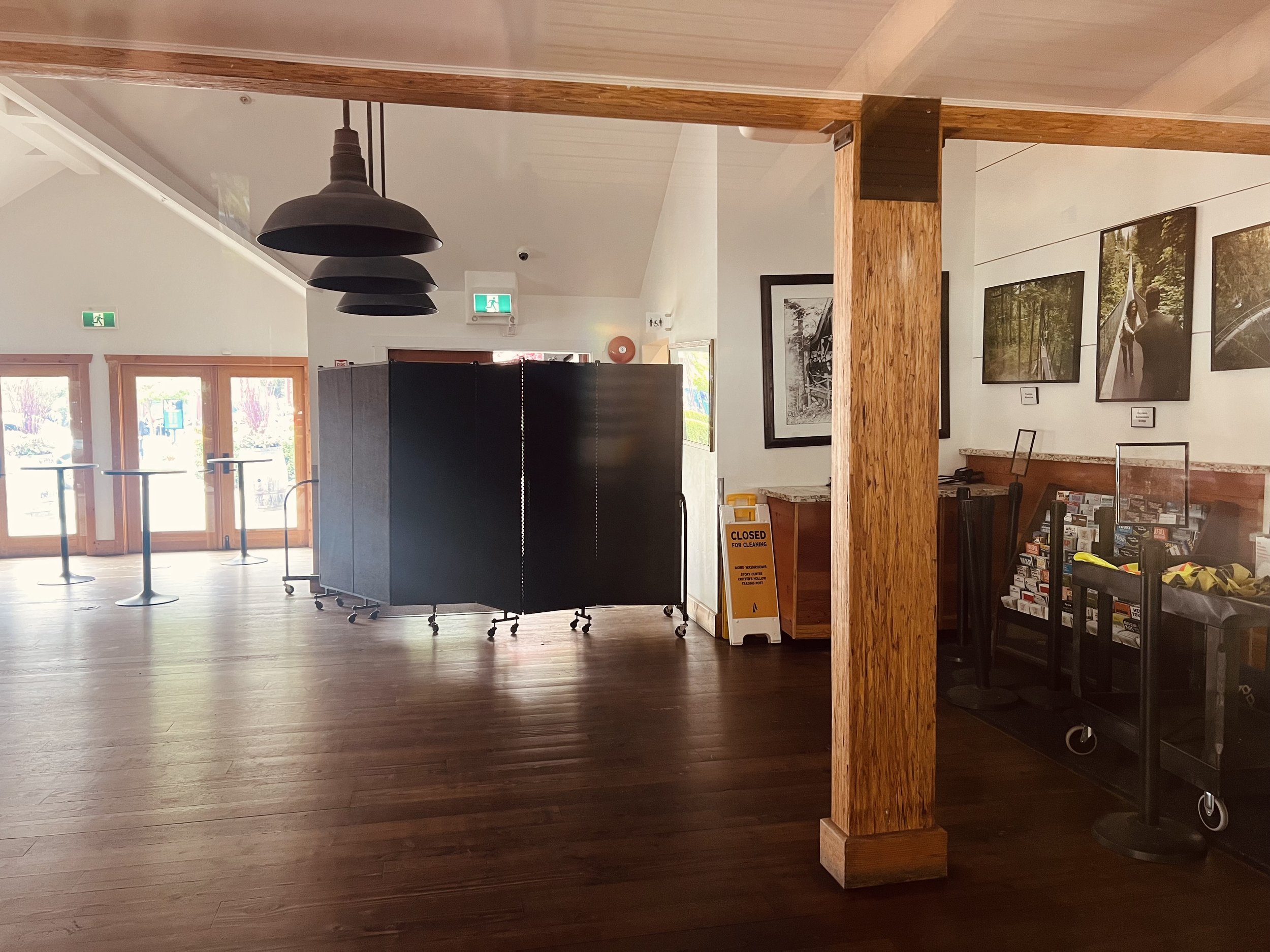
Beautiful large support beam, most likely original to the home. The interior looks to have been modernised quite a bit. Aside from the floor and fireplace, it seems to have lost a lot of its rustic look.
Photo by Jenny Morgan
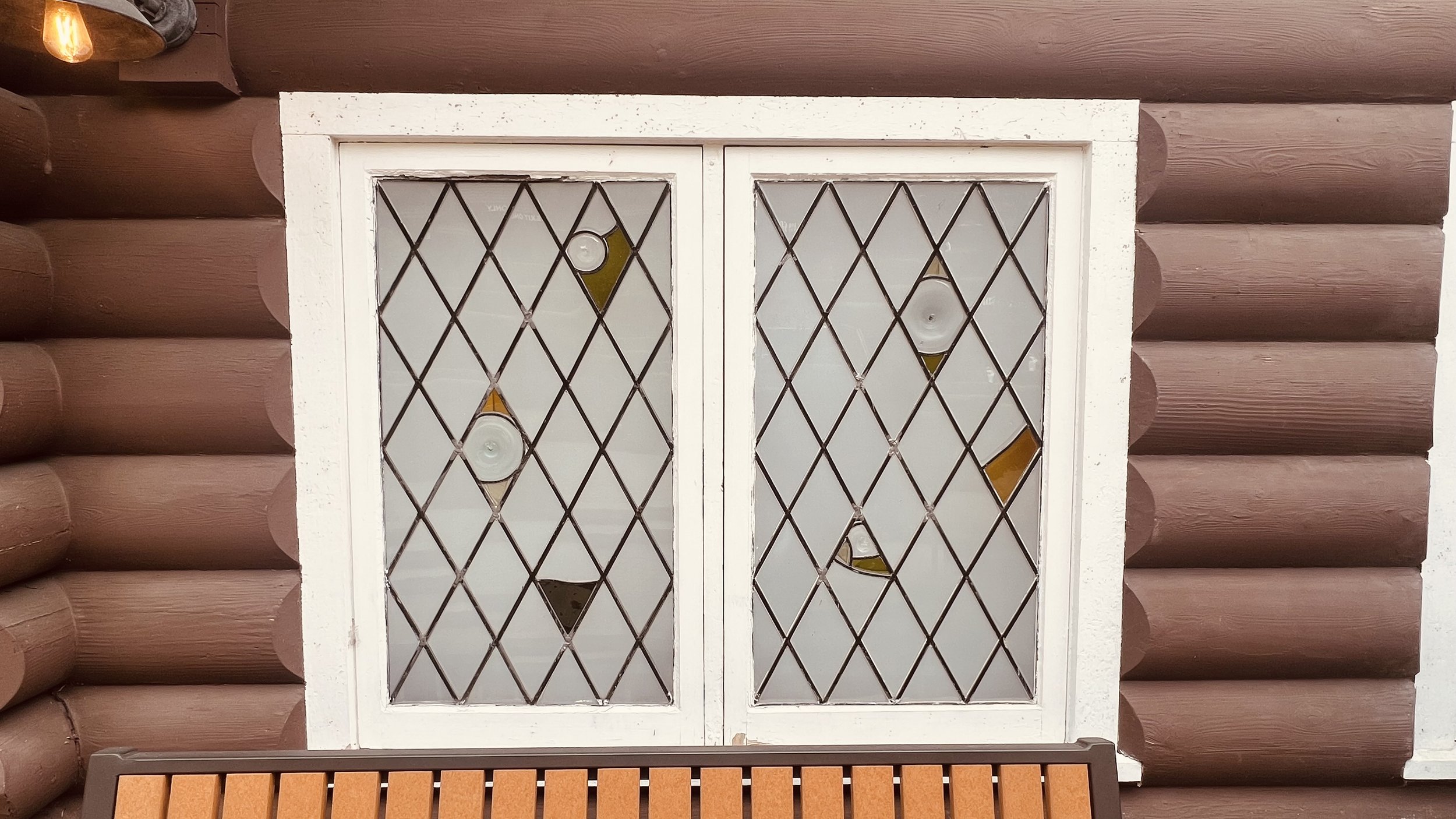
These charming lead,ed bottle glass and stained glass windows must be original. They are so creative! It’s remarkable they’ve survived all these years.
Photos above and below by Jenny Morgan
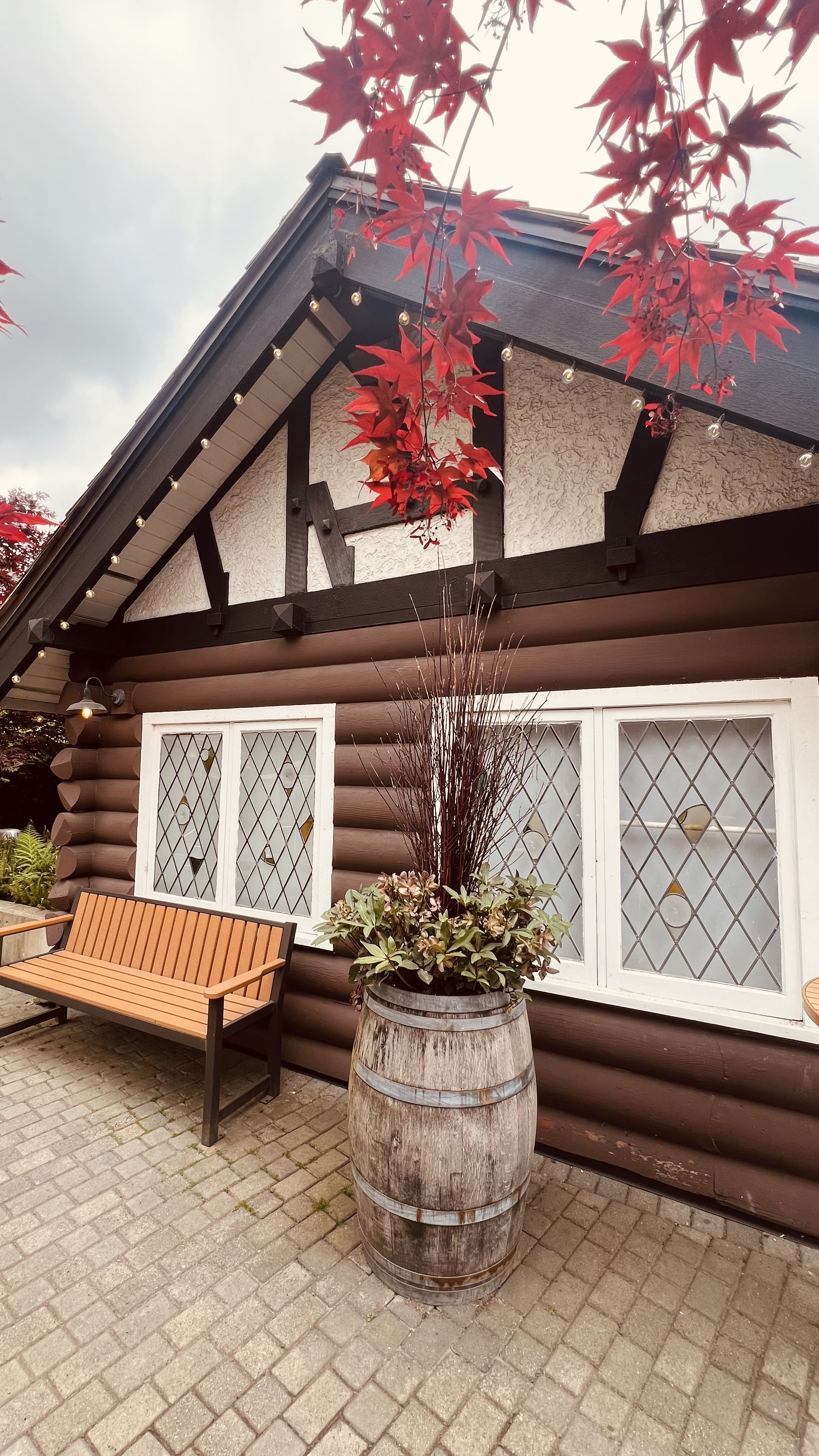
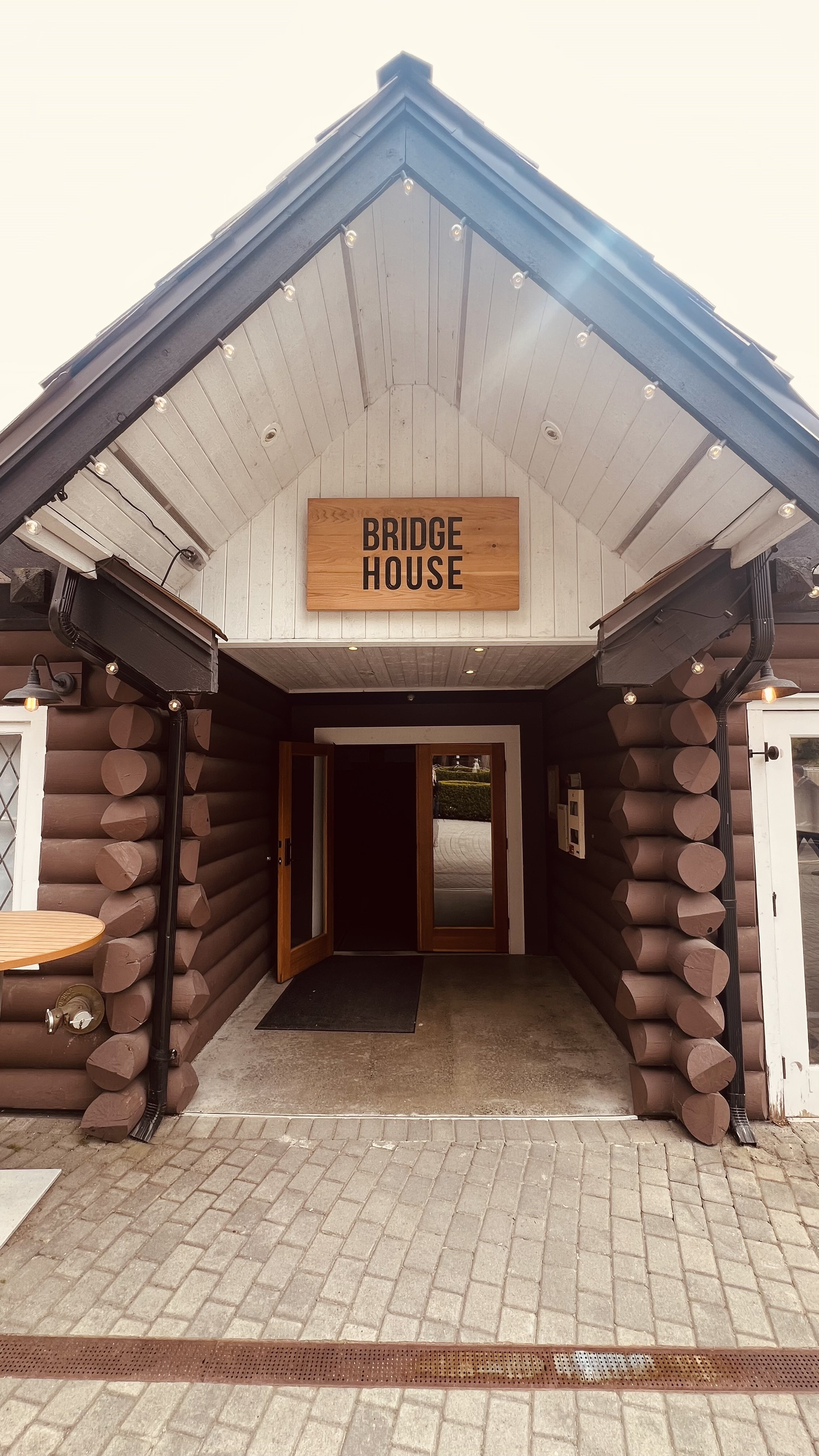
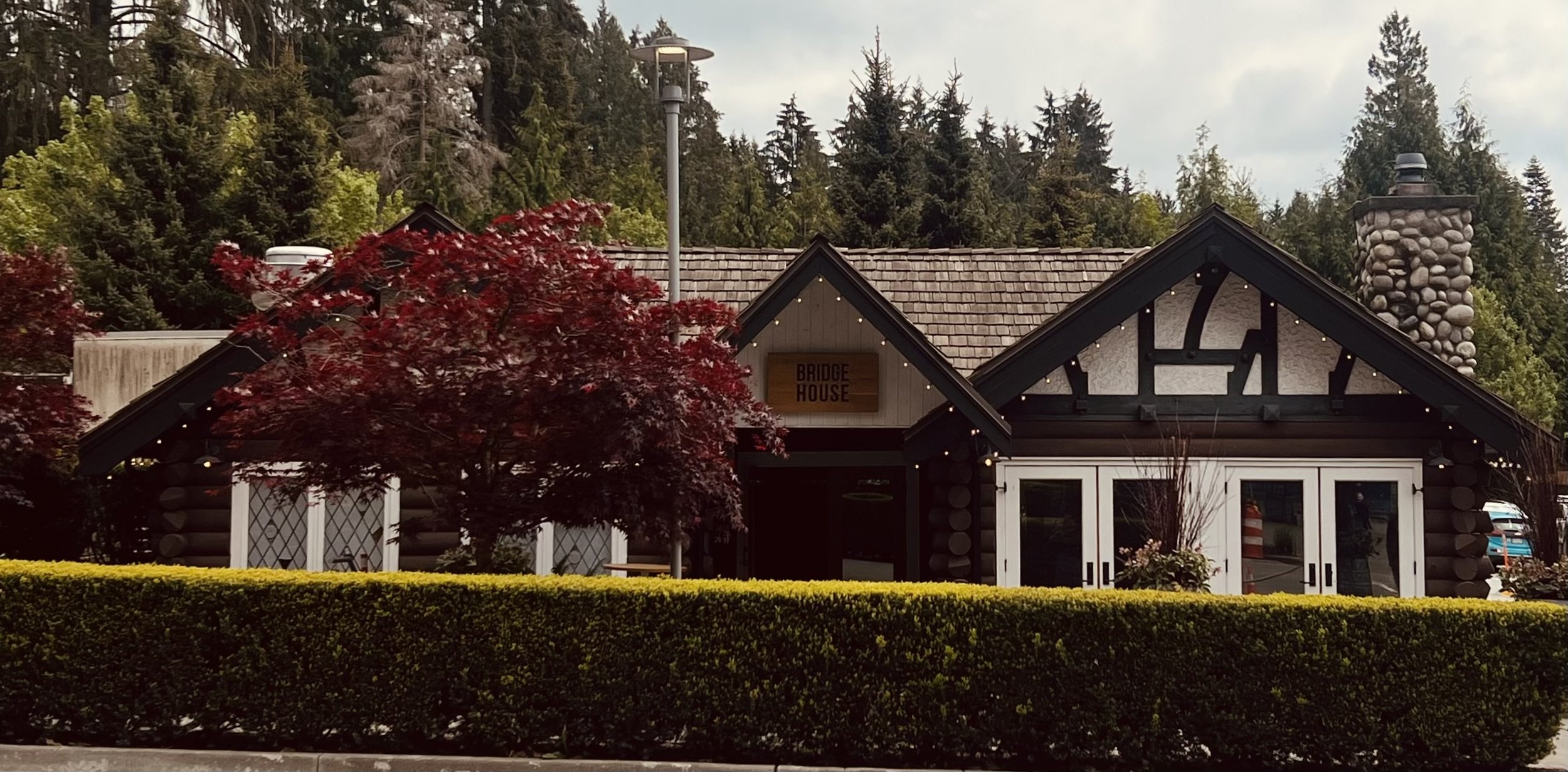
Photo by Jenny Morgan
The house today has also had quite a few changes, although the footprint is the same and it still has a charming look with some original features such as the faux timbering details, fireplace and quirky leaded windows. I’m guessing these were made either at some point when it was the Bridge House or more likely, when it was turned into a cafe. The large window on the right side has been converted into two sets of double doors, the lovely white gingerbread detailing was replaced by plain dark timbers, and the quirky, half-timbered yellow front door was replaced by double wooden and glass doors. The inside, originally, would have had more walls dividing the floorpan into more rooms, and likely early on a more open plan was made when The Chelsea was created, but it is very open now, giving the sense of a large, one room log house.
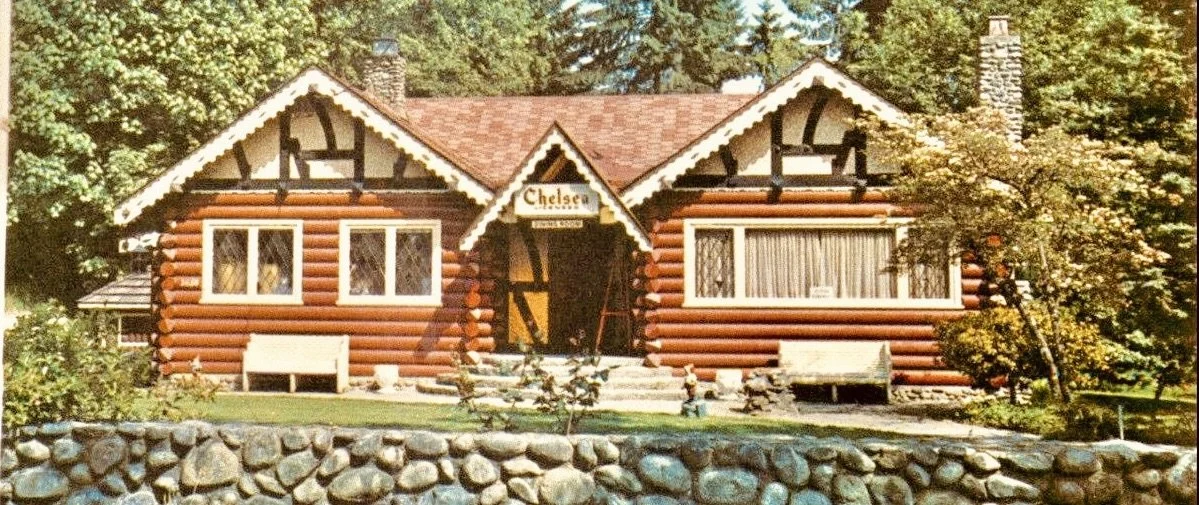
Postcard circa the 1960s published by In Living Color Advertising Agencies
Another big change is that the entrance used to be elevated, likely making more room for a basement level, but the steps are gone and you enter exactly at street level. This must have been a huge renovation when it was done. If there is still a basement, it would have to have been dug out further to be useable. My guess is this was done to make the building more accessible.
Although it started out as a home, 3650 Capilano spent most of its time related to the restaurant industry. Lili, its nearly first occupant, ran the teahouse restaurant at the Suspension Bridge. And after the Aubeneaus, came Helmut Petrak who ran Trader Vics, the Tiki bar downtown. And every other owner after that, save one, ran a restaurant out of the home. So what does the future hold for this storied place? With its proximity to the Suspension Bridge, it’ll likely remain tied to that business for the foreseeable future, but I wonder if it’ll ever go back to a place that serves hot food as it did for nearly 60 years?
Have you been to any of the restaurants that made their home over the years at 3650 Capilano Road? If so, I’d love to hear about it!
References:
The North Shore Outlook Thu, Oct 26, 2006 , newspapers.com ( The Vancouver Sun, The Province),
North Shore Heritage, Vancouver Restaurant History Facebook Group, capbridge.com