23rd & Lonsdale’s community hub is rich in the history of where North Vancouver residents have gathered for recreation, education and entertainment since 1908. Today, it bears little resemblance to its early beginnings. So, let’s start back then.
Early Settlers of the 1900’s
Most early immigrants came from the British Isles, Europe, and Asia, and for many, there was no going back. They came to build a new life, and to find prosperity for themselves and their children. What they found when they arrived here would have differed greatly from what they had left behind.
At the beginning of the 20th century, there were no bridges connecting the North Shore to Vancouver; only a fledgling ferry service linked the communities. The ferry also connected to the Lonsdale Avenue No.1 streetcar line, which started in 1906. Other modes of transportation included horse and buggy, bicycles, and the occasional vehicle. Roads were rough, and housing was still developing, with few food shops available to feed the growing population. Fresh produce was scarce. It’s difficult to imagine North Vancouver’s challenging landscape, following intensive, commercial logging that had felled centuries-old trees. It must have been so foreign to all of them. Newly-arrived immigrants needed accommodation and food. But first they had to manually clear the land of stumps and surviving trees to establish plots for houses, vegetable gardens, fruit trees and livestock. But they were here, and they got on with it, bringing skills and ideas from their old countries. It’s interesting that immigrants, no matter their homeland, tend to recreate elements of their old life into their new life.
The Horticultural Hall (Canada Day, 1908)
William Keene arrived from England in the late 19th century with his friend Benjamin Cornish and brother-in-law, Alfred E. Crickmay. The three teamed up with two other Englishmen, Arthur Diplock and Arnold Kealy. They first settled in Vancouver but saw greater opportunity in North Vancouver which was still in its pioneering stage. Together, they purchased 20 acres of land on East 15th near Lonsdale Avenue. During the years that followed, all of them contributed to the development of North Vancouver's growing immigrant community and have been described as the “founding five”. Diplock’s son, Thomas later wrote about his childhood memories of the East 15th Street area that included the daunting task of clearing dense forest off the land, building a first home that was little more than a shack with an outhouse, and no taps to run water. For the child, it was all a bitter disappointment.
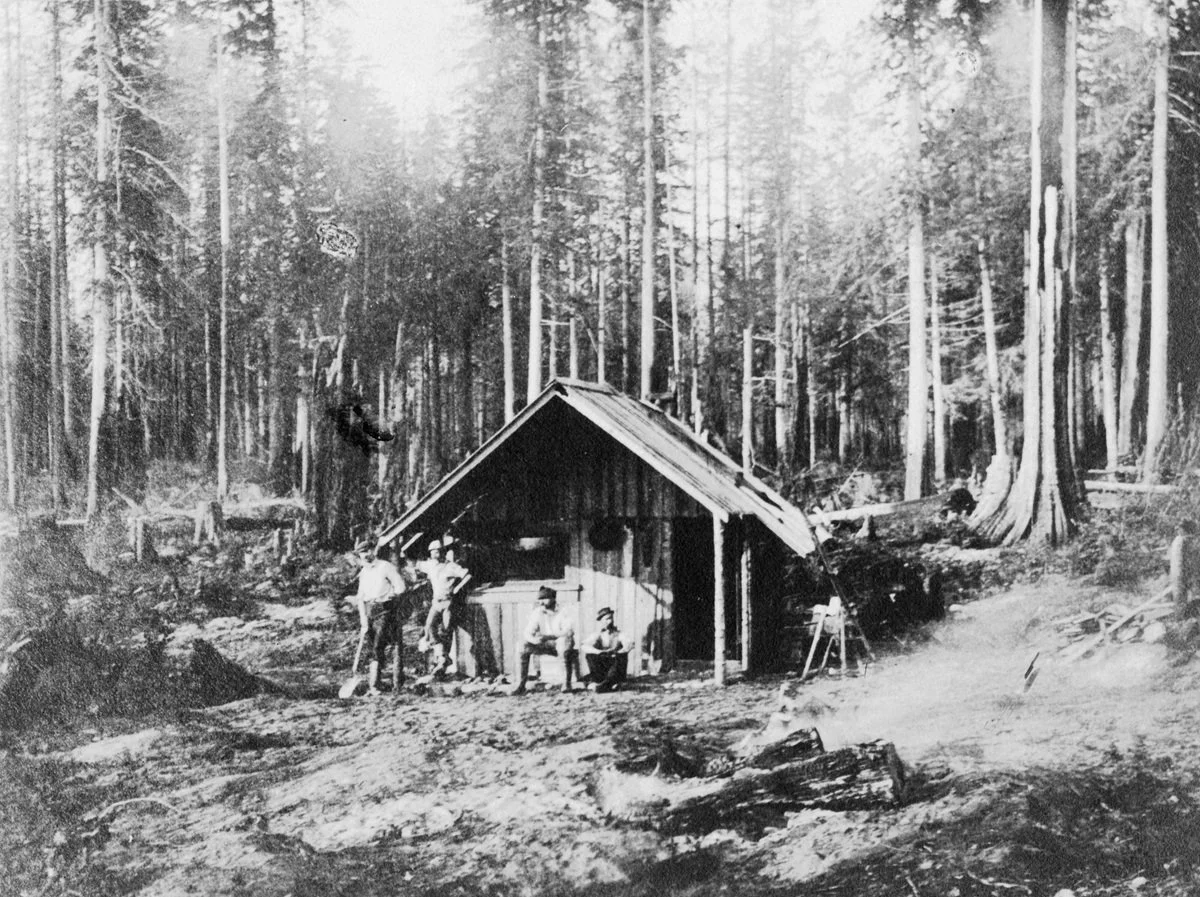
Alfred E. Crickmay’s shack, 234 E 15th St., 1895, shows Keene, Cornish, Kealy. Courtesy of MONOVA/North Vancouver Archives, Inventory No 5541
Keene soon replaced his shack with a home and established a large orchard and small farm opposite where the Lions Gate Hospital stands today. He then turned his attention to neighbouring agricultural groups in the area. Together, they purchased 5 acres of land from the newly established City of North Vancouver to build a Horticultural Hall that would be designed by Keene for outdoor horticultural and agricultural activities and to serve as an indoor venue for meetings, competitions and exhibitions. The relatively flat terrain worked well for the purpose and the Lonsdale streetcar offered public transit. The Horticultural Hall quickly became a community centre for leisure activities, including community dances, concerts and theatrical events. It served the purpose for decades, with other amenities appearing nearby.
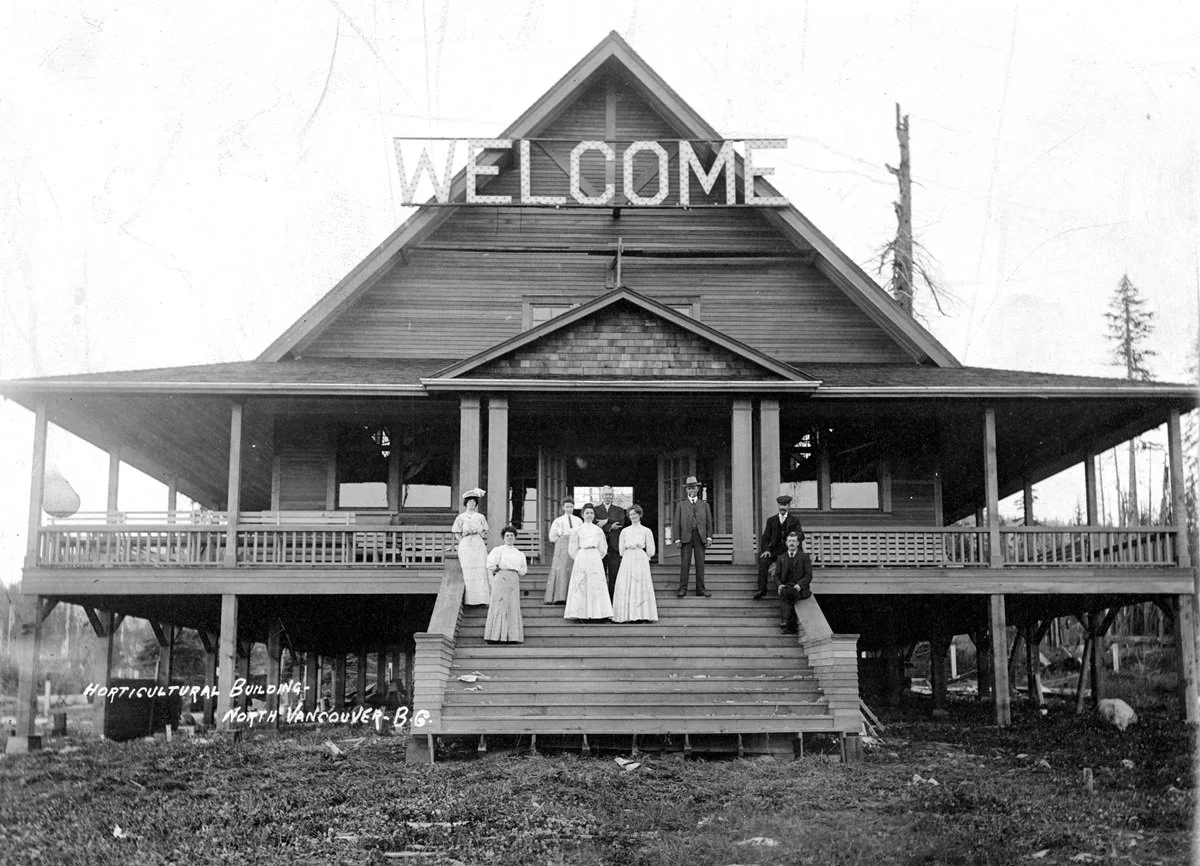
HORTICULTURAL HALL: Courtesy of MONOVA/North Vancouver Archives, Inventory No 35
Sandra Grant, born in North Vancouver, a lifelong resident and North Van High School graduate, vividly recalls the Horticultural Hall at a later stage.
“It was there through my childhood and teenage years and I remember going there with an auntie to see a Gilbert & Sullivan operetta. The drive-in entrance was from Lonsdale, with a curving dirt road leading to the Hall with plenty of room to park. Front and centre a big, wide staircase led to a second-floor porch and main indoor space. Inside was flooded with daylight from large windows on both sides and a raised stage was the centrepiece. Refreshments were served in the lower level after events.”
The Japanese Tea House (April 1910)
The next building to emerge in this area was the Tea House at 21st & St. Georges, with its impressive Japanese garden. The garden was built and landscaped by Japanese–Canadian and Vancouver resident, Rokutaro Ide. Ide emigrated from Japan to Canada in 1893, at age 23, receiving his naturalization certificate four years later. The 1910 photo is a formal portrait of Ide, his wife Mutsu, their three children at that time (Joe, Kinu, and Chie), and other relatives. All are dressed in Western style clothing, at the North Vancouver Tea Gardens
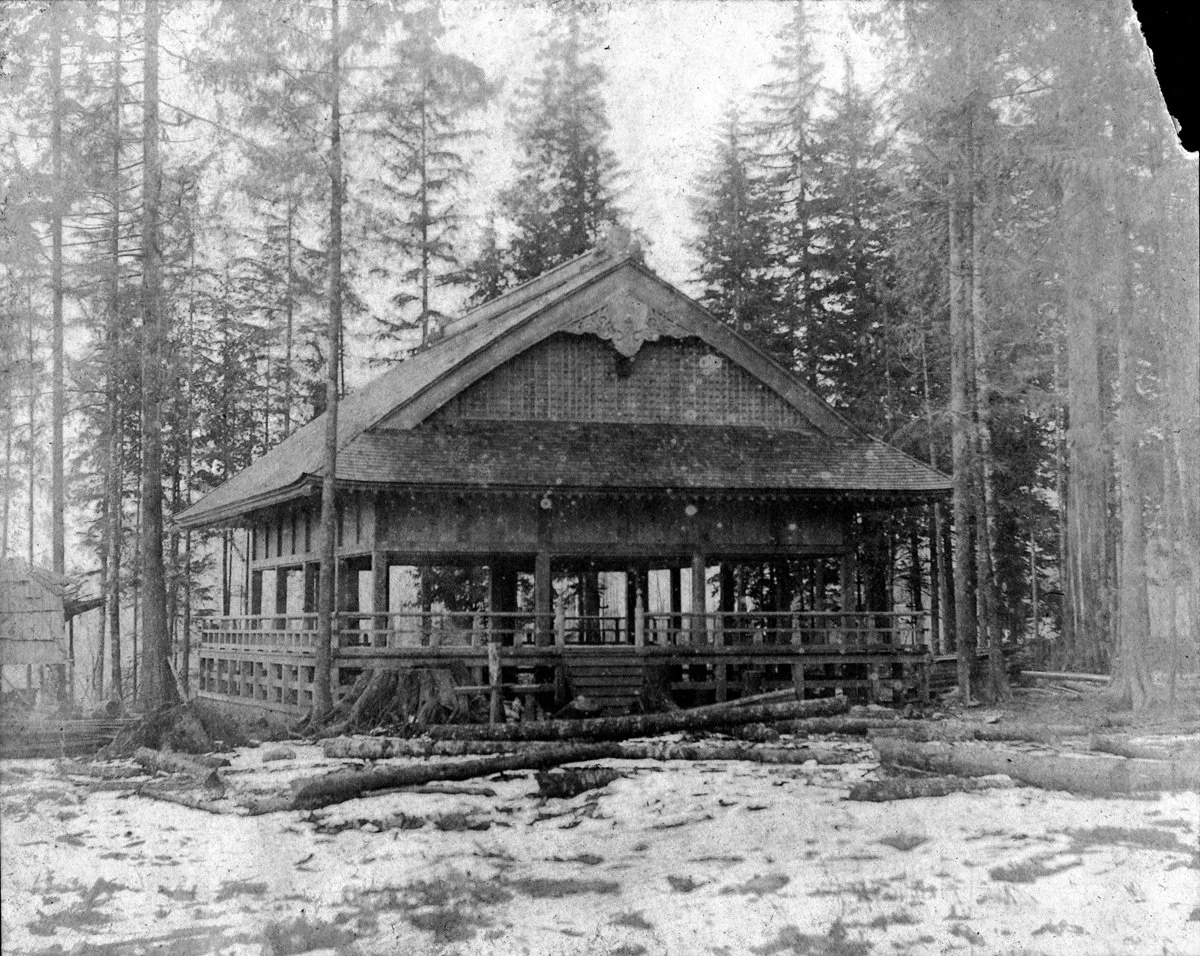
Japanese Tea House, Courtesy of MONOVA/North Vancouver Archives, Inventory No 2379
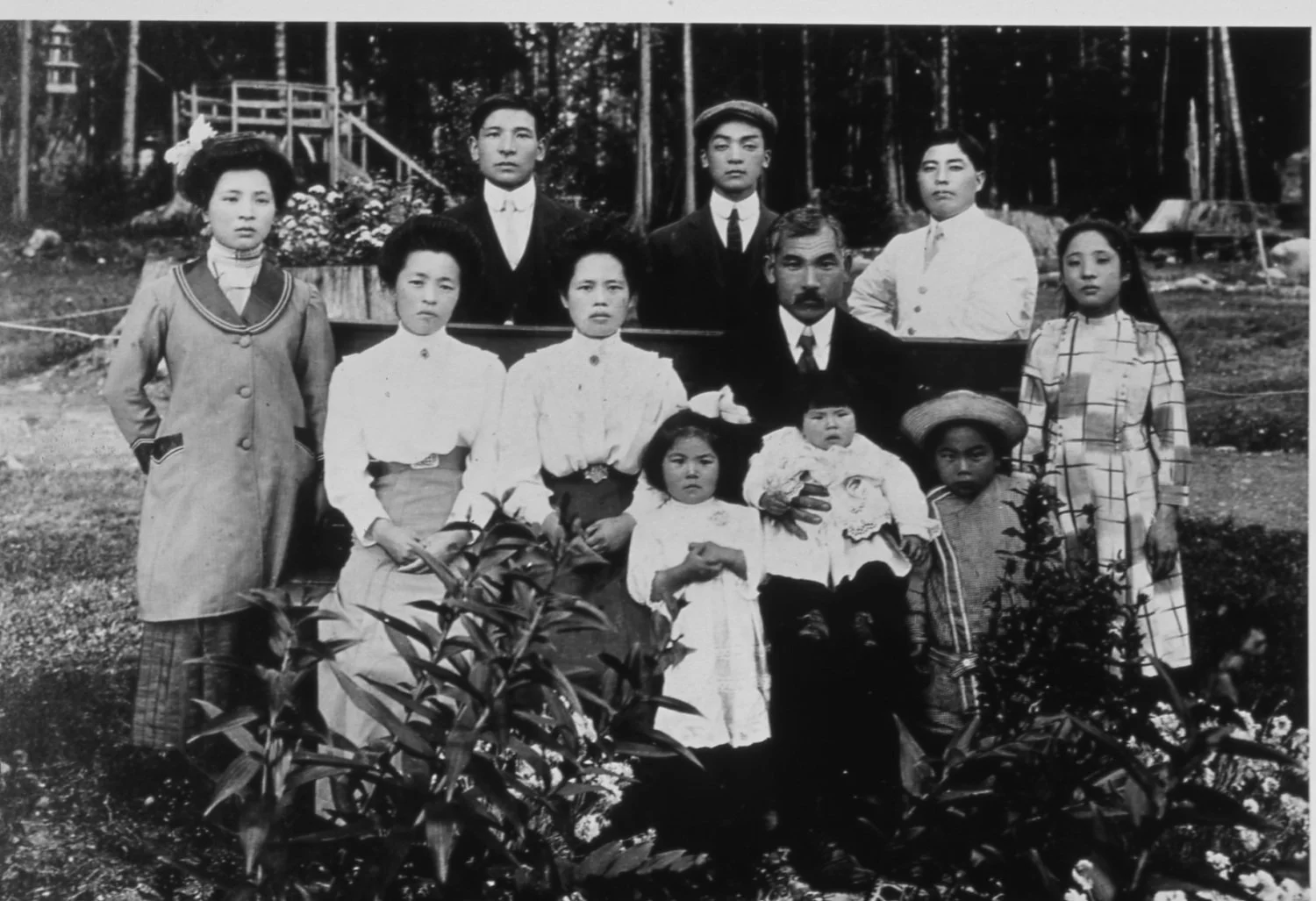
Rokutaro Ide and Family in Tea House Garden, April, 1910. Courtesy of MONOVA/North Vancouver Archives, Inventory No 15783
In 1942, Ide and his family were forcibly removed from Vancouver and their property and business were confiscated. They were sent to an internment camp at Tashme near Hope, now known as Sunshine Valley despite its sad, dark past. His official internment number was 2841 and he is listed with Matsu, his wife, and daughters Michiko and Teiko, and two sons, Henry and Joe. After the war he lived in Hamilton, Ontario and died there in 1948.
But his Tea House had closed before 1920. The building was relocated next to the Horticultural Hall and became the Scout Hall. Both buildings survived until 1965 when they were demolished to make way for the modern 1966 North Vancouver Recreation Centre that was renamed the Harry Jerome Recreation Centre in 2001.
Lonsdale Elementary School (1912)
Lonsdale Elementary, was an important addition to North Van’s burgeoning educational landscape. It remained a fixture on Lonsdale until it was demolished in 2008 to make way for the North Vancouver School Board offices and the Gordon Smith Gallery.
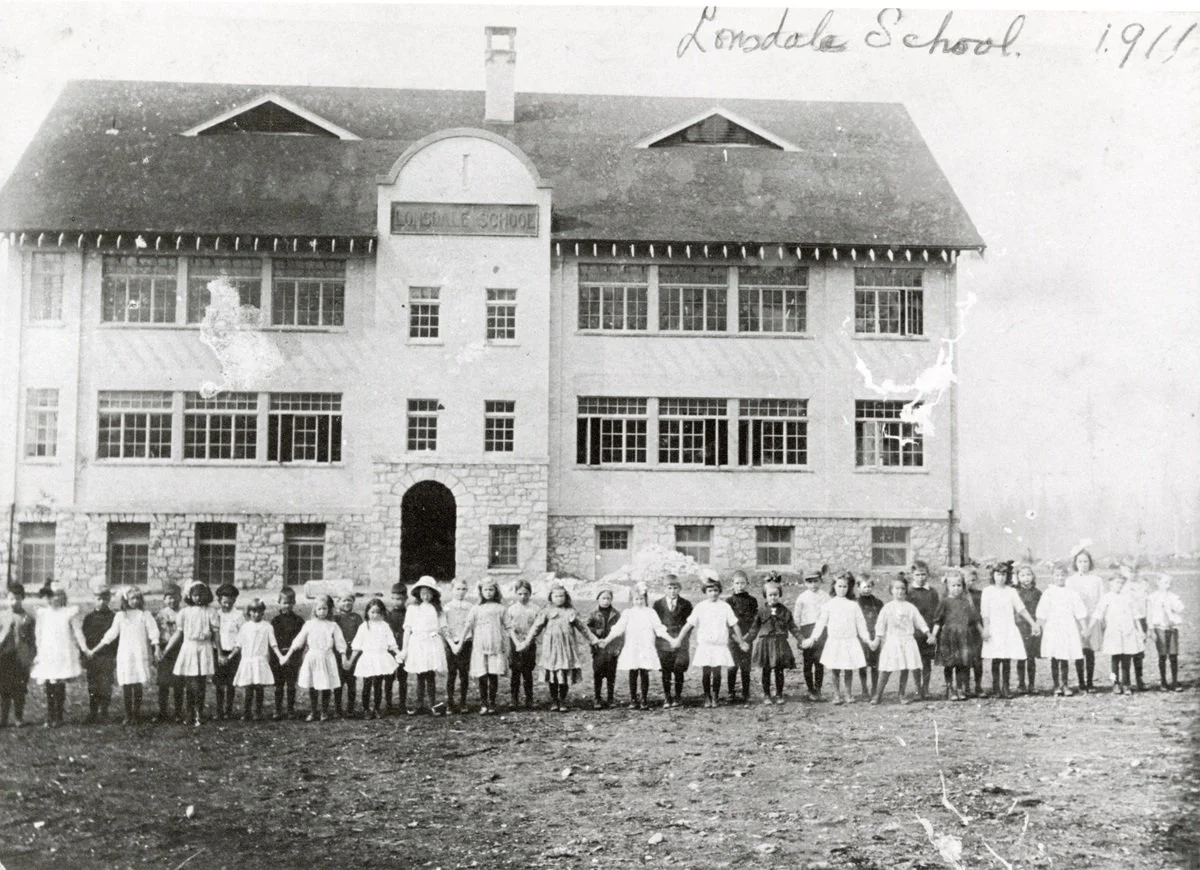
Lonsdale Elementary School 1911. Courtesy of MONOVA/North Vancouver Archives, Inventory No 5732
The Lawn Bowling Club (1923)
Opposite the school, the Lawn Bowling Green was established in 1923, close to the Horticultural Hall and the Scout Hall, where it remained for almost a century. Local residents had rolled up their sleeves working hard to level the ground for the Green. Their reward was becoming club members, dressed in white, enjoying a quiet game on the green lawn they had created. And it was an enjoyable and soothing sight for passers by. The club closed temporarily in 2020 in preparation for relocation to a new, nearby site at 249 East 24th, re-opening in 2021 with a new clubhouse and artificial Turf Greens, close to the 1984 Provincial Court House that stands on the site of the former North Van High School.
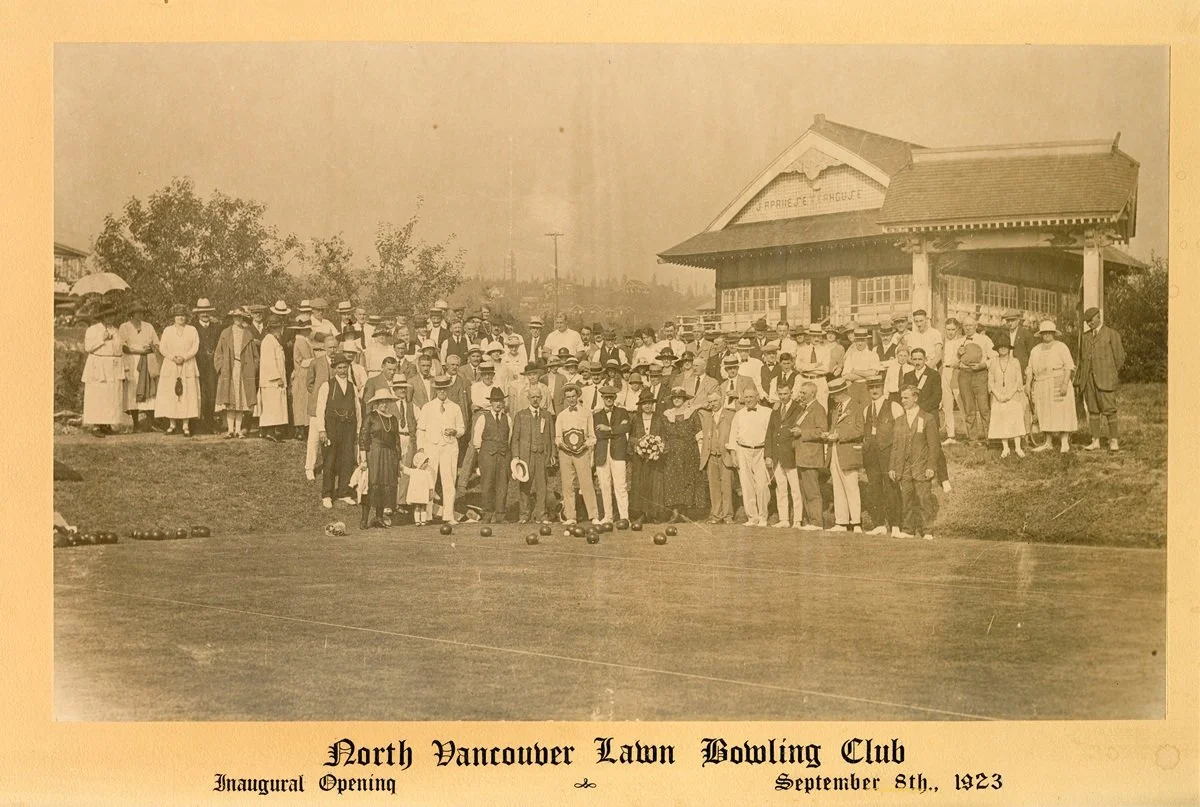
North Vancouver Lawn Bowling Club, opening, 8th September,1923. The Japanese Teahouse (Scout Hall) is in the background. Courtesy of MONOVA/North Vancouver Archives, Inventory No 7652
North Van High School (1923)
North Van High School opened its classrooms in 1923, closed in 1979 and was demolished a year later. It was the only public high school in both the City and the District of North Vancouver until Delbrook High School, in the NV District, opened in 1957. What remains of NV High today is a later 1956 addition that in 1981 became the Mickey McDougall Centre. Not only was it spared demolition, but it was also recently renovated and is now home to Flicka Gymnastics Club, which was based for years in the Memorial Community Recreation Centre at the SW corner of East 23rd and St. George's.
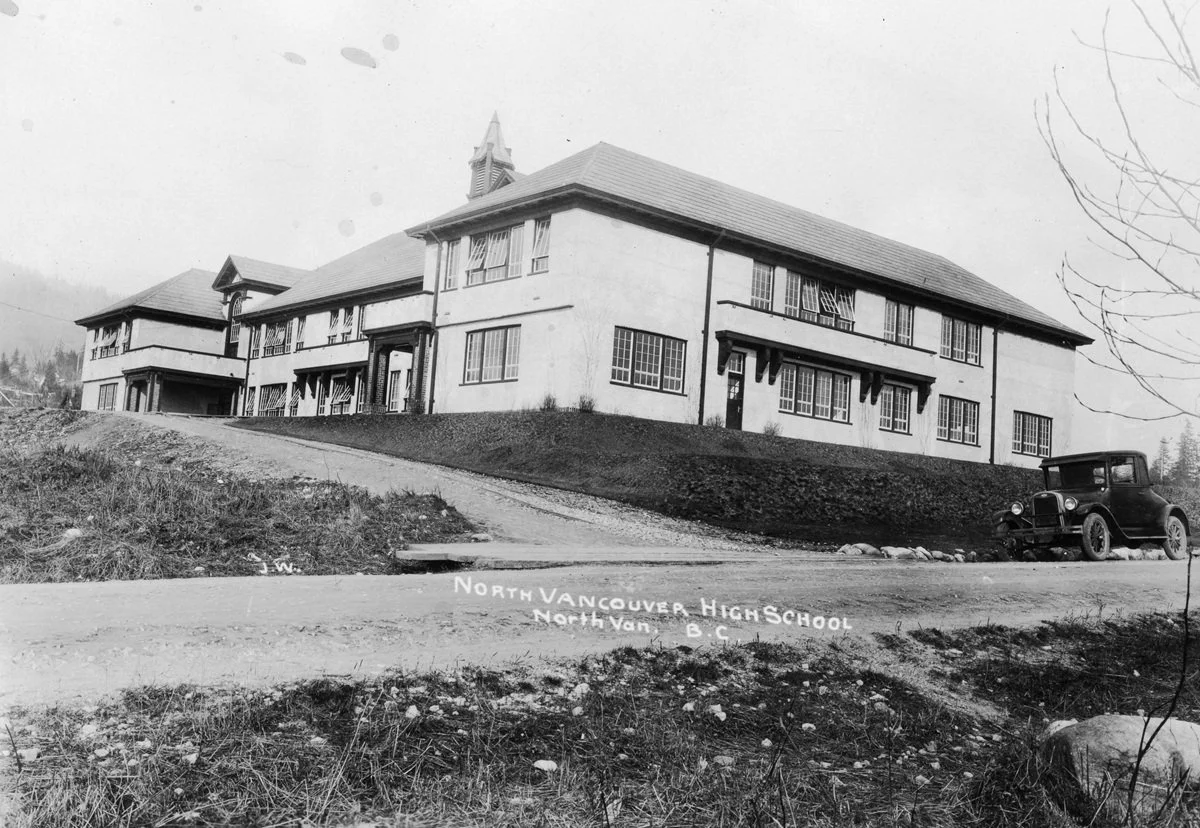
North Vancouver High School, 1924, Courtesy of MONOVA/North Vancouver Archives, Inventory No 151
Mickey McDougall, born in Milton, Ontario, arrived in Vancouver as a young boy, later serving in France with the Canadian Artillery during the First World War, and graduated from The University of British Columbia in 1921. He had an illustrious teaching career, mostly associated with North Vancouver High School, of which he was Principal from 1935 until he retired in 1961. He was the epitome of positive community service being involved with many significant institutions such as the Red Cross, Kiwanis, Air and Navy Cadets, Chairman of the first Senior Citizens' Association of North Vancouver; President of the North Vancouver Memorial Community Centre. His daughter, Anne MacDonald, was central to the development of Presentation House Theatre and to development of the arts on the North Shore.
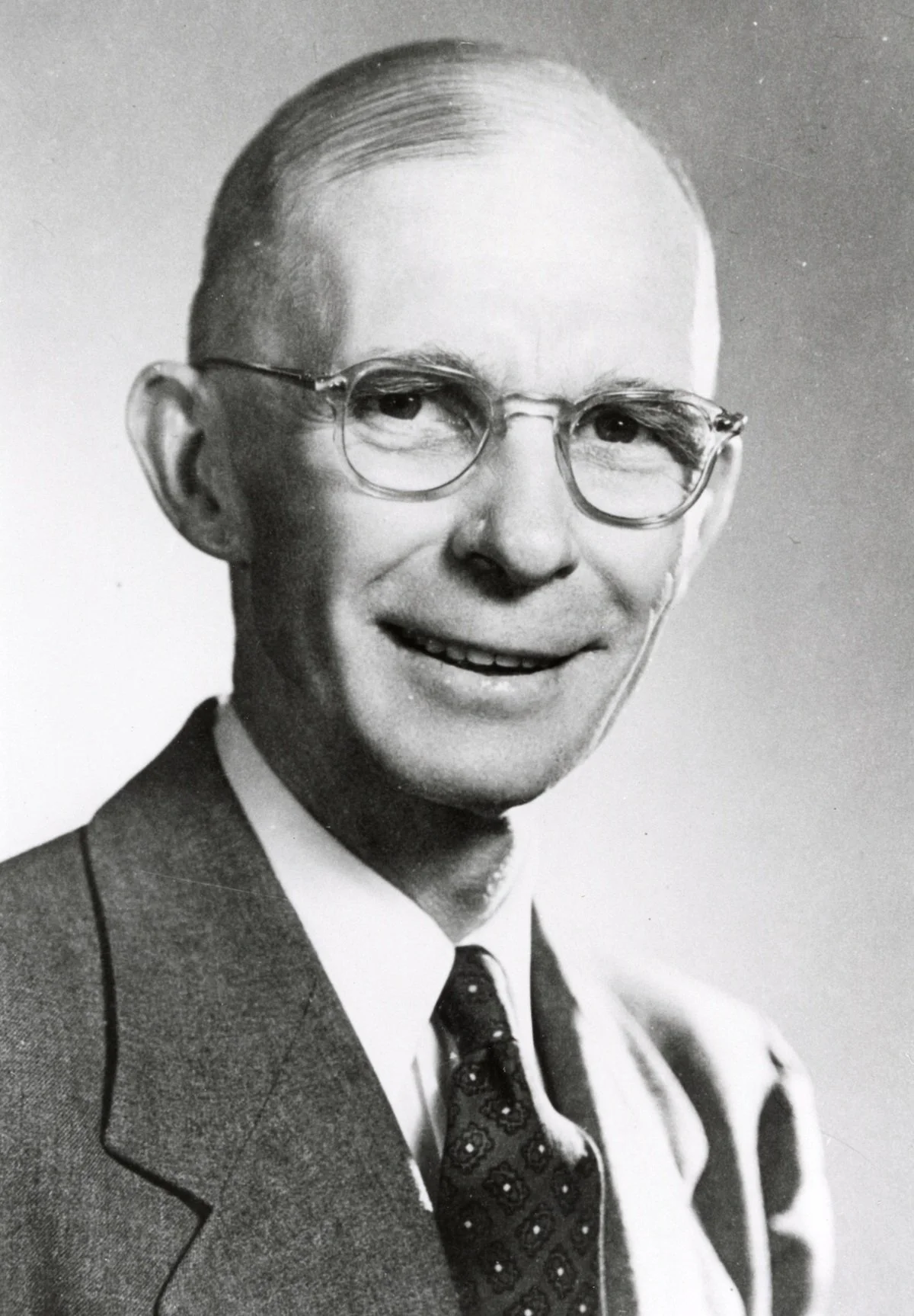
W.R. McDougall, Principal of North Vancouver High School, 1935-1961. Courtesy of MONOVA/North Vancouver Archives, Inventory No 4243
Memorial Community Centre (1949)
When Mickey McDougall returned from WWI, he could not have imagined that one generation later, students he had taught would go to war and not return. He was determined to honour them and struggled for five-years to have the Memorial Community Centre built in their memory. It opened in 1949 with the names of the fallen on a memorial plaque on the wall of the main lobby. Sandra Grant’s Uncle Billy is listed among the 123 young men who lost their lives. A Flight Sergeant with the RCAF, he was on board the vessel called the B.C. Star, when on July 23, 1943, it disappeared en route from Bella Bella to Cape St James, Haida Gwaii, on a radar defense construction mission. The Memorial building is about to be demolished raising the question: What will happen, or what has happened, to the plaque? To view it and its place in the lobby go to:
The Memorial Community Centre gymnasium holds many memories as it was used extensively by North Vancouver High School students for popular school dances and events. During the day, the gym was designated for the students, while community centre groups used it in the evening.
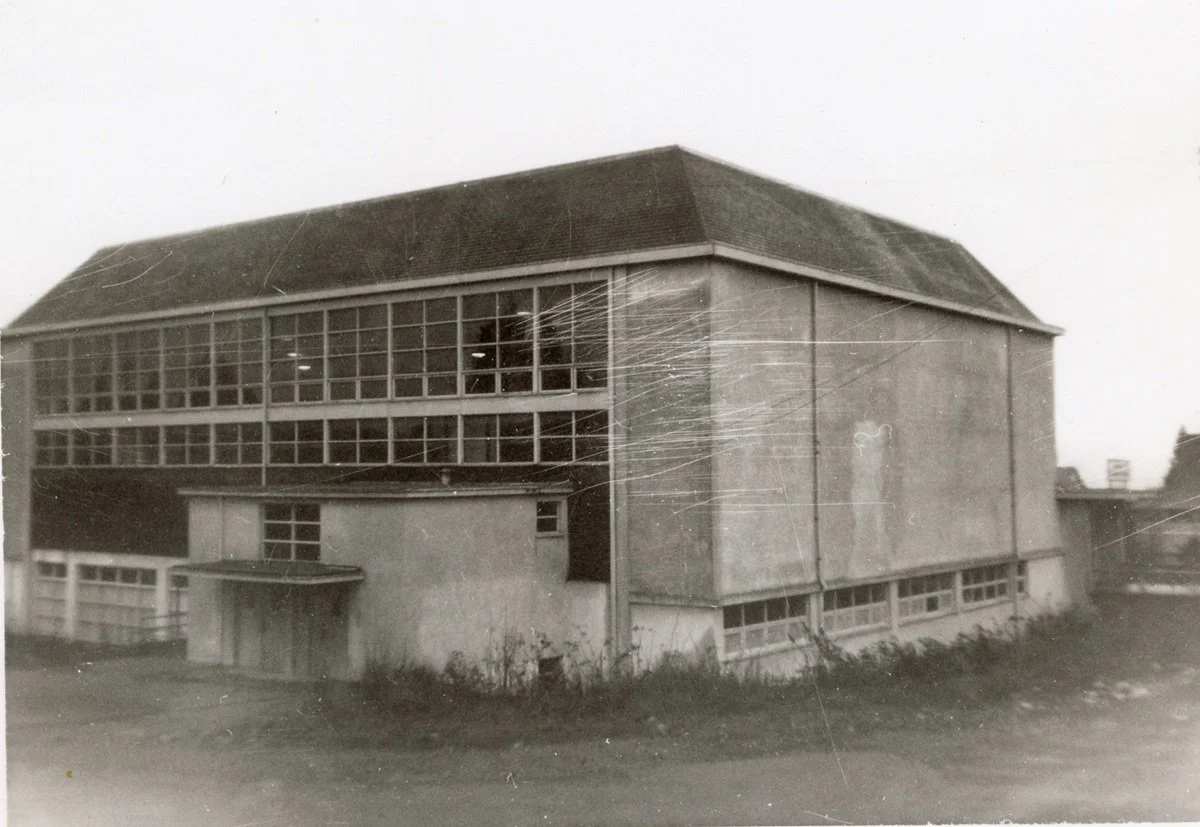
North Vancouver Memorial Community Centre, 200 bl. E. 23rd St. built in 1950 Courtesy of MONOVA/North Vancouver Archives, Inventory No 12316
Harry Jerome
Olympian Champion, Order of Canada recipient and world record-breaking track and field star, Harry Jerome, attended North Van High where he was encouraged to pursue his track and field goals and dreams. However, his early years were a nightmare for him, his sister Valerie Jerome, and their family, simply because they were Black. At the age of 12 they relocated from Saskatchewan to live on Ridgeway Avenue in North Van. Val Jerome, wrote in her book, Races, about the cruel hostility they faced on their first day at Ridgeway Elementary when schoolchildren attacked them with stones. More cruel hostility came from neighbours who petitioned against them living there.
Jerome’s first record breaking event occurred in July 1960 when at age 19 he won the 100-metre final at the Canadian Olympic Trials in Saskatoon and tied the world record with a time of 10.0 seconds. He went on to amazing successes:
1964 Tokyo Olympics: 100m bronze medal despite injuries;
1966 Commonwealth Games: Captured gold and tied the 100-yard world record;
1967 Pan American Games: Won gold in the 100-metre sprint.
Tragically, he died in 1982 at age 42 from a brain aneurism.
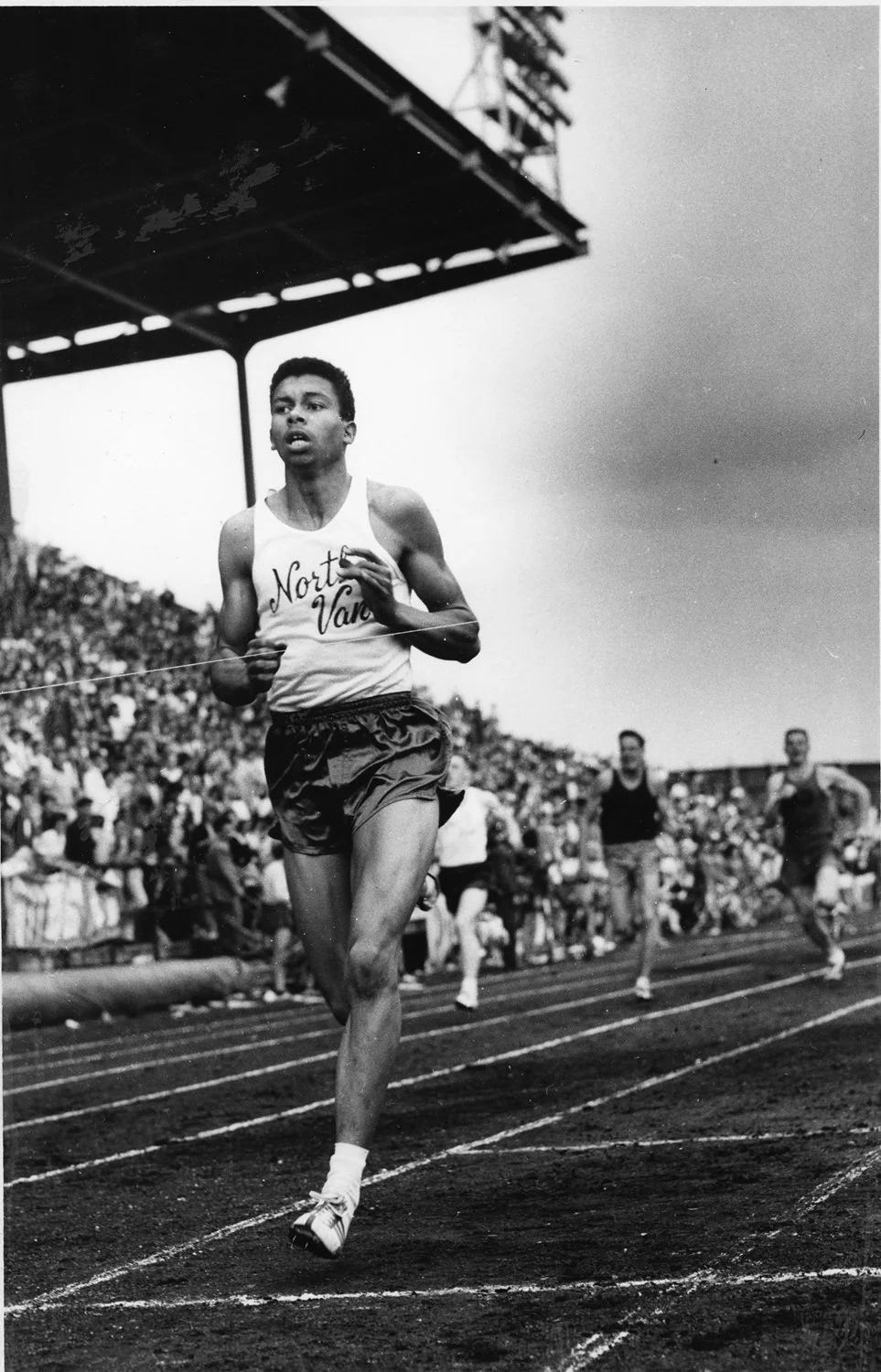
Harry Jerome of North Vancouver High School breaking Percy Williams' record of 1928 (220 yds. in 21.9 seconds) Courtesy of MONOVA/North Vancouver Archives, Inventory No 5349
North Vancouver Recreation Centre (1966) / Harry Jerome Recreation Centre (2001)
In 2001, Jerome’s name was given to the existing 1966 North Vancouver Recreation Centre, which opened in 1966 at the same time as Centennial Theatre. Both facilities opened with a week-long celebration that started with a ball in the curling rink, a parade up Lonsdale, followed by an official ribbon cutting by Lt. Gov. Pearkes. Various performances, including the Vancouver Symphony, were also held in the new theatre. Long time residents can recall hours spent at the Rec Centre, often watching energetic children swim or skate. As soon as the footbridge over East 23rd Street was crossed there was the familiar whiff of chlorine, and nowhere to grab a good cup of coffee!
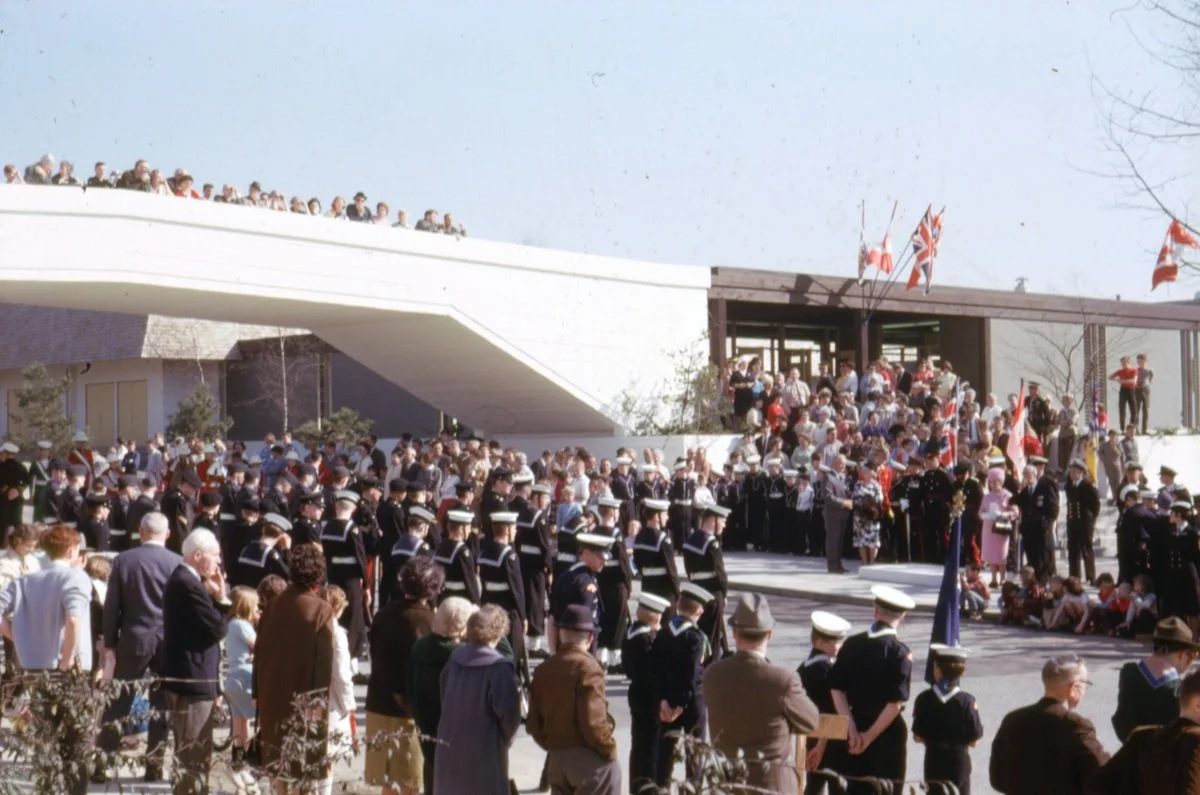
1966 Opening of the North Vancouver Recreation Centre. Courtesy of MONOVA/North Vancouver Archives, Inventory F34-SF2-S10-SS9-f2-43
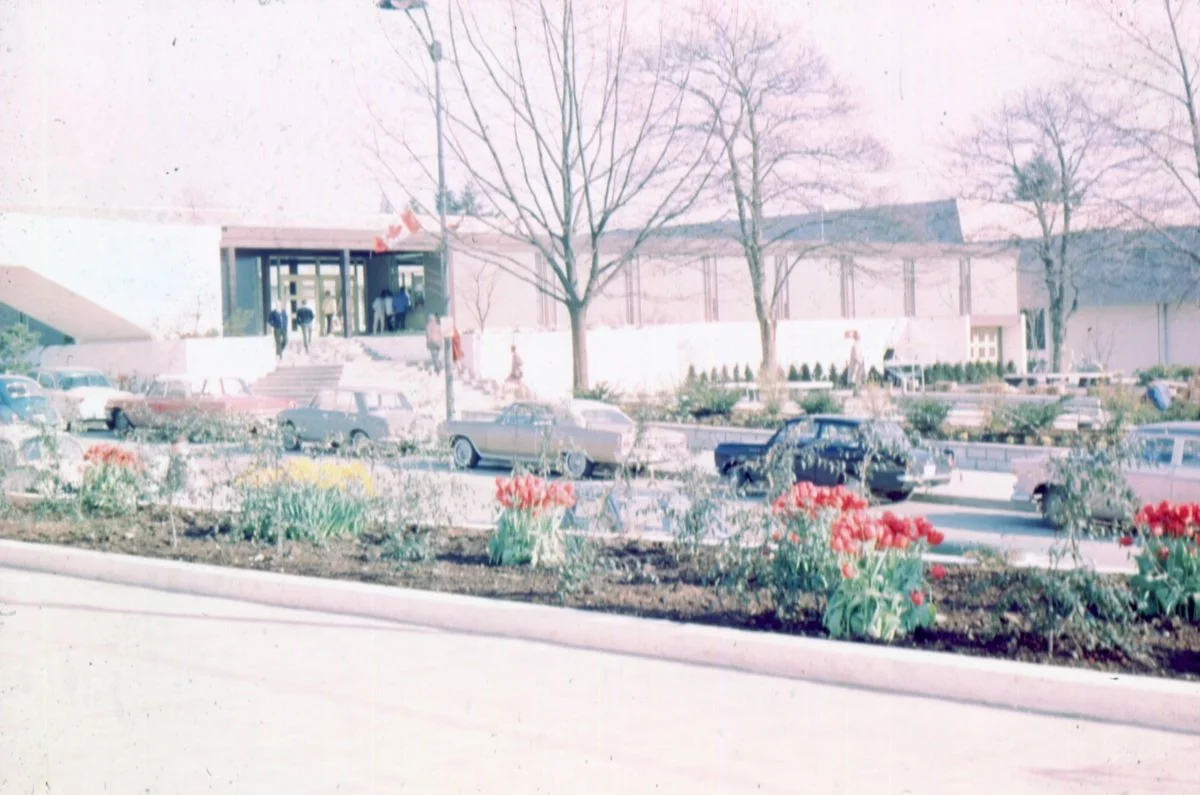
1966 Opening of the North Vancouver Recreation Centre. Courtesy of MONOVA/North Vancouver Archives, Inventory Nos F34-SF2-S10-SS9-f2-48
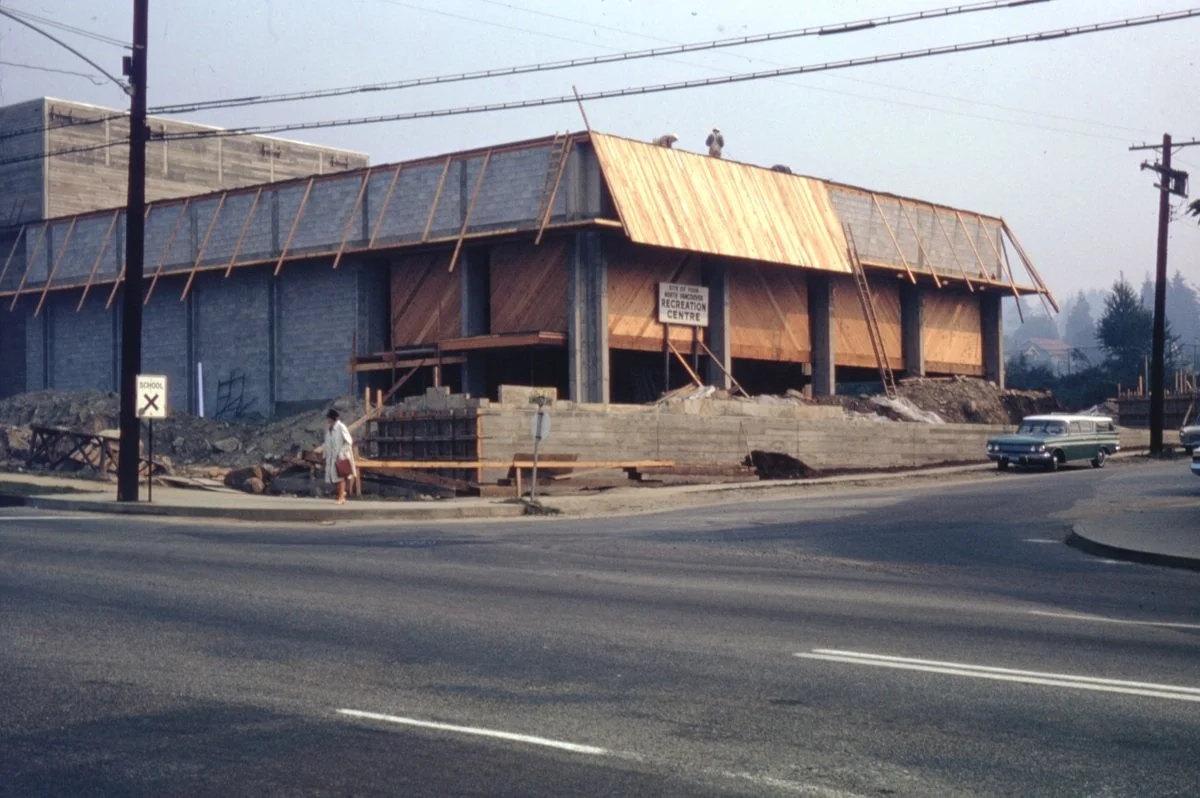
1965 Construction of the Centennial Theatre, as from 23rd Street and Lonsdale Avenue. Courtesy of MONOVA/North Vancouver Archives, Inventory Nos F34-SF2-S10-SS9-f2-39
Silver Harbour Seniors’ Centre (1973)
This purpose-built seniors’ centre at 144 East 22nd was the next facility to appear in this active area. An attractive building with a mansard roofline and a small garden area, it officially opened in 1973 after years of countless volunteer effort and planning. This centre closed in August of this year with an official CNV ribbon cutting event and key handover for the new centre at 2325 St George’s Avenue beside the new Harry Jerome Recreation Centre. The original centre is slated for demolition.
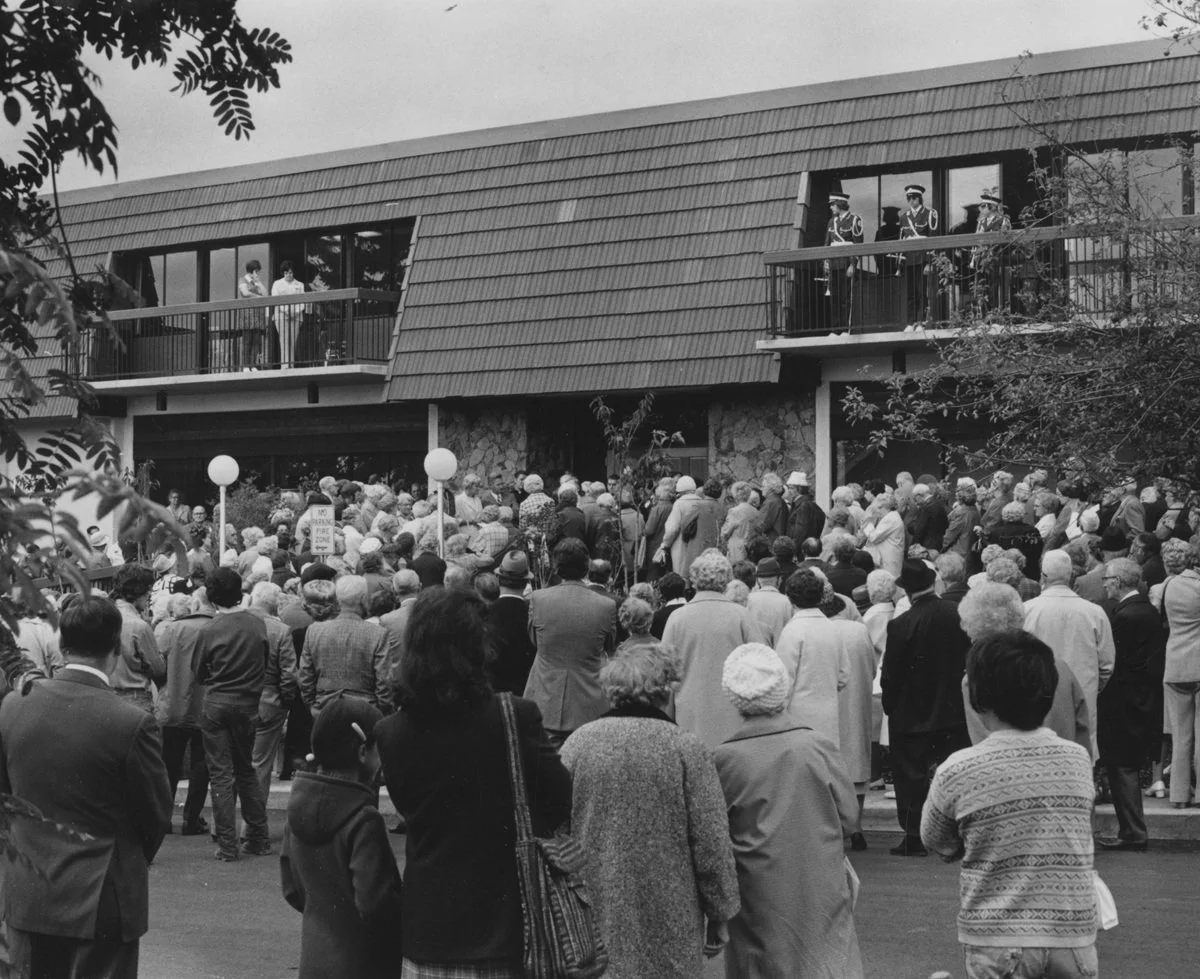
1973 opening of Silver Harbour Manor/Centre, Courtesy of MONOVA/North Vancouver Archives, Inventory No 599
The Second Harry Jerome Recreation Centre (2026)
After years and years of planning, the 2nd Harry Jerome Recreation Centre opened on July 25, 2026, at 130 East 23rd Street. It connects to the new Silver Harbour Seniors' Activity Centre, Centennial Theatre, and the re-opened Mickey McDougall Community Recreation Centre. The largest recreational facility on the North Shore, it offers extensive amenities that include an NHL Arena, an Aquatic area with many features, and a variety of Fitness and Recreation areas. Harry Jerome’s sister, Valerie Jerome, Olympian, author, and community advocate was a featured guest of honour and speaker at the grand opening.
Crickmay Park
This park sits on the Southeast corner of 23rd & Lonsdale, and is named in honour of Alfred E. Crickmay, who was one of the “founding five” that included William Keene, the designer of the 1908 Horticultural Hall. The park will remain and be extended following the demolition of the 1966 Harry Jerome Community Recreation Centre.
Conclusion
Change has been a constant at this community hub area of 23rd & Lonsdale. It evolved from a modest 1908 Horticultural Hall to today’s multi-purpose 2026 Harry Jerome Community Recreation Centre with 189,000 square feet of program space. By my count, the only older buildings that will be left standing are the Centennial Theatre and the Mickey McDougall Centre.
North Shore Heritage would love to receive memories or comments. Please take a few moments to scroll down to the comments box to leave a line or two.
SOURCES and ACKNOWLEDGEMENTS
Special thanks to Georgia Twiss, Reference Historian for the Museum & Archives of North Vancouver (MONOVA) for photos and support.
Sandra Grant, North Shore Heritage Member, born in North Vancouver, a lifelong resident and North Van High School graduate.
Japanese Tea House https://www.nsnews.com/in-the-community/time-traveller-this-japanese-teahouse-opened-in-north-vancouver-in-1910-4732715
Mickey McDougall https://www.library.ubc.ca/archives/tributes/tribm.html
WW11 Memorial Plaques
Rokutaro Ide , https://landscapesofinjustice.uvic.ca/archive/C-9331_2841.html?ref=idex6
Valerie Jerome, Races: The Trials and Triumphs of Canada’s Fastest Family is a 2023 memoir written by Canadian Olympian, teacher, and activist Valerie Jerome. https://valeriejerome.ca/races/
C.N.V. Council Minutes Archive.