If you stand at the corner of Marine Drive and 22nd Street—where Dundarave and Ambleside meet in a gentle architectural handshake—you’ll find an unmistakably modernist structure holding its ground. While potential development and demolition plans have resulted in much of the building being clad in protective plywood, its folded plate roof still angles confidently toward the sky; a fraction of its clerestory windows still catch the light; its caramel‑coloured dry‑stone veneer still glows warm in the afternoon sun.
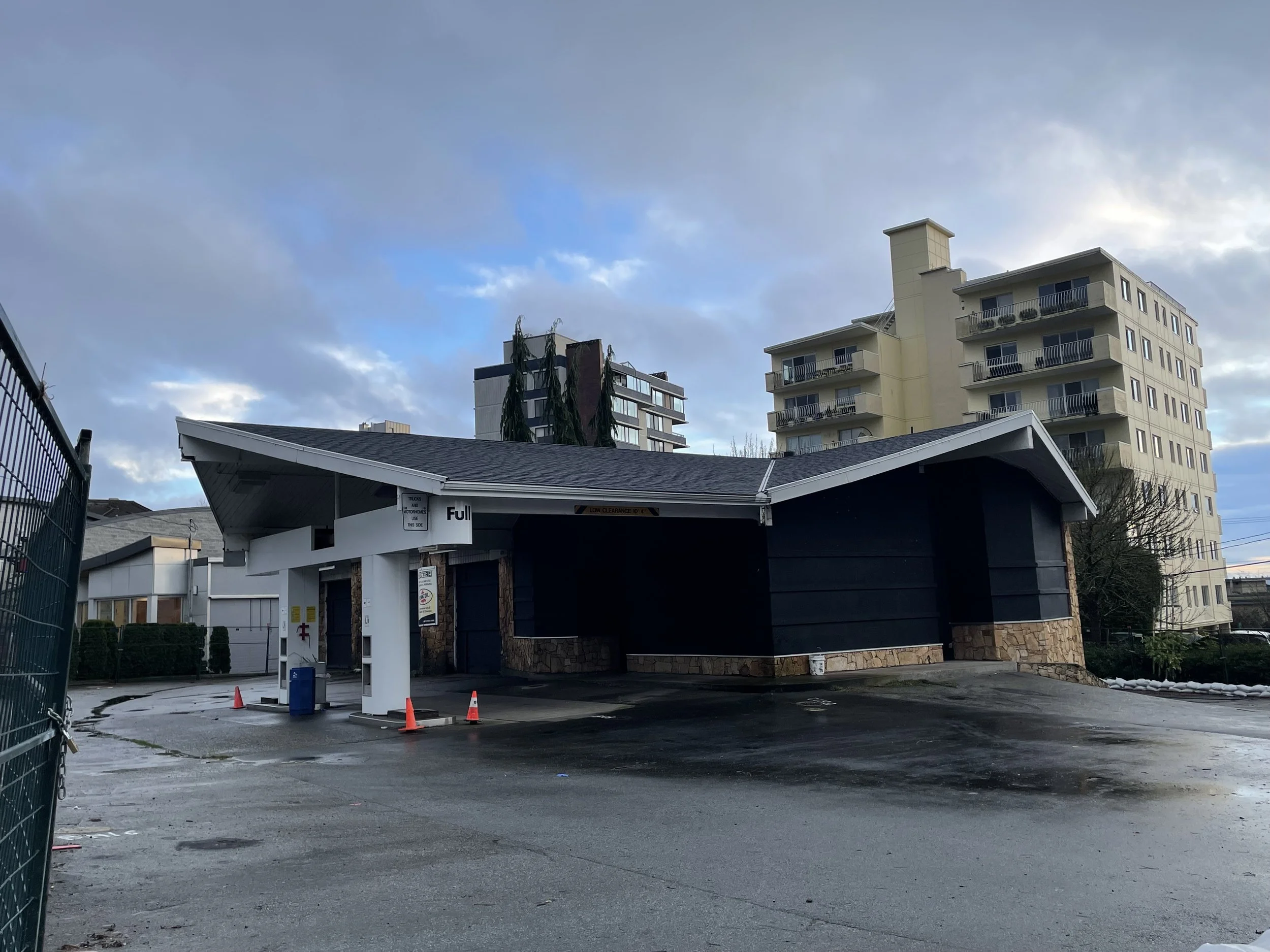
This is the former Pacific 66 Service Station, built in 1965/66, and one of the last surviving Mid‑Century Modern gas stations in Canada. For nearly sixty years, it has anchored this prominent intersection, quietly embodying West Vancouver’s post-war optimism, its embrace of car culture, and its flirtation with the bold, consumer‑oriented design language of the 1960s.
Today, as conversations about heritage, re-use, and community identity deepen, this significant building offers a rare opportunity to reflect on how even the most everyday structures can shape a neighbourhood’s character.
A Corner That Captures a Moment in Time
In the mid‑1960s, West Vancouver was changing. The sleepy, residential community of the post-war years was giving way to a more dynamic, car‑oriented district. Marine Drive—once lined with modest homes—was becoming a commercial corridor, shaped by the needs and aspirations of a modern, mobile population.
The site at 2196 Marine Drive began as a simple residential lot owned by John George and Katherine Krivenski. Archival photographs from 1964 show a small house tucked behind a tree, facing a very different Marine Drive than the one we know today.
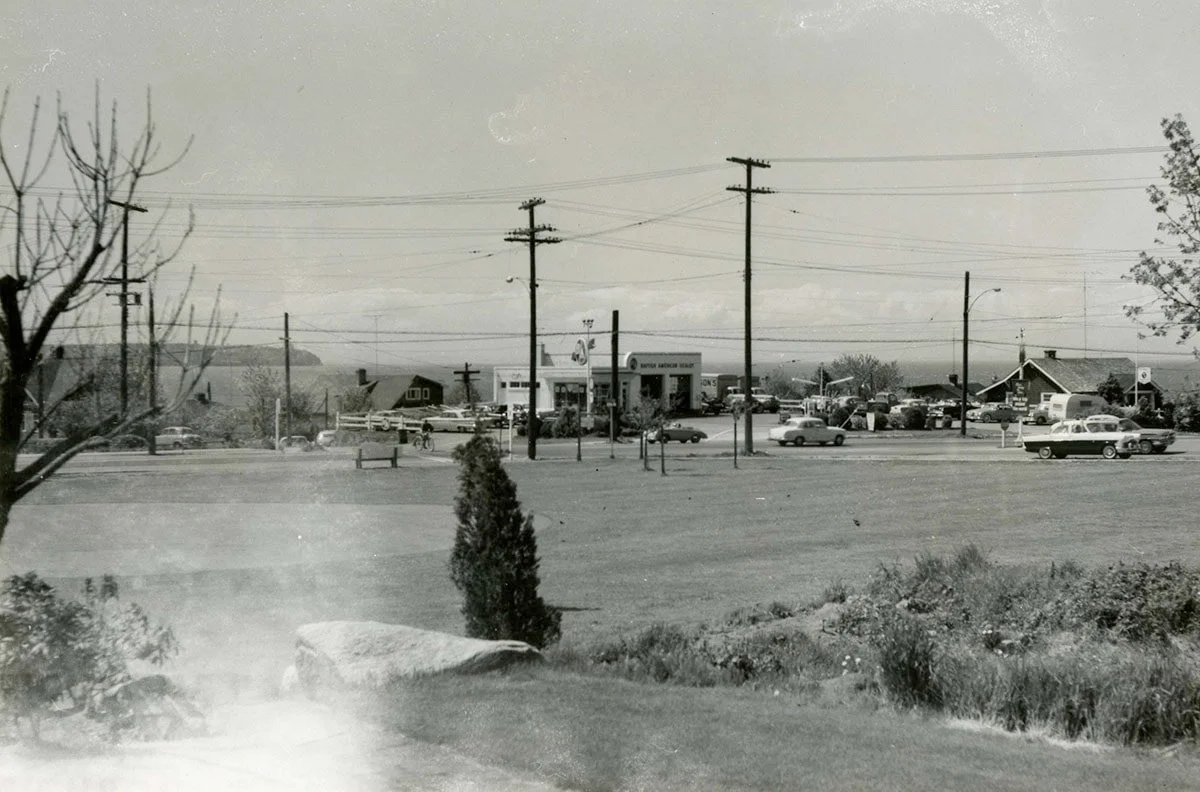
Photograph (1964): View from West Vancouver Community Centre looking southwest toward Marine Drive and 22nd Street. The south-west side of the intersection shows the British Petroleum station. The Pacific 66 station will be constructed, just one year later, across the street on the south-east side. Source: West Vancouver Archives, Inventory # 2500.2.222.DWV
Within two years, that home would be gone—replaced by a gleaming new service station built by Pelican Oils Ltd. and Pacific Petroleums Ltd.. Branded first as Surfside 66 Service, and later as Pacific 66, then Petro‑Canada and finally operating as OK Tire, the station has served generations of West Vancouver residents. It has pumped gas, fixed engines, repaired tires, and offered the kind of friendly, neighbourhood service that defined the era. Its longevity—over three decades of continuous operation—speaks to the stability of the local business landscape and the centrality of the automobile in shaping community life.
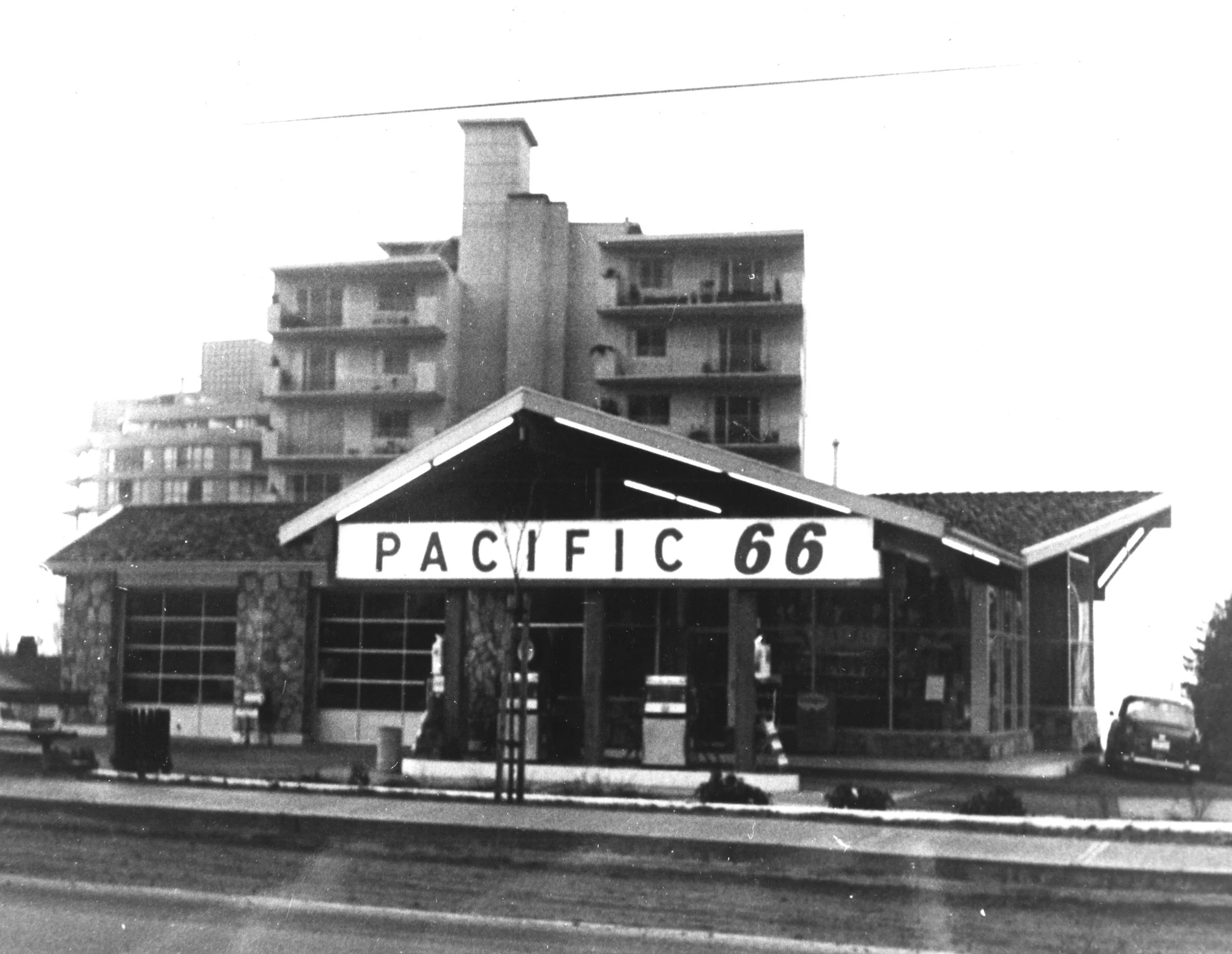
Photograph of Pacific 66 signage at 2196 Marine Drive. Note the large aluminum-frame window. folded plate roof and dry-stone veneer typical of the period. Source: MONOVA/North Vancouver Archives, Inventory #4063
The Pacific 66 station is a quintessential example of the “New Look” in mid‑century commercial design—a style that embraced flamboyance, sleek lines, and a consumer‑friendly aesthetic. Gas stations of this era were not merely utilitarian; they were roadside icons, designed to catch the eye of passing motorists and reinforce brand identity.
This building showcases the hallmarks of the period:
A folded plate roof—angular, expressive, and unmistakably modern
Large aluminum‑frame windows that dissolve the boundary between inside and out
Clerestory glazing that fills the interior with natural light
Caramel‑coloured dry‑stone veneer, laid with minimal mortar, giving the façade a textured, sculptural quality
A broad overhang that sheltered customers from West Coast rain
These elements remain remarkably intact today, giving the building a high degree of exterior integrity. While the interior has evolved through successive tenants—most recently OK Tire—the exterior continues to tell the story of its architectural lineage.
A Mid‑Century Modern Hub
What makes this station particularly compelling is its context. It sits within a remarkable cluster of Mid‑Century Modern buildings that define the character of this stretch of West Vancouver:
Villa Maris (1965), the iconic “Pink Palace” with its sensuous curves and largely intact Hollywood Regency interior
The Shoreland (1963), a circular, blue, Jetsons‑esque apartment tower
Surfside Towers (mid‑1960s), with its beach‑themed lobby and yellow staggered façade
The West Vancouver Ice Arena (1966), still boasting its original plywood interior and engineered‑wood beams
St Stephen’s Anglican Church (1967), a masterwork of cedar, light, and faceted slab glass
Together, these buildings form a rare and cohesive mid‑century landscape - one that reflects the optimism, experimentation, and cultural shifts of the postwar decades.
Within this ensemble, the Pacific 66 station plays a vital role. It is a small building with an outsized presence, a commercial anchor that has shaped the rhythm and identity of the streetscape for nearly sixty years.
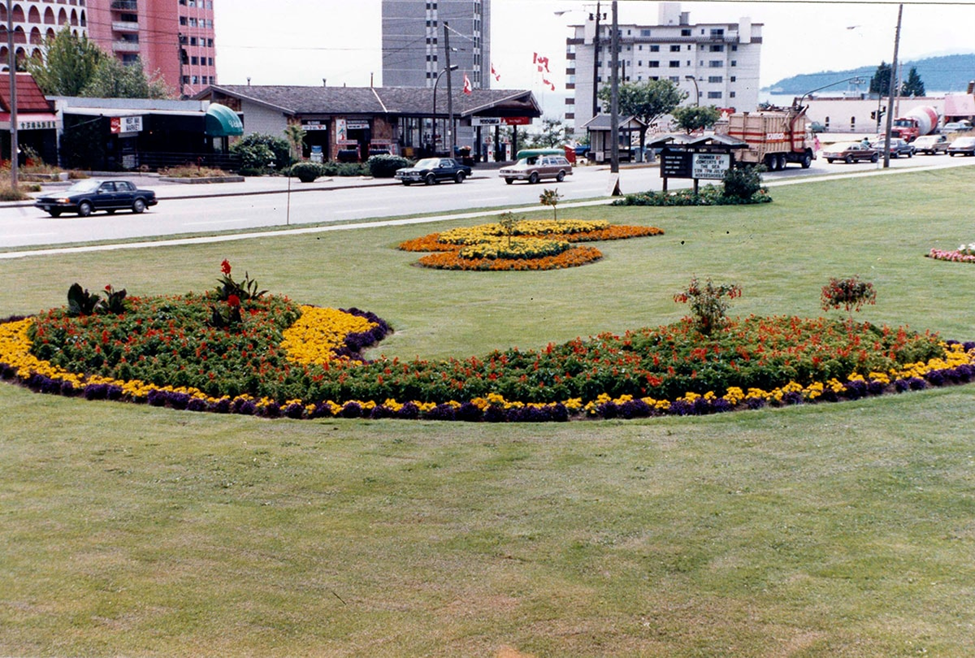
1988 Photograph of the garden front of the West Vancouver Recreation Centre with the Petro-Canada service station in the background – along with Mid-Century apartment blocks (left to right) Villa Maris (1965), Bellevue Terrace (1972-75) and The Dolphin (1961). Source: West Vancouver Archives, Inventory #3000-01.1.005.DWV
A Rare Survivor
Across British Columbia, most mid‑century gas stations have been demolished or radically altered. The Pacific 66 station endures—one of only two remaining Mid‑Century Modern gas stations in the province, the other being the former Cypress Park Shopping Centre station in Caulfeild (now Isetta Café & Car Museum).
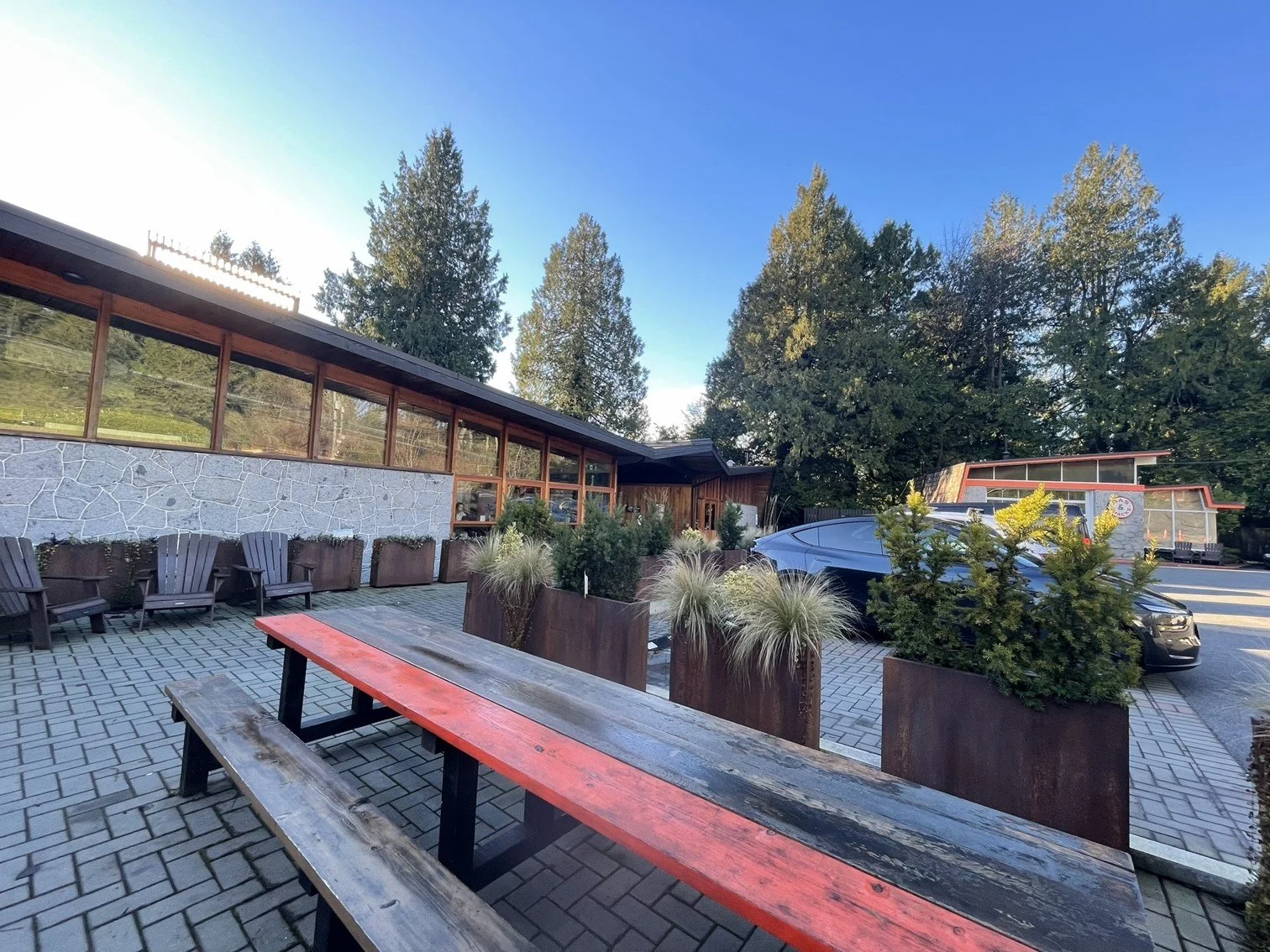
Cypress Park Shopping Centre, designed by Scott and Furnadjieff Architects in 1961, is now the Isetta Cafe and Car Museum, which was renovated by Design Architecture Everyday Inc in 2021. In this photo, the old Arcade gas/service station is pictured to the far right. Photo by Susan Walker.
The rarity of mid-century modern gas stations in BC elevates the heritage value of the Pacific 66 Station. It is not simply a relic of car culture; it is a tangible link to a transformative period in West Vancouver’s development, when architecture, commerce, and lifestyle converged in new and expressive ways.
Integrity, Condition, and the Path Forward
The building’s exterior remains largely unchanged since 1966, retaining the features that define its heritage character. Its compact footprint and location make it a compelling candidate for adaptive re-use—an approach that has proven successful in similar mid‑century commercial structures across North America.
Any future use should prioritize:
Conservation of the folded plate roof
Preservation of the clerestory and aluminum‑frame glazing
Retention of the dry‑stone caramel-coloured veneer
Featuring the building prominently on the site - respecting the building’s roadside identity and modernist proportions
Preservation of the building in its entirety; without facadism destroying the building's historical and cultural context.
With thoughtful stewardship, the Pacific 66 station could continue to serve the community—not as a service bay, but as a cultural, commercial, or civic space that honours its past while embracing new possibilities.
A Promise Worth Keeping
Pacific 66 once advertised with the slogan:
“We care, about you and your car. That’s a promise.”
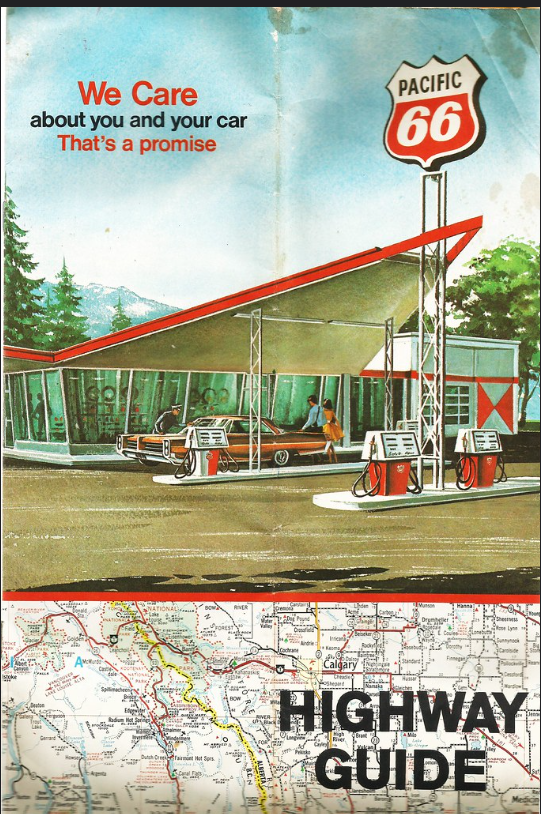
Known for their stylish designs, and customer-orientation, the Pacific 66 stations in the four western provinces became part of Petro-Canada in 1975. Image 1971, courtesy of National Snapshot: Canada & the Automobile 1901-2000: 1974
Today, the promise is different. It is a promise to recognize the value of everyday heritage. To see beauty in the functional. To honour the buildings that shaped our neighbourhoods – when they were designed to be remarkable and built to last.
The Pacific 66 station is more than a former gas station. It is a marker of West Vancouver’s mid‑century transformation, a rare architectural survivor, and a beloved part of the community’s evolving story.
What memories do you have of this iconic building and its various businesses? We welcome your comments below.
References:
BC City Directories, 1965–2000
History Chalmette Refining: https://www.chalmetterefining.com/about-us/history/
Municipal Records: West Vancouver Council Minutes, September 27, 1965
Petroleum History Society: Old Companies http://www.petroleumhistory.ca/history/companies.html
Pelican Oils Limited filing history: https://find-and-update.company-information.service.gov.uk/company/07538996/filing-history
Pelican Petroleum Company - American Oil & Gas Historical Society: https://aoghs.org/old-oil-stocks/pelican-petroleum-company/
Petroleum History Society: preserving history of the petroleum http://www.petroleumhistory.ca/